3.3 Filament
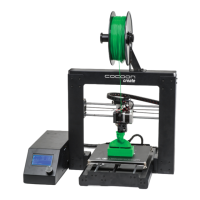
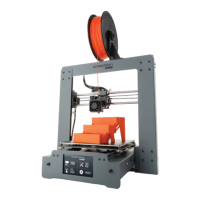
The Cocoon Create 3D Printer Touch uses high quality PLA and ABS laments. Only use quality
Cocoon Create laments as using generic laments may damage your 3D Printer Touch, aect the
print quality and may void your warranty. Extra lament including multiple colours and types are
available from the online store at cocoonproducts.com.au.
For beginners, we recommend using PLA materials as they are easy to print and does not
produce fumes when printing. Before using other types of laments, ensure you understand the
advantages and disadvantages of other laments and their proper usage.
3.3.1 Filament Types
Filament Type PLA ABS PVA HIPS
Extruder Temp: 215ºC 240ºC 175ºC 240ºC
Heat Bed Temp 60ºC 90ºC 50ºC 60ºC
Ocial Name: Polyactic Acid Acrylonitrile
Butadiene Styrene
Polyvinylv Alcohol High Impact
Polystyrene
Printing Level: Basic Advanced Advanced Advanced
Advantages: • Bioplastic
• Non-Toxic
• Less warping
issues
• Hard or soft/
exible variants
• High print
speed
• Smooth nish
• Durable
• Ideal for
mechanical
parts
• Water soluble
• Non-Toxic
• Lightweight
• Cost eective
• Dissolvable in
Limonene
Disadvantages: • Low heat
resistance
• Easier to break
than ABS
• Requires
thicker walls
than ABS
• Petroleum-
based
• Non-
biodegradable
• Heated Print
Bed required
• Fumes when
printing
• Sunlight
deterioration
• Sensitive to
high heat.
Do not heat
over 190C
• Only available
in white
Finishing: • Sanding
possible
• Limited gluing
• Easy sanding
• Easily soluble in
acetone
• Gluing Only • Gluing Only
Alternative types of PLA
These PLA Alternatives require advanced knowledge of the 3D Printer Touch. Please visit
www.cocoonproducts.com.au for details of lament types and parameters.
SETUP


 To Next Page