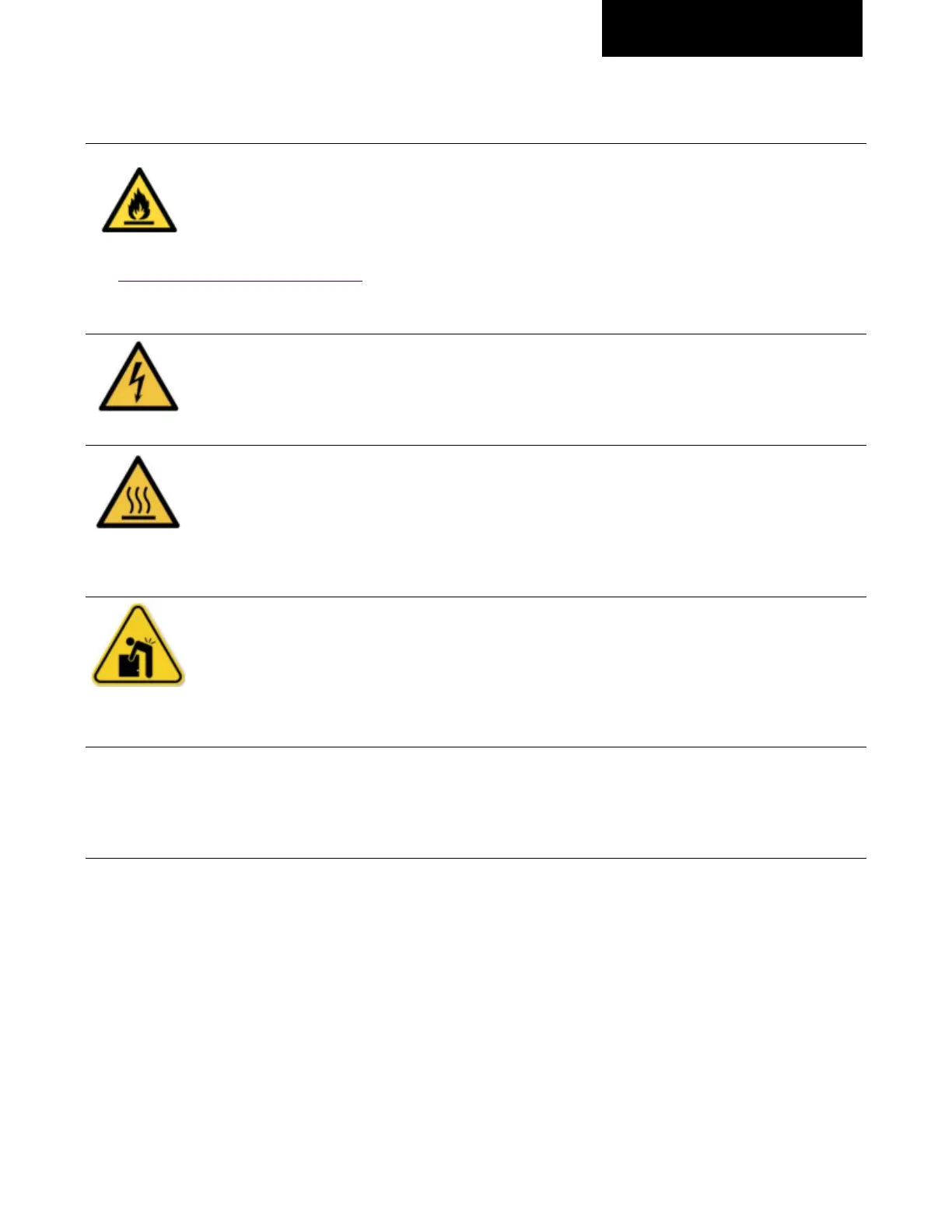
Flammable Refrigerant Hazards
If flammable refrigerant is released from a system, an explosive concentration can be present in the air
near the system. If there is an ignition source nearby, a release of flammable refrigerant can result in a
fire or explosion. While systems using flammable refrigerant are designed to mitigate the risk of ignition
if the refrigerant is released, fire and explosion can still occur.
See copeland.com/flammable-refrigerants for more information on flammable refrigerant safety.
Electrical Hazards
Until a system is de-energized, and capacitors have been discharged, the system presents a risk of
electric shock.
Hot Surface and Fire Hazards
While the system is energized, and for some time after it is deenergized, the compressor may be hot.
Touching the compressor before it has cooled can result in severe burns. When brazing system
components during service, the flames can cause severe burns and ignite nearby combustible
materials.
Lifting Hazards
Certain system components may be very heavy. Improperly lifting system components or the
compressor can result in serious personal injury. Use proper lifting techniques when moving.
POE Oil Hazards
This equipment contains polyol ester (POE) oils. Certain polymers (e.g., PVC/CPVC and polycarbonate) can be harmed
if they come into contact with POE oils. If POE oil contacts bare skin, it may cause an allergic skin reaction.
Precautions
• Always wear personal protective equipment (gloves, eye protection, etc.).
• Keep a fire extinguisher at the jobsite at all times.
• Keep clear of the compressor when power is applied.
- IMMEDIATELY GET AWAY if you hear unusual sounds in the compressor. They can indicate that
terminal pin ejection may be imminent. This may sound like electrical arcing (sizzling, sputtering or
popping). However, terminal venting may still occur even if you do not hear any unusual sounds.



 To Next Page