
 Need help?
Do you have a question about the Copley Controls Accelnet and is the answer not in the manual?
Covers title, revision, history, conformity, and original instructions.
Copley Controls disclaims liability for injury or damage from document use.
Emphasizes operating within specs and risks of electric shock.
No user-serviceable parts; tampering voids warranty.
Overview of drive installation, highlighting STO interface.
Defines key terms used for the STO feature operation.
Lists other documents for drive installation and commissioning.
Lists relevant international standards for safety and drive systems.
Defines acronyms and abbreviations used in the manual.
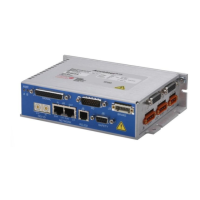
Describes the Accelnet & Stepnet Plus Panels drives and their STO feature.
Explains the organization and naming convention of the drive models.
Details the specific models available for the Accelnet Plus Panel family.
Details the specific models available for the Stepnet Plus Panel family.
Lists the various control modes supported by the drives.
Identifies the different sources for drive commands.
Specifies the DC voltage requirements for the drives.
Explains how the individual STO channels operate to ensure safety.
Details the technical specifications of the STO function.
Lists the operating and storage environmental conditions for the drives.
Provides safety parameters like SIL, HFT, PFH, PFD, PL, Category.
Lists the regulatory approvals and compliance standards for the drives.
Covers electrical isolation, motor compatibility, signal levels, and control mode limits.
Details HV/AuxHV and STO DC power supply needs and wiring rules.
Specifies the requirement for annual testing of the STO function.
Details STO overview, power, wiring, connector, and physical locations.
Demonstrates STO wiring, configuration, and timing for safety implementation.
Details all startup validation and preliminary checks for the STO function.
Details STO status indications via drive LEDs, data objects, and CME2 software.
Addresses common STO function problems and their solutions.
Details service accessibility and the comprehensive periodic STO testing checklist.
Covers STO muting methods and the function of muting jumpers.
 General
| Product Family | Accelnet |
|---|---|
| Category | DC Drives |
| Protection Features | Overcurrent, Overvoltage, Undervoltage, Overtemperature, Short Circuit |
| Communication | CANopen |
| Communication Protocol | CANopen |
| Feedback | resolver |
| Feedback Options | Incremental encoder, absolute encoder, resolver |
| Digital Outputs | 4 |
| Analog Inputs | 2 |
| Control Modes | Current, Velocity, Position |
| Operating Temperature | 0°C to +55°C |
| Humidity | 95% non-condensing |
| Dimensions | Varies by model |
| Weight | Varies by model |
| Certifications | CE, UL |

 To Next Page