12
ENGLISH
Storage
Long-term storage of thegenerator will require some additional preventative measures to guard against
deterioration and ensure that it works well when it is usedagain.
1. Let thegenerator cool down. Empty the fuel system. Refer to the Emptying the fuel system section.
2. Unscrew thespark plug and pour atablespoonful of engine oil (10W-30 in thesummer and 5W-30in the winter) into
thespark plughole.
3. Check theengine oil level and top-up theoil tank if necessary.
4. Pull thestarter handle afew times to distribute theoil in thecylinder, then refit thesparkplug. DoNOT reconnect
thespark plugcap.
5. Pull thestarter handle afew times until you feel aslight resistance, then slowly allow thestarter cord to recoil.
6. Clean theexterior of thegenerator.
7. Store thegenerator indoors, in adry and well-ventilated room. Donot cover thegenerator with aplastic sheet or dust
cover. Non-porous covers will trap moisture around thegenerator and assist corrosion.
Warning:
If you choose to store thegenerator with fuel in thetank, consider thefollowing advice:
• Do not store the generator in a room where there is any type of heater or appliance with a pilot light which could ignite
petrol fumes. Alsoavoid any area containing spark-producing electric motors or where power tools are operated.
• Avoid storing thegenerator in areas with high humidity, because that promotes corrosion.
• Leave theengine switch/fuel cut-off valve in the0 OFF position.
• Place thegenerator on afirm level surface. Tilting can cause thefuel to leakout.
When removing thegenerator from storage:
• Check thegenerator as described in section Preparations. Refuelwith fresh petrol.
Responsible disposal
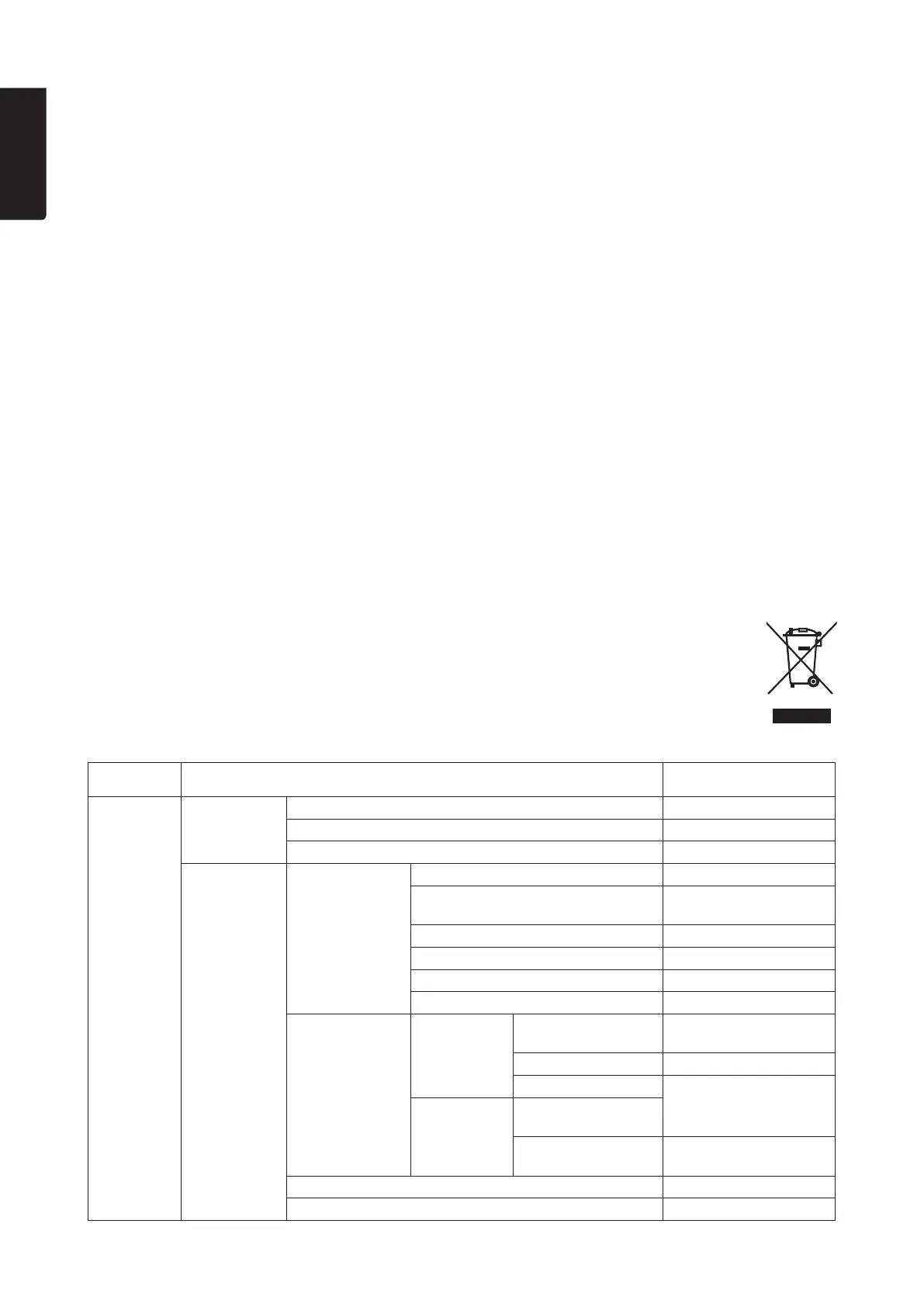
This symbol indicates that this product should not be disposed of with general household waste. This applies
throughout theentire EU. In order to prevent any harm to theenvironment or health hazards caused by
incorrect waste disposal, theproduct must be handed in for recycling so that thematerial can be disposed
of in aresponsible manner. When recycling your product, take it to your local collection facility or contact
theplace of purchase. They will ensure that theproduct is disposed of in anenvironmentally sound manner.
Troubleshooting guide
Trouble Possible cause Action
The engine
does
notstart.
Low engine
output.
The engine
runs
erratically.
Insufficient
compression.
Loose sparkplug. Tighten.
Loose cylinder headbolt. Tighten.
Damaged cylinder head gasket. Replace gasket.
Sufficient com-
pression.
Fuel system
problem: no fuel
supplied to com-
bustion chamber.
Choke not applied. Apply the choke.
Starter handle pulled too slowly.
Pull starter handle
more sharply.
Foreign matter intank. Clean thetank.
Clogged fuelline. Clean thefuelline.
Fuel tankempty. Addfuel.
Fuel cut-off valve or air vent closed. Open.
Electrical system
problem: fuel
supplied to com-
bustion chamber.
Insufficient
spark.
Spark plug dirty
orwet.
Clean.
Faulty sparkplug. Change sparkplug.
Faulty magnet.
Contact our
customer services.
Sparkokay.
Carburettor
set upwrong.
Starter handle
pulled too slowly.
Pull starter handle
more sharply.
Wrong type of fuelused. Check.
Overloading. Check theratedpower.


 To Next Page
 Loading...