[e'llJliJ]=l!l_l=l[,..'] ;[e]:t I:}:,(li:l_!.'][e]_[l_[e]:|il_DleJlJ:] ! i I__lJ i;| I It] _
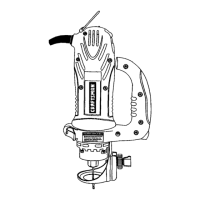
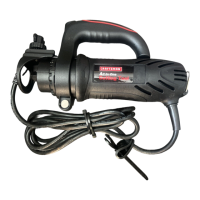
This cutting tool is double insulated to protect you from
electrical shock.
IA WARNING I
Double insulated tools are equipped with a polarized
plug (one blade is wider than the other). This plug will
fit into a polarized outlet only one way. If the plug
does not fit fully into the outlet, reverse the plug. If it
still does not fit, contact a qualified electrician to
install a polarized outlet. Do not alter the plug in any
way. Double insulation eliminates the need for the three
wire grounded power cord and grounded power supply
system.
Avoid body contact with grounded surfaces such as
pipes, radiators, ranges and refrigerators. There isan
increased risk of electric shock if your body is grounded.
Do not expose power tools to rain or wet conditions.
Water entering a power toolwill increase the risk of
electric shock.
Do not abuse the cord. Never usa the cord to carry the
tool or pull the plug from the outlet. Keep cord away
from heat, oil, sharp edges and moving parts.
Replace damaged cords immediately. Damaged cords
increase the risk of electric shock.
When operating a power tool outdoors, use an
outdoor extension cord marked "W-A" or "W". These
cords are rated for outdoor use and reduce the risk of
electric shock.
IAWARNINGI
Always make sure the receptacle is polarized. If you
are not sure, have a qualified electrician check the
receptacle.
Make sure your extension cord is In good condition.
When using an extension card, be sure to use one heavy
enough to carry the current the tool will draw. An
undersized cord will cause a drop in line voltage resulting
in loss of power and overheating. The table below shows
the correct size to use according to cord length and
nameplate ampere rating. If in doubt, use the next heavier
gauge. The smaller the gauge number the heavier the
cord.
Be sure your extension cord is properly wired and in
good condition. Always replace a damaged extension cord
or have it repaired by a qualified electrician before using it.
Protect your extension cord from sharp objects, excessive
heat and damp or wet areas.
Use a separate electrical circuit for your power tools.
This circuit must not be less than 14 gauge wire and
should be protected with either a 15 Ampere time delay
fuse or circuit breaker. Before connecting the power tool to
the power source, make sure the switch is in the OFF
position and the power source isthe same as indicated on
the nameplate. Running at lower voltage will damage the
motor.
IAWARNINGI
Repair or replace damaged or worn extension cords
immediately.
Select the appropriate extension cord gauge and length
using the chart below.
MINIMUM GAUGE (AWG) EXTENSION CORDS
(120 Volt use only)
Ampere Rating Total length infeet
Not
More Than More Than 25' 50' 100' 150'
0 6 18 16 16 14
6 10 18 16 14 12
10 p 12 16 16 14 12
12 16 14 12 NotApplicable
IAWARNINGI
Keep the extension cord clear of the working area.
Position the cord so it will not get caught on the
workpiece, tools or any other obstructions while you
are working with the power tool.


 To Next Page