39
BATTERY CARE - VEHICLES WITHOUT THE SINGLE-POINT WATERING SYSTEM
To keep batteries in good working condition, follow this maintenance program on a regular basis:
1. Keep the batteries clean and free of corrosion. Wash tops and terminals of batteries with a solution of baking soda and
water (1 cup (237 mL) baking soda per gallon (3.8 L) of water). Rinse solution off of the batteries. Do not allow this
solution to enter the battery. Be sure terminals are tight. Let the terminals dry and then coat with Battery Terminal
Protector Spray.
NOTE: Please Dispose of Waste Water Properly.
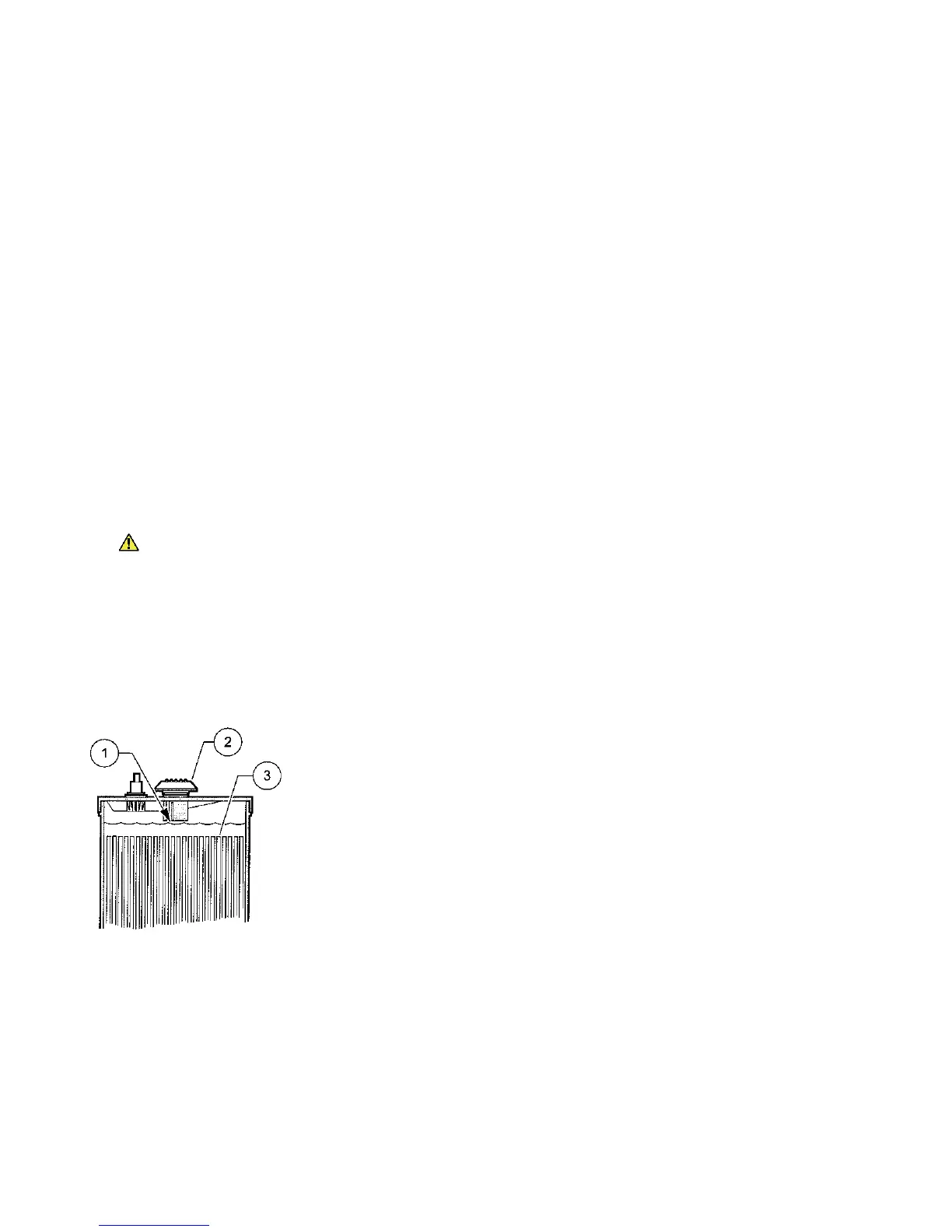
2. Check the electrolyte level weekly (Figure 30). Add water only after charging unless the electrolyte level is below the
top of the plates. In this case, add just enough water to cover the plates, charge, and then check the level again. Never
charge batteries if plates are exposed above electrolyte level. For best battery life, add only distilled water. See
following CAUTION and NOTE.
NOTE: A battery watering gun or bottle is available at many auto parts dealers.
3. The battery hold-downs should be tight enough so that the batteries do not move while the vehicle is in motion, but not
so tight as to crack or buckle the battery case. For vehicles with a Style A battery configuration(Figure 2, Page 9),
tighten hold-down retaining nuts to 40 in-lb (4.5 N-m). For vehicles with a Style B or Style C battery configuration
(Figure 3, Page 9) or (Figure 4, Page 10), tighten hold-down retaining nuts to 72 in-lb (8.1 N-m). The terminal
connections should be clean and tight, and any worn insulation or frayed wires should be replaced. Tighten battery
terminals to 110 in-lb (12.4 N-m). See following WARNING.
WARNING
4. After use, charge the batteries. The batteries should never be left discharged any longer than absolutely
necessary (do not leave discharged overnight).
• If battery wire terminals are damaged or corroded, replace or clean them as necessary. Failure to do so
may cause them to overheat during operation and could result in fire, property damage, or personal injury.
1. Level Indicator 2. Cap 3. Plates
Electrolyte level at least 1/2 inch (13 MM) above plates
or to level indicator.
Figure 30 Battery Electrolyte Level


 To Next Page