Page 11 of 34
SECONDARY HEATING: The fire is intended as a secondary heat source and should
not be used as a primary heat source. Check that a primary heat source (such as
radiators) is present in the room before installing the appliance. The fire should not be
operated if the room temperature is below 15 deg C. If the fire is used in a room without
the primary heat source operating to raise the initial room temperature above 15 deg C
there may be a build up of condensation and it is likely the stone fascia will crack due to
heat shock. When the appliance is used properly there is no risk of the fascia stone cracking
and this damage is not covered by the warranty. Houses with warm air heating systems,
solid walls, or no damp proof course may be unsuitable for flueless appliances. This
appliance does not contain Asbestos.
ROOM AIR QUALITY: The fire must not be used in rooms where the atmosphere is likely
to contain water or chemical vapours that may adversely affect the appliance or its finish
e.g. a kitchen
DECORATING: Do not use the fire while painting or decorating even if it is in an adjoining
room. When decorating the residue can linger for some time and this will lead to unpleasant
smells from the appliance. It may be some weeks before this odour clears and it is advised
not to use the appliance during this period. Always completely cover the appliance while
decorating.
WALL MOUNTED: The appliance has been designed to be installed onto a wall. It must be
placed on a non-combustible surface of minimum of 12mm thickness. The surface on which
the appliance is to be mounted must be flat, level and square to the back panel. Care should
be taken with all wall coverings as it may discolour them in time.
GAS SUPPLY
Before working on any pipe work, plug the ends to prevent the entry of
debris. Decide upon the route for the gas and lay pipe work as required.
Where pipes pass through the walls they must be sleeved. Before
connecting any pipes to the appliance, fully purge pipes of debris or grease
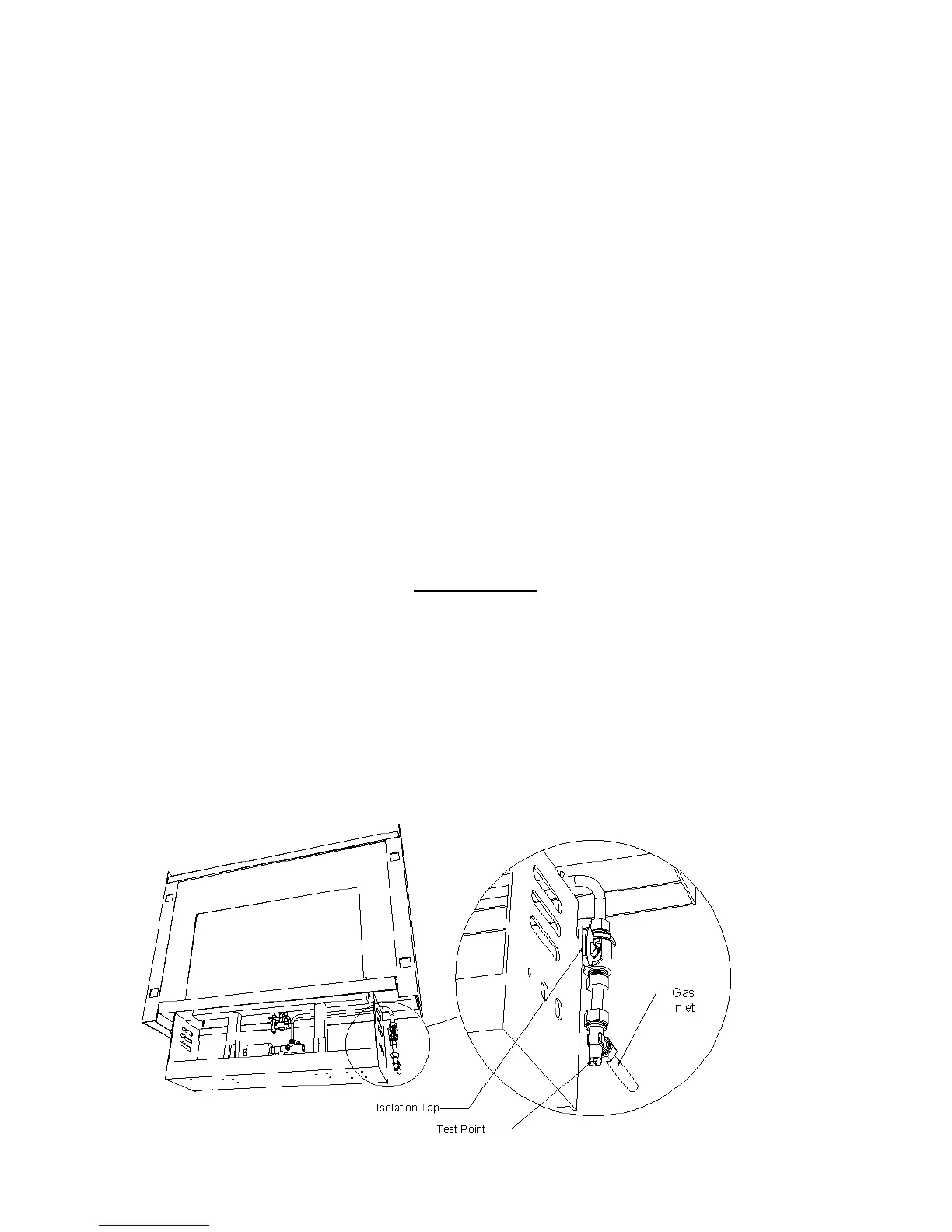
etc. Inlet is via an 8mm gas tap (isolation valve) which is supplied fitted to
the appliance. Connect gas supply to the supplied pressure test point and
then to the 8mm isolation valve as shown below. The pressure test point
MUST BE as close to the isolation valve as possible to ensure
accurate inlet pressure testing when the fire is commissioned.


 To Next Page