EasyManua.ls Logo

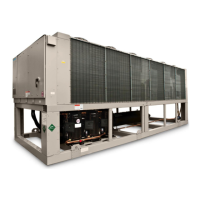
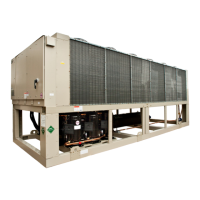
Daikin AGZ 130D - User Manual

Daikin AGZ 130D
84 pages
Print Icon
To Next Page IconTo Next Page
Loading...
Operating & Maintenance Manual
OMM 1166-1
Group: Chiller
Part No. OMM1166-1
Effective: March 2014
Air-Cooled Scroll Compressor Chiller
AGZ025D AGZ190D (Rev 0A) 25 to 190 Tons
50 - 60-Hertz, R-410A
Software Version 251699201
© 2014 Daikin Applied

Table of Contents

Questions and Answers

  • T
    Teresa ChungAug 20, 2025
    Why is the discharge pressure high on my Daikin Chiller?
    • S
      Sheila FarleyAug 21, 2025
      High discharge pressure in your Daikin Chiller can stem from several issues. Noncondensables might be present in the system, requiring extraction using approved procedures. The system could be overcharged with refrigerant, necessitating removal of the excess and a check of liquid subcooling. Ensure the optional discharge shutoff valve is fully open. Verify that the FanTrol wiring is correct and that the fan is running by checking its electrical circuit and motor. A dirty condenser coil can also cause this issue, so clean it thoroughly. Finally, correct any air recirculation problems.
  • K
    Karen YoungAug 23, 2025
    Why is my Daikin AGZ 130D Chiller compressor noisy or vibrating?
    • H
      Heidi HamptonAug 23, 2025
      If your Daikin Chiller compressor is making excessive noise or vibrating, start by checking the refrigerant charge, as low or no refrigerant can cause this. Ensure the compressor is running in the correct direction by verifying the unit and compressor phasing. Inspect the piping support on both the suction and discharge lines, relocating, adding, or removing hangers as needed. Finally, examine the compressor isolator bushings for wear and replace if necessary, and consider whether the compressor itself is worn, potentially requiring replacement.
  • B
    braymondAug 28, 2025
    What causes high suction pressure in Daikin Chiller?
    • T
      Tara ReynoldsAug 28, 2025
      High suction pressure in a Daikin Chiller may result from several causes. Check the control settings to ensure the water temperature isn't excessively high. An excessive load on the system can also lead to this issue; reduce the load or add additional equipment. If the expansion valve is overfeeding, inspect the remote bulb and regulate the superheat. Lastly, verify that the compressors are running in the correct direction by checking for proper phasing.
  • F
    Frank MeyerAug 31, 2025
    What to do if Daikin AGZ 130D Chiller compressor oil level is too high or too low?
    • M
      Monica FrazierAug 31, 2025
      If the oil level in your Daikin Chiller compressor is too high or too low, consider these potential causes. Oil may be hanging up in the piping, so review the refrigerant piping and correct as necessary. If the oil level is genuinely low, check for leaks and add oil. Inspect the oil line fittings for looseness and tighten them. If the level is too high, adjust the thermal expansion valve. Insufficient water flow can also cause a high oil level, so adjust the flow. Excessive liquid in the crankcase can also elevate the oil level; check the crankcase heater, reset the expansion valve for higher superheat, and verify the liquid line solenoid valve operation. Short cycling can also affect oil levels; stabilize the load or increase the staging interval.
  • M
    mary06Sep 2, 2025
    What to do if the Daikin AGZ 130D Chiller discharge pressure is low?
    • A
      Andrew SummersSep 2, 2025
      Low discharge pressure in a Daikin Chiller can be caused by several factors. Refrigerant flood back is one possibility, requiring correction. If wind is blowing directly into the coil at low ambient temperatures, shield the coil or install wind guards. A faulty condenser temperature regulation system should be checked for proper operation. Insufficient refrigerant in the system can also cause this; check for leaks, repair them, and add charge. Additionally, low suction pressure and only one compressor operating can contribute to low discharge pressure.
  • R
    Richard HolderSep 5, 2025
    Why is my Daikin AGZ 130D compressor losing oil?
    • M
      Madison EricksonSep 5, 2025
      If your Daikin Chiller compressor is losing oil, start by checking for refrigerant leaks and repairing them, then add refrigerant as needed. Also, check if the suction superheat is too high and adjust it accordingly. Finally, inspect the crankcase heater for burnout and replace it if necessary.
  • J
    Jack McintyreSep 7, 2025
    What to do if Daikin AGZ 130D Chiller compressor will not stage up?
    • K
      Kathleen RodriguezSep 7, 2025
      If your Daikin Chiller compressor isn't staging up, the issue might stem from a defective capacity control, which would need replacement. Alternatively, there could be a faulty thermostat stage or a broken wire, also requiring replacement. Finally, ensure that the stages are correctly set for the specific application by resetting the thermostat settings.
  • L
    lewisjocelynSep 10, 2025
    Why are the motor overload relays or circuit breakers open on my Daikin AGZ 130D?
    • B
      Brady HarringtonSep 10, 2025
      If the motor overload relays or circuit breakers in your Daikin Chiller are opening, it could be due to low voltage during high load conditions; check the supply voltage for excessive line drop. Defective or grounded wiring in the motor can also cause this, necessitating replacement of the compressor motor. Inspect for loose power wiring or burnt contactors, tightening all connections. Also, high condenser temperature and a power line fault causing unbalanced voltage can trigger this issue.
  • K
    Kevin HodgeSep 12, 2025
    What causes the compressor thermal protection switch to open on a Daikin AGZ 130D?
    • A
      Andre AustinSep 12, 2025
      If the compressor thermal protection switch on your Daikin Chiller is open, it could be due to operating beyond design conditions, requiring additional facilities to bring conditions within allowable limits. A partially shut discharge valve can also cause this, so ensure it's fully open. Additionally, a blown compressor internal gasket, voltage range issues or imbalance, high superheat, or compressor bearing failure can trigger this switch.
  • D
    Dr. Steven KingSep 15, 2025
    Why are the compressor staging intervals too short on my Daikin AGZ 130D?
    • R
      rachelwilliamsSep 15, 2025
      If your Daikin Chiller compressor is staging at intervals that are too short, the thermostat control band may not be set properly; try setting it wider. A faulty water temperature sensor can also cause this, requiring replacement. Insufficient water flow is another potential cause, so adjust the flow accordingly. Additionally, rapid load swings can contribute to short staging intervals, so stabilize the load.

Summary

Introduction

General Description

Overview of the chiller unit's construction and key features.

Hazard Identification Information

Details potential dangers and safety precautions for users.

Ambient Air Temperature Limitations

Standard;High Ambient Panels

Specifies operating temperature limits for different unit configurations.

Water Flow Limitations

Outlines flow rate requirements crucial for proper unit operation.

Glycol Solutions

Calculation Factors

Provides factors for calculating chiller performance with glycol/water mixtures.

Evaporator Freeze Protection

Details measures for preventing evaporator freeze-up in cold conditions.

Operating;Standby Limits

Minimum Allowable Flow Rates

Defines minimum chilled water flow rates required for stable unit operation.

Pressure Drop Curves

MicroTech III Controller

Overview

Introduces the controller's design and benefits for troubleshooting.

Controller Inputs and Outputs

Lists and describes the controller's analog and digital I/O points.

Unit Level Setpoints

Mode;Enabling

Configuration of unit operational modes and enabling conditions.

Staging and Capacity Control

Parameters governing compressor staging and unit capacity adjustments.

Alarm Settings

Configuration of alarm triggers and thresholds for unit protection.

Security

Entering Passwords

Procedure for accessing the unit controller with passwords.

Editing Setpoints

Process for modifying unit setpoints after successful password entry.

Unit Functions

Definitions

Defines key terms used in unit level and circuit control logic.

LWT Slope

Explains calculation of leaving water temperature change over time.

Unit Enable

Unit Mode Selection

Glycol Configuration

Details how to enable or disable glycol operation based on setpoints.

Unit States

Evaporator Pump Control

Pump selection

Options for configuring primary and secondary evaporator pumps.

Compressor Staging in Cool Mode

Unit Capacity Overrides

Demand Limit

How unit capacity is limited via analog input or network signal.

Circuit Functions

Definitions

Defines terms related to refrigerant circuits.

Circuit Control Logic

Explains the logic for enabling and controlling refrigerant circuits.

Pumpdown Procedure

Condenser Fan Control

Fan Staging

Describes how condenser fans are staged on/off based on conditions.

Alarms

Unit Fault Alarms

Details specific fault alarms and their triggers and actions.

Unit Problem Alarms

Unit Warning Alarms

Circuit Fault Alarms

Circuit Events

Low Evaporator Pressure - Hold

Describes the event triggered by low evaporator pressure.

Alarm Logs

Active Alarms

Shows a list of currently active alarms.

Alarm Log

Provides a historical record of alarms that have occurred.

Clearing Alarms

Using the Controller

Navigating

How to navigate through the controller menus and screens.

Passwords

Managing access levels and entering passwords for security.

VFD Interface (HMI)

Recommended Periodic Inspection

Optional BAS Interface

Information on integrating the chiller with Building Automation Systems.

Startup

Pre Start-up

Checks to perform before initial unit startup.

Start-Up

Step-by-step procedure for starting the chiller.

Operation

Hot Gas Bypass (Optional)

Explanation of the hot gas bypass feature for low load operation.

Compressor Communications

System Adjustment

Liquid Line Sight Glass

How to interpret the sight glass for system charge status.

Refrigerant Charging

Unit Maintenance

General

Routine checks and general maintenance practices.

Compressor Maintenance

Specific maintenance requirements for scroll compressors.

Planned Maintenance Schedule

Service

R-410 A

Information and safety precautions regarding R-410A refrigerant.

POE Lubricants

Details on the type and handling of POE oil used in the unit.

Filter-Driers

Evaporator

AGZ-D Troubleshooting Chart

Daikin Applied Training and Development

Warranty

Information regarding the product warranty terms.

Aftermarket Services

Details on obtaining parts and service support.

Daikin AGZ 130D Specifications

General IconGeneral
BrandDaikin
ModelAGZ 130D
CategoryChiller
LanguageEnglish

Related product manuals