9
control wiring runs not exceeding 125 feet. Use #14
AWG wire for 24V control wiring runs not exceeding
200 feet. Low voltage wiring may be National
Electrical Code (NEC) Class 2 where permitted by
local codes.
4. Route the low voltage contol wires from sub-base
terminals to the unit. Control wiring should enter
through the condenser panel opening or through
curb indicated in “Electrical Entrance” gure.
Connect thermostat and any accessory wiring to low
voltage terminal block TB1 in the main control box.
The supply duct from the unit through a wall may be
installed without clearance. However, minimum unit
clearances must be maintained (see “Clearances” section).
The supply duct should be provided with an access panel
large enough to inspect the air chamber downstream of
the heat exchanger. A cover should be tightly attached to
prevent air leaks.
Ductwork dimensions are shown in the roof curb
installation manual.
If desired, supply and return duct connections to the unit
may be made with exible connections to reduce possible
unit operating sound transmission.
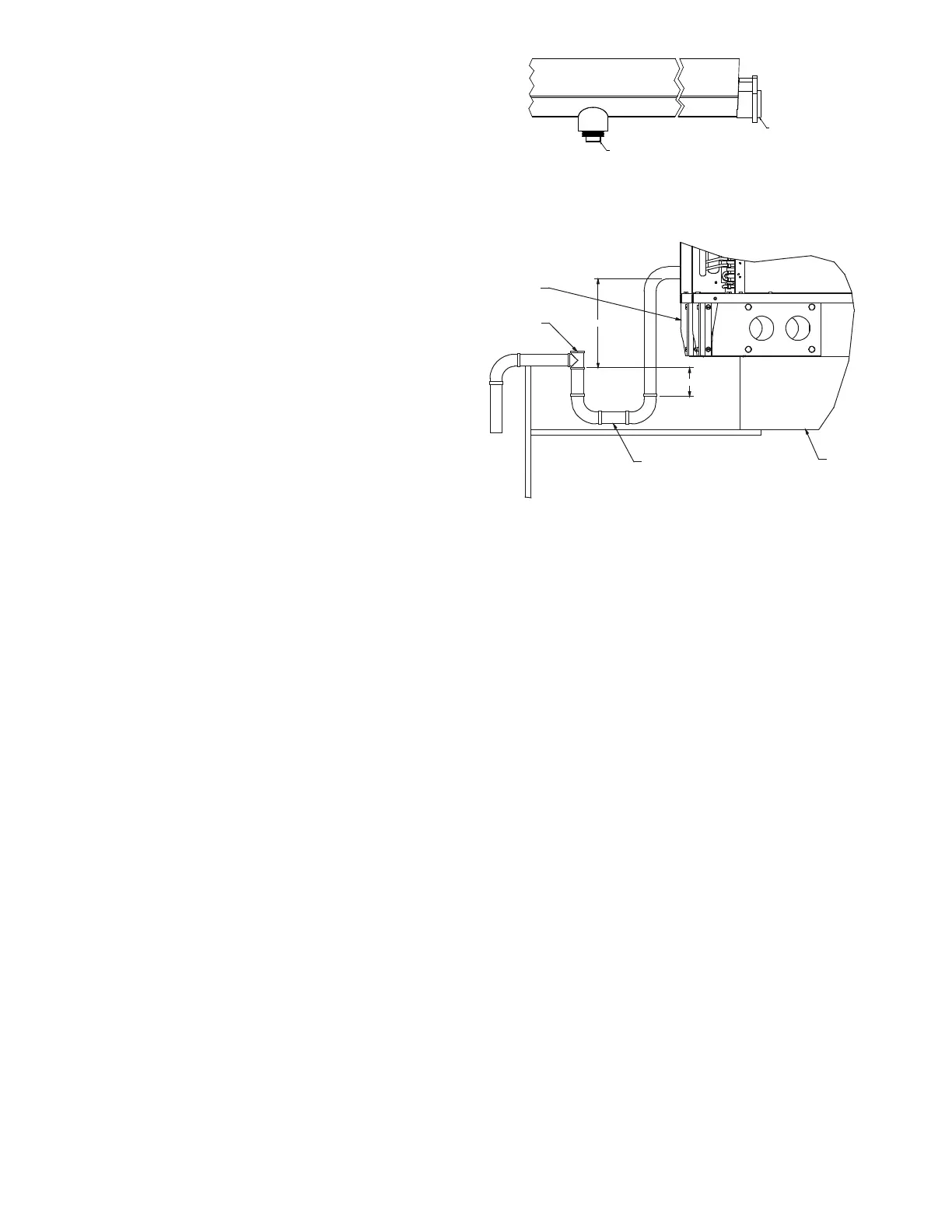
A 3/4” female NPT drain connection is supplied on the
end of the unit and bottom of the drain pan for condensate
piping. An external trap must be installed for proper
condensate drainage. Hand tighten drain tting to the drain
connection.
STANDARD
SIDE DRAIN
DRAIN PLUG
(FACTORY-INSTALLED)
Drain Pan (Side View)
NOTE: Trap should be deep enough to offset maximum
unit sta�c difference. A minimum 4” trap is recommended.
Drain Plug
Roof Cur
See NOTE
Base Rail
Open Vent
2” Min
Install condensate drain trap as shown. Use 3/4” drain line
and ttings or larger. Do not operate without trap.
Drainage of condensate directly onto the roof may be
acceptable; refer to local code. It is recommended that a
small drip pad of either stone, mortar, wood or metal be
provided to prevent any possible damage to the roof.
To use the bottom drain connection, remove the drain plug
from the bottom connection and install it in the horizontal
connection.
Due to the fact that drain pans in any air conditioning
unit will have some moisture in them, algae and fungus
will grow due to airborne bacteria and spores. Periodic
cleaning is necessary to prevent this build-up from plugging
the drain.



 To Next Page