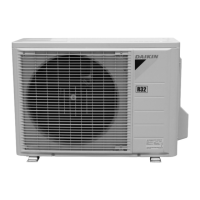
This document outlines the removal procedure for Daikin 2.5/3.5 kW Class Outdoor Units, specifically covering Non-Inverter Pair Type models. It serves as a service manual for technicians, detailing the steps required to disassemble various components of the outdoor unit.
Function Description:
The document primarily functions as a step-by-step guide for the removal of key components from Daikin outdoor units. It covers the disassembly of outer panels, the fan motor, electrical components, the sound blanket, partition plate, capillary tube, and the compressor assembly. Each section provides detailed instructions, accompanied by illustrations, to ensure proper and safe removal. The manual emphasizes safety precautions, such as waiting for power supplies to turn off and handling refrigerant gas responsibly.
Important Technical Specifications:
The manual covers a range of Daikin outdoor unit models, including:
Usage Features:
The manual is structured for ease of use by service technicians.
- Step-by-step Procedures: Each removal task is broken down into sequential steps, making complex procedures manageable.
- Illustrations: Clear diagrams and images accompany each step, providing visual guidance for component identification and removal. These illustrations may vary slightly by model.
- "Points" Section: This section highlights critical information, such as specific screw types, reassembly tips (e.g., fitting hooks, aligning marks), and model-specific variations (e.g., presence of hooks or sound blankets).
- Safety Warnings and Cautions: Prominent warnings are included to ensure technician safety and environmental protection. These cover:
- Waiting 10 minutes after power-off before disassembling.
- Risk of burns from heated pipes during brazing.
- Ventilation requirements if refrigerant gas leaks.
- Prohibition of discharging refrigerant gas into the atmosphere.
- Importance of nitrogen replacement during brazing.
- Avoidance of metal saws for cutting pipes to prevent sawdust contamination.
- Careful handling of pipes to prevent deformation.
- Use of protective sheets during brazing to prevent damage to surrounding components.
- Caution against burning compressor terminals, name plates, or heat exchanger fins.
- Instructions for handling difficult brazing situations (disconnecting and cutting pipes).
- Preparation for extinguishing fire if refrigerant oil catches fire.
Maintenance Features:
While primarily a removal guide, the document implicitly supports maintenance by enabling technicians to access and replace faulty components.
- Component Access: The procedures detail how to access internal components like the fan motor, capacitor, terminal board, and compressor, which are common points for inspection and replacement during maintenance.
- Reassembly Notes: The "Points" section often includes specific instructions for reassembly, such as fitting hooks, aligning parts, and routing wires correctly. This ensures that units can be put back together properly after maintenance or repair.
- Refrigerant Handling: Emphasis on collecting refrigerant gas and using non-oxidation brazing for piping restoration is crucial for maintaining system integrity and environmental compliance during repairs involving the refrigerant circuit.
- Corrosion Cautions: The document includes general cautions on product corrosion, advising against installation in corrosive gas environments and recommending protection for outdoor units near sea shores. This information is valuable for preventative maintenance and installation planning to extend the lifespan of the unit.
In summary, this service manual is an essential tool for technicians performing removal, repair, and maintenance on Daikin 2.5/3.5 kW Class Outdoor Units, providing clear, safe, and detailed instructions for component disassembly and reassembly.

 Need help?
 General



 To Next Page