D uct I nformation
10
GENERAL:
- When planning the path for ducting to the outside, keep in
mind the following guidelines:
- Minimize use of elbows and transitions in ductwork as to
maximize air flow to outside of building. An efficient airflow
path contributes to the overall efficiency of the Vent Hood.
- DCS recommends the use of smooth wall ducting, not
flexible ductwork.
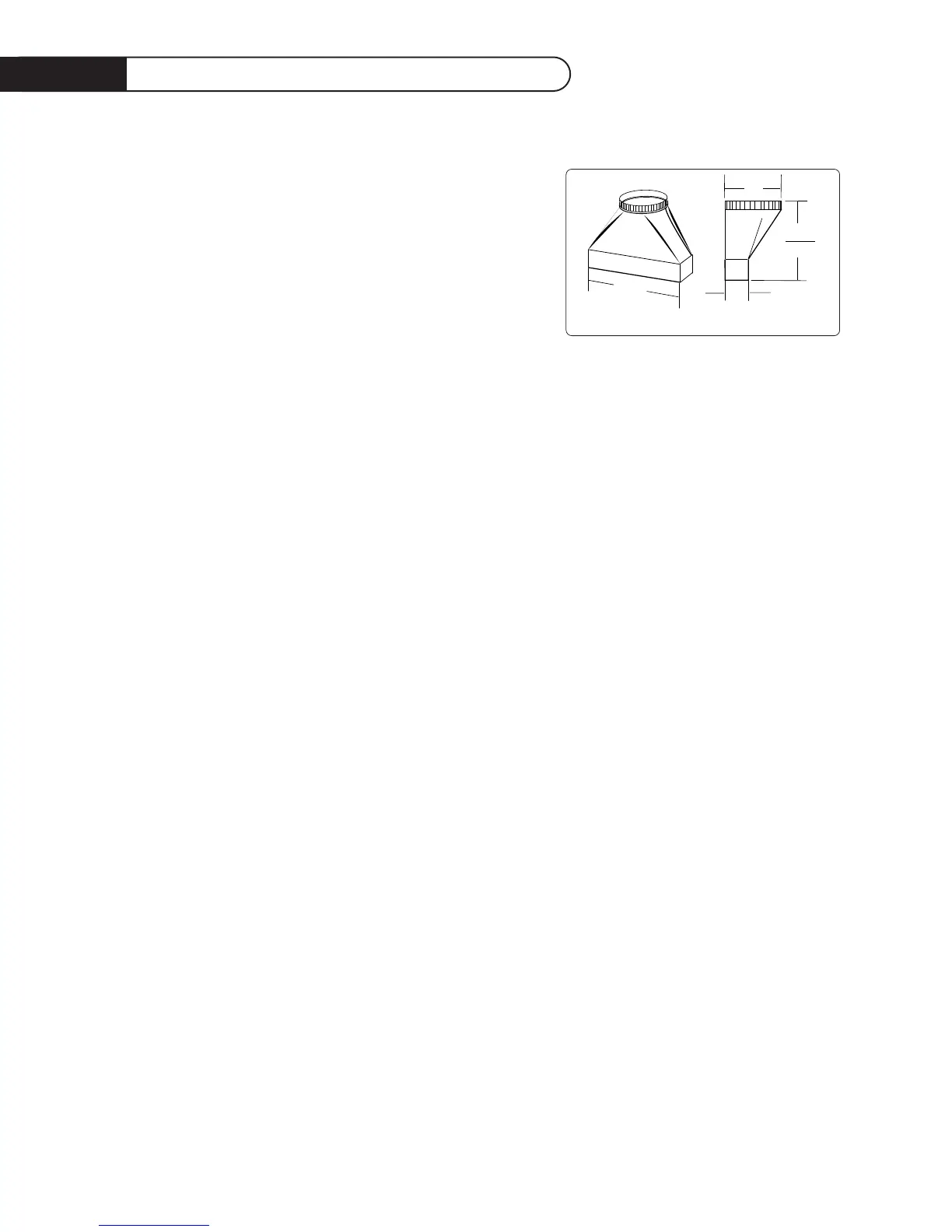
- Transitions are required from rectangular to round ducting
DCS-IB12 BLOWER Requires one of the following 4-1/2” x 18” to 10” round transitions
(purchase separately)
Model 19052-01-Vertical discharge
Model 19052-02-Rear discharge
Model 19052-03-Left discharge
- Duct tape may be used at ducting joints.
DCS-VH-48 / DCS-VH12-36 REQUIREMENTS:
- DCS recommends the use of 10” round ducting which provides 78.6 sq. In. of surface area.
- Alternate duct sizes in rectangular style may be used. If a rectangular duct style is used, the duct
must equal at least 78.6 sq. In. for best results. (Example- 3-1/4” x 24” duct = 78 sq. In.)
- Maintain consistent ducting square area as to avoid reduced air flow. [ie.- With a VH-48 Hood,
connecting a 4”x13” (52 sq. In.) to a 10” round (78.6 sq. In.) is not recommended]
DCS-VH-36/30 REQUIREMENTS:
- DCS recommends the use of 7” round ducting which provides 34.7 sq. In. of surface area.
- Alternate duct sizes in rectangular style may be used. If a rectangular duct style is used, the duct
must equal at least 34.7 sq. In. for best results.
DUCT ACCESSORIES:
- Wall Caps and Roof Caps must have free open area equal to duct size diameter.
- Note that a Sealed Back Draft Damper may reduce air delivery.



 To Next Page