GENERAL INFORMATION
4 GENERAL INFORMATION
GENERAL INFORMATION
CAUTION: United States federal law restricts this device to sale by, or on the order of a physician.
NOTES: Use this tourniquet system according to the policies in your practice setting. The following information on
intended use, precautions, contraindications, and adverse effects are offered as a guide to assist in this process
INTENDED USE
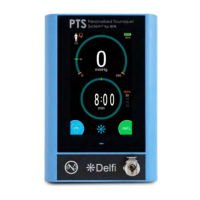
The Delfi PTS ii Portable Tourniquet System is intended to be used by qualified medical professionals to exert enough
pressure on the arterial blood flow in a limb to produce a bloodless operating field. Tourniquets are generally used for
operations lasting less than 90 minutes. Tourniquets have been found useful in surgical procedures involving the
extremities, such as:
• Reduction of certain fractures
• Kirschner wire removal
• Tumor and cyst excisions
• Knee joint replacements
• Arthroscopy of certain joints
• Replacement of finger joints
• Bone grafts
• Amputations
• Subcutaneous fasciotomy
• Nerve injuries
• Tendon repair
• Total wrist joint replacement
CONTRAINDICATIONS
Refer to the medical literature for possible contra-indications to tourniquet use. A partial list is provided below;
however, in every case the final decision to use a tourniquet rests with the attending physician.
• Open fractures of the leg
• Post traumatic lengthy hand reconstruction
• Severe crushing injuries
• Elbow surgery (where there is concomitant excess swelling)
• Severe hypertension
• Skin grafts in which all bleeding points must be readily distinguished
• Compromised vascular circulation, e.g., peripheral artery disease
• Diabetes mellitus
• Secondary or delayed procedures after immobilization
The presence of sickle cell disease is a relative contraindication (see Precautions in Use under Section 1 General
Information).
WARNINGS
Do not use tourniquet cuffs to control the distal flow of CO2 or any other gases used as a distention media. Tourniquet
cuffs have not been evaluated for safety or effectiveness in controlling gas flow beyond the surgical site during
arthroscopic insufflation procedures. Possible effects of using a tourniquet cuff in this manner include serious
subcutaneous emphysema proximal to the cuff.
The tourniquet instrument should only be connected to a tourniquet cuff known to be in operable condition.



 To Next Page