LT-1929
5
UNPACKING AND SETUP
INITIAL INSPECTION
It is suggested that an initial inspection be performed upon
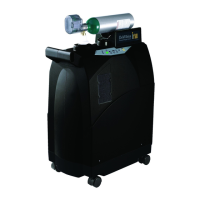
receiving the iFill personal oxygen station.
1. After removing the oxygen station from the carton, examine
it for any external damage. If shipping damage has
occurred, contact the DeVilbiss Customer Service
Department at 1-800-338-1988 or 1-814-443-4881 for
specic instructions. Save the carton for possible later
return; note the position of the unit and placement of the
packing material.
2. Check to make sure both of the cabinet air lters are in
place.
3. Plug the unit into an electrical outlet. The audible alert will
sound momentarily and the indicator panel lights will ash
on and then off. The standby light will remain on indicating
the unit is ready for use.
4. Attach an empty iFill cylinder to the oxygen station (be sure
rotary selector is "Off."
5. Push the start/stop switch on the control panel to start the
unit. After a few minutes, the iFill unit will begin lling the
cylinder.
6. Allow the lling process to continue for at least 20 minutes.
7. Turn the unit off and remove the cylinder.
8. Use an analyzer to check the oxygen concentration from
the cylinder. It should be 93% +/- 3%.
NOTE– If cylinder has a PulseDose
®
regulator attached, turn
knob to the continuous ow setting to check concentration level.
Cylinders having a continuous ow regulator attached should be
adjusted to 2 LPM to test concentration percentage.
NOTE– If the unit fails to operate properly or if it is damaged,
contact the DeVilbiss Customer Service Department at 1-800-
338-1988 or 1-814-443-4881; International 49-621-178-98-230
for information.
PATIENT SETUP
NOTE– Before operating the DeVilbiss iFill Personal Oxygen
Station for the rst time, locate the device where desired.
Choosing A Location
WARNING
The personal oxygen station should be at least six (6) inches
away from walls, draperies, or furniture to ensure sufcient
airow.
Avoid placing the oxygen station next to heaters, radiators,
or hot air registers. It should be kept at least 5 feet (1.6m)
away from hot, sparking objects or naked sources of ame.
Do not use in a closet.
Do not use in an area where the air may be contaminated
with carbon monoxide as this may shorten the life of the unit
(i.e. near running gasoline engine, furnace, or heater).
Transporting iFill Oxygen Station
WARNING
NEVER transport the Personal Oxygen Station with a
cylinder connected to or stored on it, otherwise injury or
damage can occur.
CAUTION–When transporting the DeVilbiss iFill Personal
Oxygen Station, be careful not to bump the unit or the
connectors into obstacles. Otherwise damage to the oxygen
station may occur.
There are three (3) methods to safely transport the DeVilbiss
iFill Personal Oxygen Station:
1. Pull or push the unit on its casters using the front handle.
Travel in a line oriented front to back to avoid tipping. Stop
the unit to change direction.
2. Carry the unit using the front and rear handles
simultaneously.
3. Carry the unit using the front handle and the recess located
under the rear of the base.
DeVilbiss iFill Oxygen Station Operation
Checklist
NOTE– Each time the Oxygen Station is used to ll a cylinder,
complete the following steps:
1. Check the Hydrostatic Test Date.
NOTE– All US DOT marked iFill cylinders must undergo
requalication testing every 5 years. Cylinders that are pi “π”
marked, which is the ofcial stamp mark required by the
Transportable Pressure Equipment Directive (TPED) certifying
that the gas cylinder conforms to RID/ADR for use throughout the
European Union, will require recertication within 10 years as
dened per Annex B of DIN EN 1802:2002.
Recertication testing of cylinders must be done by a certied
testing facility.
NOTE– Do not ll oxygen cylinders that have not been tested in
the past ve (5) years or ten (10) years, whichever is applicable.
2. Perform the prell inspection on the cylinder by following
iFill Oxygen Cylinder External Examination below.
WARNING
ONLY use cylinders that have the DeVilbiss iFill Personal
Oxygen Station ll connection.
All cylinders must be inspected before attempting to ll -
otherwise injury or damage may occur.
iFill Oxygen Cylinder External Examination
1. Examine the outside of the cylinder for the following
conditions, and replace the cylinder if they exist:
a. Dents or dings
b. Arc Burns
c. Oil or Grease
d. Any other signs of damage that might cause a cylinder
to be unacceptable or unsafe for use.
2. Examine the cylinder for evidence of re or thermal
damage. Evidence includes charring or blistering of the
paint or other protective coating or heat sensitive indicator.
If re or thermal damage is found, replace the cylinder.
3. Inspect the oxygen ll connector for the following:
a. Debris, oil or grease
b. Noticeable signs of damage
c. Signs of corrosion inside the valve
d. Signs of excessive heat or re damage
Do not use oxygen cylinder if any of the above are found.


 To Next Page