10
PM-000005 - Trencher Operators Manual - December 2012
5 mainTenance
● Make sure that all nuts and bolts are in place and properly tightened.
● Make sure that all other fasteners are in place and are performing their specied function.
● Make sure that all hydraulic ttings are tightened and that there are no leaks in any ttings or hoses.
● Make sure that all safety signs are in place, are clean, and are legible. (SEE THE SAFETY SIGN SECTION)
● Check for any Oil leaks.
● Wear and tear on Pins, linkages, clips, chain or chain teeth.
● Replace any damaged parts and excessively worn parts.
● Use only manufacturer recommended replacement parts. Other parts may be substandard in t and quality.
● Always wear safety goggles or glasses when inspecting equipment.
SAFETY FIRST!! READ AND UNDERSTAND THE SAFETY INSTRUCTIONS BEFORE BEGINNING ANY
TRENCHER MAINTENANCE.
BEFORE FIRST USE
BEFORE EACH USE
● Inspect the attachment for shipping damage. If damage does exist, do not operate until the damaged parts have been replaced
or repaired.
● Check the Hydraulic Oil level of the motor.
EVERY 10 HOURS OF USE
Always wear safety goggles or glasses when inspecting equipment
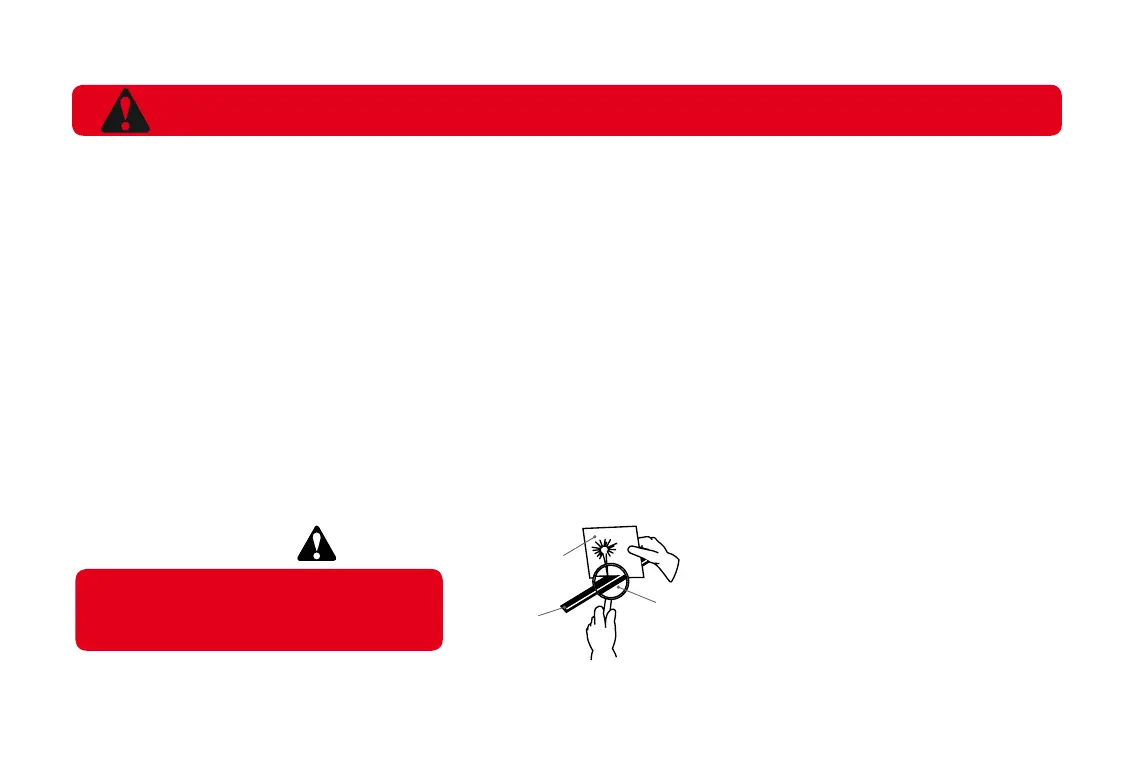
Escaping uid under pressure can have
sufcient force to penetrate the skin causing
serious personal injury. Fluid escaping from a
very small hole can be almost invisible. Use a
piece of cardboard or wood, rather than hands
to search for suspected leaks. Keep unprotected
body parts, such as face, eyes, and arms as far
away as possible from a suspected leak. Flesh
injected with hydraulic uid may develop
gangrene or other permanent disabilities.
If injured by injected fluid, see a doctor at
once. If your doctor is not familiar with this
type of injury, ask him to research it
immediately to determine proper treatment.
WARNING!
CARDBOARD
HYDRAULIC HOSE
OR FITTING
MAGNIFYING GLASS



 To Next Page