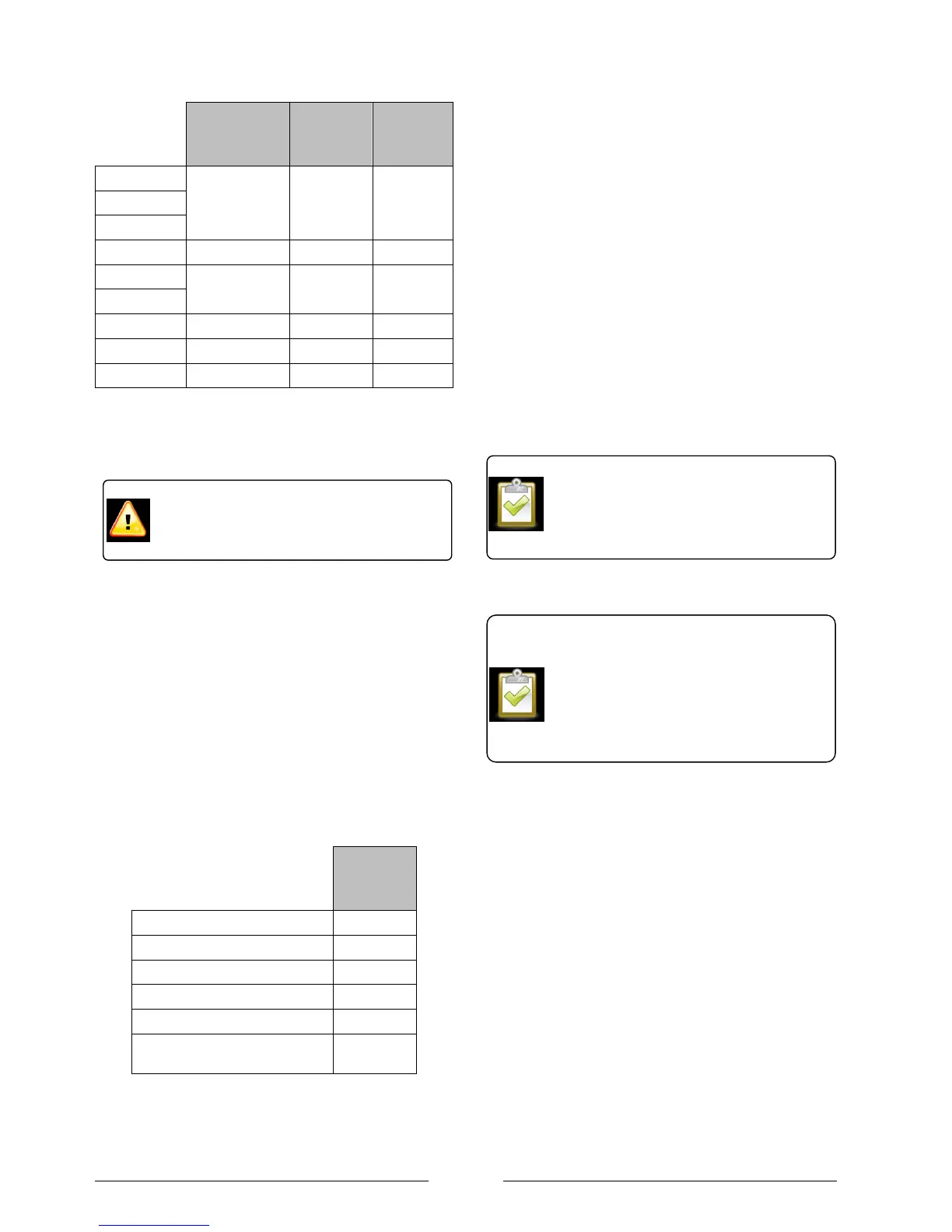
Typical room
temperatures
Table 5: Example of values used in the ventilation heat loss
calculation. For full details see BS 5449:1990
Estimating the building’s heat loss
The existing boiler cannot be used as a guide to determine
the actual heat consumption because boilers are often
over sized.
However, an approximate estimate can be made on the
basis of the existing energy consumption of the living
space to be heated and the specific heat consumption.
For early budgeting purposes a buildings heat loss can be
estimated based upon the floor area.
Estimated heat loss(W) = A x E
Where: A = Floor area (m
2
)
E = Estimated heat loss (W/m
2
)
Estimated
heat loss
per m
2
High insulation new build
New build (2002 regulations)
Older than 1930‟s with high
ceilings
Table 6: Typical building heat loss per m2 used to estimate a
buildings heat loss
Dimplex design service
Dimplex offer a free of charge service to calculate a
buildings heat loss along with a full product and accessory
specification. Providing we receive the information below,
turnaround is usually 7-10 working days.
To request this service a form can be downloaded from
our website that should be sent in with the following
information:
Plan and elevation drawings [scale 1:50 or 1:100]
Construction U values
Type of scheme ie: domestic, commercial or
industrial
Internal and external design temperatures
required
Details of any special requirements or unusual
aspects to the building
Alternatively the form and CAD drawings can be
emailed to
Drying-out of buildings
When a house is being built, large quantities of water are
normally used for mortar, rendering, plaster and wall
paper, which only evaporates very slowly from the
building. In addition, rain can decisively increase the
humidity in the building's structure. This increased
humidity in the entire structure causes an increase in the
heat consumption of the house during the first two heating
periods. For this reason, buildings should be dried out
using specially designed dehumidifiers.
The heat pump is not designed for the
increased heat consumption required when a
building is being dried out. Some additional
heat is available in the form of an inline flow
preinstalled in the product. If a building is to
be dried out in autumn or winter, we
recommend installing an additional
temporary heating.
For further information about our design
service please visit:
http://www.dimplex.co.uk/products/renewable
_solutions/heating_design_service
Rules of thumb and estimates are suitable for
budget purposes but are not accurate enough
to calculate the building‟s heat loss in order to
select a heat pump.



 To Next Page