Section 2: Selection and sizing of the heat pump
Process to select a heat pump
1. Confirm the building is suitable for a heat pump
installation as out lined in Section 6: Installation
considerations.
2. Accurately determine the buildings heat loss to EN
15316.
3. Decide on the maximum flow temperature.
4. Select the model of heat pump using the output
curves to EN14511
Mono energy operation
As the weather gets colder, the heat demand of the
building increases and the output of the heat pump
decreases. There becomes a tipping point where it is so
cold outside the output of the heat pump is not able to
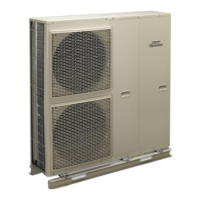
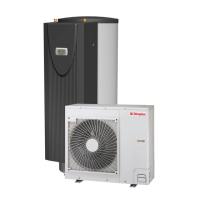
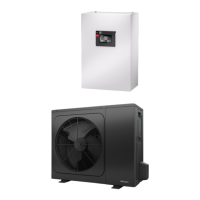
heat the building alone. The LA MI range of heat pumps
are monoenergy heating devices. i.e. in the event of very
low external temperatures an electrically operated inline
flow boiler will automatically be activated to provide
additional heat and keep the building warm.
The heat pump should fully meet the heat consumption
down to a certain external temperature as specified by the
NHBC and summarised in Table 3. The MIS 3005 also
standard states outside design temperatures for different
locations in the UK. To comply with both pieces of advice
the system should be designed to operate to the lower of
the two design temperatures. If this is not the case, the
electrical inline flow boiler will operate more frequently and
increase the running costs.
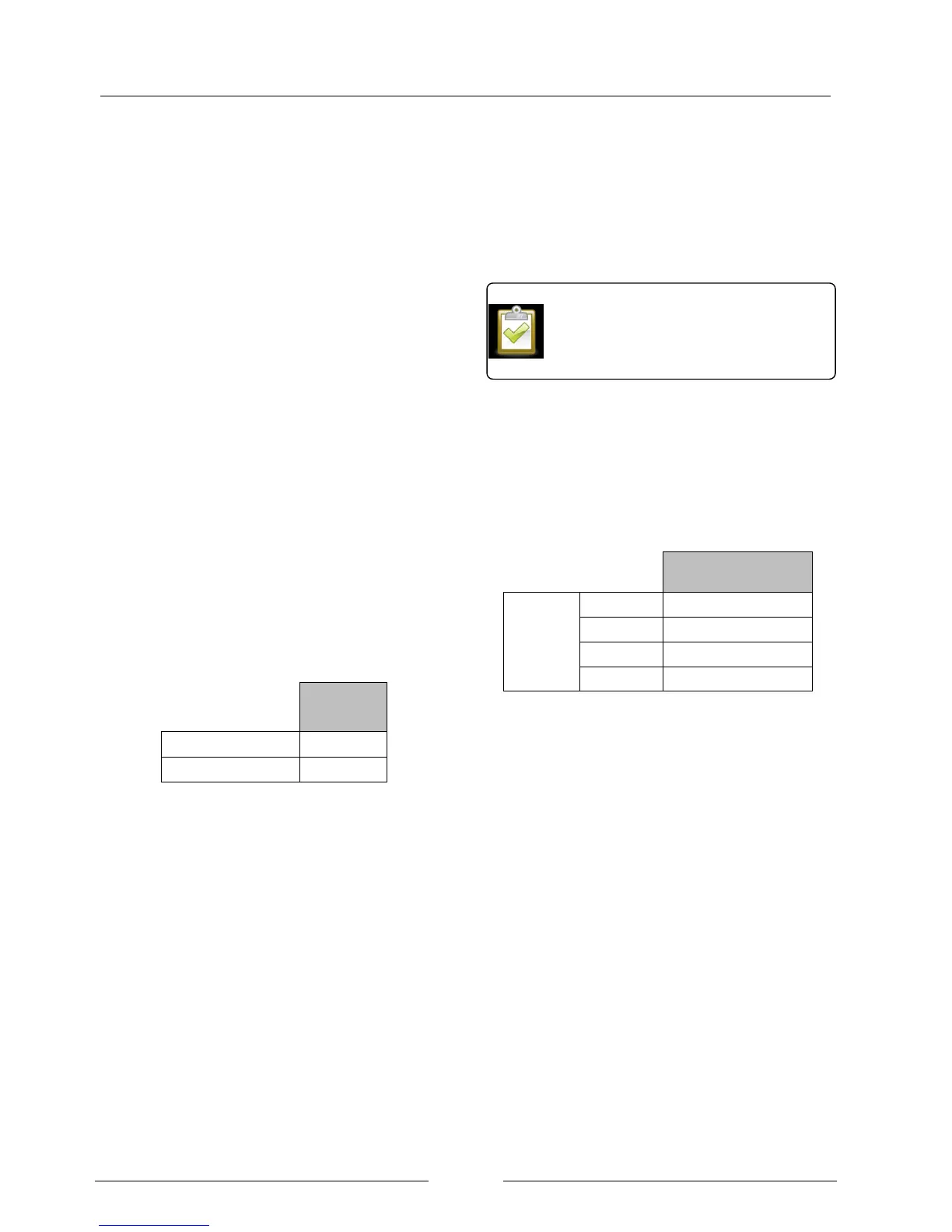
Table 3: External design temperatures (bivalent point) stated
by NHBC
Bivalent operation is when an additional heat source other
that electricity is used to supplement the heat load.
Integration of another boiler such as gas, oil or LPG is not
possible with the LA MI but is possible with Dimplex‟s
WPM range.
Accurately determining the building’s heat loss
It is essential to accurately calculate the buildings heat
loss to ensure the heat pump is correctly sized. The heat
loss of a building is calculated using details of the
buildings construction, individual room sizes, room
temperatures and air change rates.
Dimplex recommend calculating the buildings heat loss to
the standards defined in EN15316, this is also stipulated in
MIS 3005 which is required if the installation is going to be
MCS approved.
The total heat loss is made of two components; the fabric
losses and the ventilation heat losses. Fabric heat losses
are due to the transmission of heat by conduction though
the buildings structure such as windows, walls, roof and
floor. Ventilation heat losses are due to warm air escaping
the building and being replaced by cold air.
Total heat loss = Fabric losses + Ventilation losses
Fabric heat loss (W) = U x A x T
Where: U = U value (w/m
2
C)
A = Area of the wall, window, ceiling or floor (m
2
)
T = Temperature difference on either side of the
insulation (C)
Table 4: Example U values for Fabric heat loss calculation.
Further details can be found in Dom 8 - Design of total
heating systems.
Ventilation heat loss (W) = V x R x T x F
Where: V = Room volume (m
3
)
R = Air change rate per hour
T = Temperature difference of air in and out (C)
F = Ventilation Factor (W / m
3
C)
It is beyond the scope of this document to give
all the necessary values to calculate the
buildings total heat loss. This section intends
to outline the process to remind the system
designer to find the necessary information.



 To Next Page