3.INSTALLATION AND CONNECTION
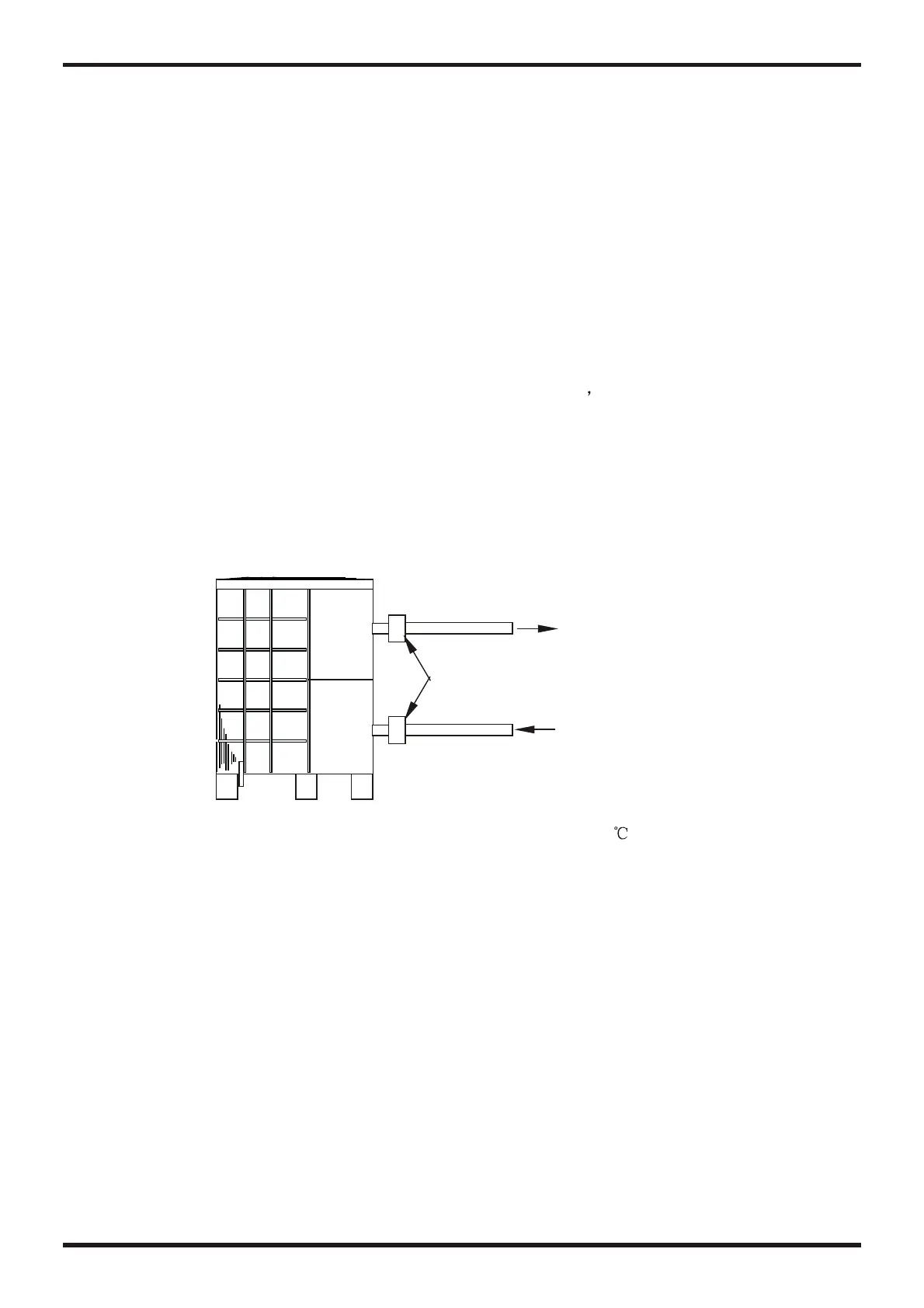
To pool
From pump
PVC COUPLER
RECOMMENDED(Provided)
6
3.4 Swimming Pool Heat Pump Plumbing
Location: Connect the unit in the pool pump discharge (return) line downstream of all filter
and pool pumps, and upstream of any chlorinators, ozonators or chemical pumps.
Standard model have slip glue fittings which accept 1.5inch PVC pipe for connection to the
pool or spa filtration piping. When the water connector is 1inch using a 1inch to 1.5inch you
can plumb 1.5inch PVC piping straight into the unit.
Give serious consideration to adding a quick coupler fitting at the unit inlet and outlet to allow
easy draining of unit for winterizing and to provide easier access should servicing be
required.
The Swimming Pool Heat Pumps exclusive rated flow titanium heat exchanger requires no
special plumbing arrangements except bypass(please set the flow rate according to the
nameplate). The water pressure drop is less than 10kPa at maximum flow. Since there is no
residual heat or flame , the unit does not need copper heat sink piping. PVC
pipe can be run straight into the unit.
Condensation: Since the Heat pump cools down the air about 4 -5 , water may condense on
the fins of the horseshoe shaped evaporator. If the relative humidity is very high, this could
be as much as several litres an hour. The water will run down the fins into the basepan and
drain out through the barbed plastic condensation drain fitting on the side of the basepan.
This fitting is designed to accept 1/2inch clear vinyl tubing which can be pushed on by hand
and run to a suitable drain. It is easy to mistake the condensation for a water leak inside the
unit.
NB: A quick way to verify that the water is condensation is to shut off the unit and keep the
pool pump running. If the water stops running out of the basepan, it is condensation. AN
EVEN QUICKER WAY IS to TEST THE DRAIN WATER FOR CHLORINE - if the is no chlorine
present, then it's condensation.



 To Next Page