Need help?
Do you have a question about the DLE DLE55 and is the answer not in the manual?
Details on warranty coverage and exclusions for DLE engines.
This document is a user manual for the DLE55 and DLE55RA engines, which are internal combustion engines designed for model aircraft. The manual emphasizes safety, proper operation, and maintenance to ensure optimal performance and longevity.
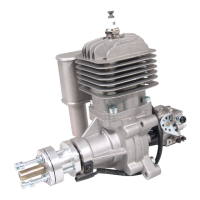
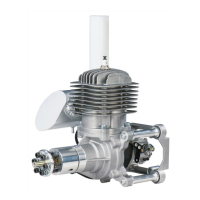
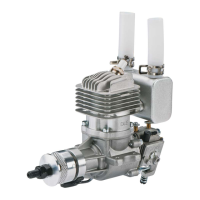
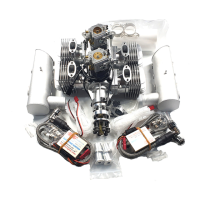
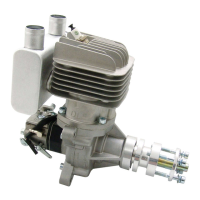
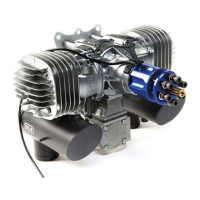
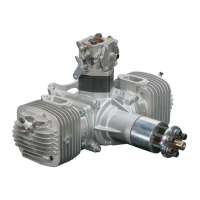
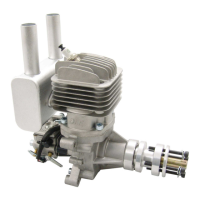
The DLE55 and DLE55RA are gasoline-powered engines primarily intended for use in remote-controlled (RC) aircraft. They provide the necessary thrust to propel model planes, offering a balance of power and reliability for hobbyists. The engine system includes the main engine unit, an exhaust pipe, and electronic ignition equipment. The electronic ignition system is powered by a 4.8V-14V battery and includes an ignition control switch wire, an ignition wire to the spark plug, and a pick-up sensor wire connected to the engine's sensor. An optional tachometer can be connected to the tachometer lead for RPM signal output.
Engine Mounting: During the break-in period, the engine should be mounted in an environment that can absorb vibration, such as in the model aircraft itself or with a soft mount if bench running. Hard mounting to a bench without adequate vibration damping can cause damage and shorten engine life. The best method for break-in is to mount the engine in the model.
Safety Precautions: Users must always stand clear of and behind the propeller. No one, including the operator, should ever be in front of or to the sides of the propeller when starting or running the engine. Anyone near the engine should wear protective eyewear, and loose clothing should be avoided near the engine or propeller. Children under 18 should not operate the engine without supervision.
Engine Adjustment: The carburetor mixture settings may need adjustment based on altitude and barometric pressure to achieve optimum performance. The carburetor features:
Fuel and Oil: Use non-Ethanol 92 or 95 Octane fuel. For general use and break-in, a 30:1 oil ratio with full synthetic oil is recommended. After 2-3 hours of run-time, the oil ratio can be decreased to 40:1 if using high-quality fully synthetic oil. It is crucial not to mix different types or brands of engine oil, as this can cause carburetor fouling.
Breaking-in Procedure: Start the engine and adjust the idle mixture if necessary. Allow the engine to warm up at idle, then slowly increase RPM. Avoid running at full throttle for the first tank of fuel. Instead, run in short bursts of 1-2 seconds up to 4500 RPM, then return to mid-throttle or idle. Continue this process for 2 hours, gradually increasing the upper RPM and duration of high RPM. If the engine sags at high RPM, throttle back immediately and adjust the high-speed mixture screw 1/8 of a turn out before retesting.
Low RPM Running: Avoid prolonged running at low speeds, as this can lead to carbon buildup on the spark plug.
Pre-Flight Checks: Before every use, carefully check the engine assembly, propeller, and airframe for any loose screws and nuts. The use of Loctite 242 Blue (or similar threadlocker) is strongly recommended on all screws to prevent loosening due to vibration.
Spark Plug Inspection: During break-in and after a few runs at full throttle, unscrew and check the spark plug. A slight yellow color indicates proper mixture settings. Running an overly rich mixture can lead to poor performance, carbon buildup, a fouled plug, and excessive exhaust residue. Conversely, a lean mixture can damage the cylinder and piston and is not covered under warranty.
Fuel Line Inspection: Periodically, or if the engine runs erratically, check the fuel line for possible pinholes or air leaks.
Carburetor Fuel Screen Cleaning: The carburetor fuel screen should be cleaned periodically. To do this, carefully remove the pump cover (on the inlet side of the carburetor), the gasket, and the pump membrane. The screen will then be visible for cleaning.
Cooling: Adequate cooling is essential. Ensure the engine has proper ducting to force air over the cylinder cooling fins. A minimum 1:3 cooling air inlet to outlet ratio is recommended. Additional venturi fins on the air outlet can help draw air. Simply mounting the engine in the cowl without proper ducting is considered inadequate cooling and can lead to overheat damage, which is not covered by warranty.
Warranty Information: All DLE engines come with a one-year parts and labor warranty, provided they are run according to factory instructions, use specified propellers, and correct lubricants and lubricant ratios. The engine number and purchase date are recorded for warranty purposes, and users should retain their purchase invoice as additional proof. The warranty does not cover damage caused by running the engine without oil or with too little oil, using incorrect sized propellers (oversized propellers increase stress and wear, while undersized propellers cause too high RPM), or inadequate cooling.


 To Next Page
 General