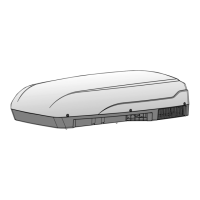
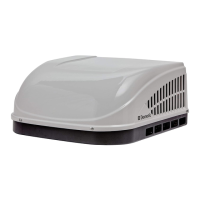
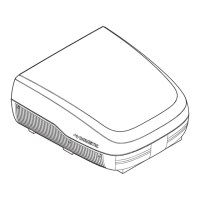
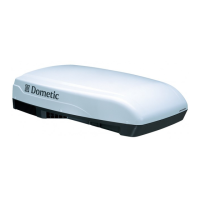
This document is an installation and operating manual for a Dometic rooftop air conditioner unit designed for Recreational Vehicles (RVs). It provides comprehensive instructions for installation, operation, and maintenance, along with important safety information and wiring diagrams.
Function Description:
The Dometic rooftop air conditioner is designed to provide cooling and air circulation within an RV. It operates by drawing in return air, cooling it, and discharging it into the RV's interior. The unit includes a compressor for cooling, a fan for air circulation, and a thermostat for temperature control. It can be installed on the roof of an RV, either over an existing roof vent opening or in a newly cut opening. The air distribution box (ADB) manages the airflow and houses the controls.
Important Technical Specifications:
- Models Covered: 459530, 459530A, B59530, 640310.
- Power Requirements: 120 Vac, 60 Hz, 1 phase.
- Minimum Wire Size: 12 AWG Copper (up to 24 ft). For longer lengths, consult the National Electrical Code.
- AC Circuit Protection: 15 Amp time delay fuse or circuit breaker.
- Minimum Generator Size:
- 1 Unit: 2.5 kW
- 2 Units: 4.0 kW
- Refrigerant: R-410A (20.0 oz for most models, 20.5 oz for 640310C45X).
- Roof Opening Requirements: 14-1/4" x 14-1/4" (±1/8") square opening. This opening is part of the return air system and must be finished in accordance with NFPA 1192.
- Roof Construction: Requires rafters/joists support frames on a minimum of 16-inch centers.
- Roof Thickness: Minimum of 1.5 inches and maximum of 6 inches distance between roof to ceiling.
- Roof Load Capacity: The roof must be designed to support 130 pounds when the RV is in motion (normally a 200 lb. static load design will meet this requirement).
- Maximum Acceptable Tilt:
- 15° for models 459530, 459530A, B59530.
- 8° for model 640310.
- Mounting Bolt Torque: 40 to 50 inch pounds, tightened EVENLY.
Usage Features:
- Controls: The unit features a selector switch with eight positions, including "OFF," various fan speeds, and cooling modes.
- Thermostat: Controls the compressor's ON/OFF operation within a temperature range of approximately 65°F and 90°F (measured at the ADB inlet).
- Cooling Operation (Blue Graphic):
- HIGH COOL: For maximum cooling and dehumidification.
- MEDIUM Cool: For normal or average cooling.
- LOW COOL: For maintaining desired comfort level, often used for night operation.
- The compressor cycles on and off to maintain the selected temperature. The fan runs continuously to help keep the temperature uniform.
- A 2-minute delay is recommended before restarting the compressor to prevent quick-cycling and potential overload.
- Fan Operation (Black Graphic): Circulates air without cooling or heating. Offers high, medium, and low fan speeds.
- Center Air Discharge: Features a slide lever to open and close the center air discharge vent, allowing users to direct airflow.
Maintenance Features:
- Air Filter:
- Periodically (minimum every 2 weeks of operation), the return air filter should be removed, washed with soap and warm water, dried, and reinstalled.
- It is crucial NOT to run the unit without the filter, as this can plug the evaporator coil with dirt and degrade performance.
- ADB Housing: Clean the ADB housing and control panel with a soft cloth dampened with a mild detergent. Avoid furniture polish or scouring powders.
- Fan Motor: The blower motor is factory lubricated and requires no service.
- Frost Formation on Cooling Coil:
- Small amounts of frost are normal. If significant ice forms (indicated by very cold output at low air speed), inspect and clean the filter, and ensure air vents are open.
- Frosting is more common in low outside temperatures and can be mitigated by adjusting the thermostat to a warmer setting.
- If frosting persists, operating in "FAN ONLY" mode will help defrost the coil. Contact a local service center if the condition continues.
- Heat Gain Management: The manual provides tips to reduce heat gain in the RV, such as parking in the shade, using window shades, keeping windows/doors closed, and avoiding heat-producing appliances. Starting the air conditioner early in the morning can also improve performance.
- Condensation: The manufacturer is not responsible for damage from condensation. Keeping doors and windows closed during operation helps reduce interior condensation.

 Need help?
 General

 To Next Page