EasyManua.ls Logo

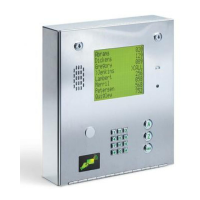
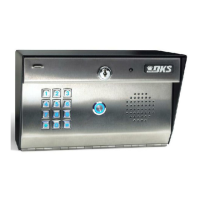
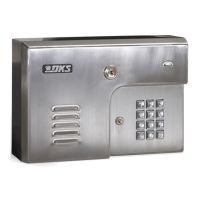
DoorKing 1837-084 - User Manual

DoorKing 1837-084
76 pages
Print Icon
To Next Page IconTo Next Page
Loading...
UL Listed
Copyright 2009 DoorKing, Inc. All rights reserved.
Copyright 2021 DoorKing
®
, Inc. All rights reserved.
Date Installed:
Installer/Company Name:
Phone Number:
Leave Manual with Owner
Circuit Board
Serial Number
and Revision Letter:
Model Number
Installation/Owner’s Manual
80 Series
Telephone Entry and Access Control Systems
80 Series
80 Series
1833-084
7
8
9
4
5
6
1
2
3
0
O
P
E
R
O
P
ER
W
X
YZ
WX
Y
Z
T
U
V
T
U
V
P
Q
R
S
P
Q
R
S
M
N
O
M
N
O
JK
L
J
K
L
G
H
I
G
H
I
D
E
F
D
EF
A
B
C
A
B
C
S
P
S
P
TEL
EP
HONE
ENTR
Y SYSTEM
O
PE
RA
T
I
N
G
I
N
S
TR
U
CT
I
O
N
S
Locate
C
ode
Number
on Direc
to
r
y.
P
re
s
s
C
ode
Num
ber
.
If Line
is
B
us
y,
P
re
s
s
“#
to
H
ang
UP
.
T
r
y
A
gain.
Ent
e
r on To
n
e
.
1.
2.
3.
Flush Mount
1833-080
7
8
9
4
5
6
1 2
3
0
O
P
E
R
O
P
E
R
W
X
Y
Z
W
X
Y
Z
T
U
V
T
U
V
P
Q
R
S
P
Q
R
S
M
N
O
M
N
O
J
K
L
JKL
G
H
I
G
H
I
D
EF
D
EF
A
B
C
AB
C
S
P
S
P
TELEPHONE
ENTR
Y
S
YSTEM
O
PE
R
AT
I
NG
I
NST
R
U
CTI
O
N
S
Locate C
ode
N
umber
on
D
irecto
r
y.
P
res
s
C
ode
Num
ber
.
If
Line
is
B
usy,
P
res
s
“#”
to
H
ang
UP
.
T
r
y
A
gain.
Ent
e
r on Ton
e
.
1.
2.
3.
Surface Mount
1833
1833
1833
Wall Mount
7 8
9
4 5
6
1
2
3
0
OPER
O
P
ER
W
X
Y
Z
W
X
Y
Z
TU
V
T
U
V
PQ
RS
P
Q
R
S
M
N
O
M
N
O
JK
L
JK
L
G
HI
G
H
I
D
EF
D
EF
ABC
A
B
C
S
P
S
P
A
Z
CALL
Discontinued
Flush Mount
1837-084
7
8
9
4
5
6
1
2
3
0
O
P
E
R
O
P
E
R
WX
Y
Z
W
X
YZ
T
U
V
T
U
V
P
Q
R
S
P
Q
R
S
M
N
O
M
N
O
JK
L
J
K
L
G
H
I
G
H
I
D
E
F
D
E
F
A
B
C
A
B
C
S
P
S
P
A
Z
CA
LL
1837-080
A
Z
CALL
7
8
9
4
5
6
1
2
3
0
O
PE
R
O
P
E
R
W
XY
Z
W
X
Y
Z
T
U
V
T
U
V
P
Q
R
S
P
Q
R
S
M
N
O
M
N
O
J
K
L
J
K
L
G
H
I
G
H
I
D
E
F
D
E
F
A
BC
A
B
C
S
P
S
P
Surface Mount
1837
1837
1837
1835-084
7
8
9
4
5
6
1
2
3
0
O
P
ER
O
P
E
R
WX
YZ
W
X
YZ
TU
V
T
U
V
P
Q
R
S
P
Q
R
S
M
N
O
M
N
O
JK
L
JK
L
G
H
I
G
H
I
D
E
F
D
E
F
A
BC
A
B
C
S
P
S
P
A
Z
CALL
TEL
EP
HONE EN
T
RY
S
YSTEM
HOLD TO
S
CAN
O
P
ERA
T
ING INS
TR
U
C
TIONS
U
se “A
t
o Z”
B
u
t
t
on
s
to Locat
e
Na
me
and
C
od
e
Nu
m
be
r
on
Disp
la
y
.
N
am
e
s
a
re
I
n
Alp
ha
b
etica
l
Or
d
e
r
.
T
o
C
al
l
, En
t
er C
o
de Number
on
Ke
y
p
ad
o
r
Pr
ess
C
a
ll
B
u
tto
n
.
If
Lin
e
is
B
u
sy,
P
re
ss
#
or
“C
all”
to
H
a
n
g
Up.
Try
A
g
ai
n.
En
ter
o
n
Ope
n
Disp
la
y
a
n
d
To
n
e
.
1
.
2.
3
.
Flush Mount
1835-080
A
Z
CALL
7
8
9
4
5
6
1
2
3
0
O
P
ER
O
P
E
R
WX
Y
Z
W
X
Y
Z
T
U
V
T
U
V
P
Q
R
S
PQ
R
S
M
N
O
M
N
O
JK
L
JK
L
G
H
I
G
H
I
D
E
F
D
E
F
A
B
C
A
B
C
S
P
S
P
TELEPHONE ENTRY SYS
T
EM
HOLD TO SCAN
O
P
E
R
AT
IN
G
I
N
S
TR
U
C
TI
O
N
S
Use
“A
to
Z” Button
s
to Lo
ca
t
e
N
ame
a
n
d
C
o
d
e
Nu
m
be
r
o
n
D
i
s
p
la
y
.
N
am
e
s a
re
I
n
Alp
h
a
b
e
t
i
ca
l
O
r
de
r
.
T
o
C
al
l
,
En
t
er Code
N
u
m
ber on
Key
p
ad
o
r
Pr
e
s
s
C
a
ll”
B
u
tto
n
.
If
L
in
e
i
s
B
u
sy
,
P
r
e
s
s
“#”
o
r
“C
a
l
l”
to
H
an
g
U
p.
T
ry
Agai
n.
E
n
te
r
o
n
Op
e
n
D
is
play
a
n
d
T
o
n
e
.
1.
2.
3.
Surface Mount
1835
1835
1835
7
8
9
4
5
6
1
2
3
0
O
PE
R
O
P
ER
W
XYZ
W
X
Y
Z
TU
V
T
U
V
PQRS
P
Q
R
S
M
NO
M
N
O
JK
L
JK
L
G
HI
G
H
I
DE
F
D
EF
AB
C
A
B
C
SP
S
P
A
Z
CALL
Discontinued
Wall Mount
26, 30 and 31-Bit Wiegand Compatible
For 1837 circuit board:
Wall 1837-009 Revision Y or higher (Discontinued).
Flush/Surface 1837-010 Revision Y or higher.
For 1835 circuit board:
Wall 1835-009 Revision Y or higher (Discontinued).
Flush/Surface 1835-010 Revision Y or higher.
For 1833 circuit board:
Flush/Surface 1833-010 Revision Y or higher.
Conforms To UL STD 294
Certified To CAN/ULC-S319-05
Download REMOTE ACCOUNT MANAGER Software FREE at:
http://www.doorking.com/telephone/software
1835-065-N-1-21

Table of Contents

Question and Answer IconNeed help?

Do you have a question about the DoorKing 1837-084 and is the answer not in the manual?

DoorKing 1837-084 Specifications

General IconGeneral
Model1837-084
KeypadYes
Housing MaterialAluminum
MountingSurface mount
CompatibilityPOTS (Plain Old Telephone Service)

Summary

1837 Model Overview

1835 Model Overview

Details for the 1835 circuit board, including wall and flush/surface mounting options.

1833 Model Overview

Details for the 1833 circuit board, including flush/surface mounting options.

QUICK GUIDE: Terminal Descriptions

Main Terminal

Detailed description of each terminal on the main connection block, including function and wiring.

Elevator Control Terminal

Instructions for connecting the elevator control board to terminals 1-3.

Aux Terminal

Wiring and expansion board connection details for the removable 14-pin auxiliary terminal.

RS-232 Terminal

Description of the 6-pin terminal for PC connection and easy wiring.

Relay 0 Terminal

Details on the non-removable Relay 0 terminal for switch input and phone line connections.

Overview for Entry System Keypad Programming

Section 3.2 Setup Entry System for PC Programming

Steps for setting up the telephone entry system for PC programming, including master code and system configuration.

Section 3.3 General Programming using System Keypad

General programming functions accessible directly from the system keypad, such as relay strike time and talk time.

Section 3.4 Programming Letters, Numbers and Messages

Procedures for programming names, messages, and directory information via the system keypad.

Section 3.5 Programming Phone Numbers and Names

Instructions for programming phone numbers, area codes, and resident names into the system directory.

SPECIFICATIONS

Features

Highlights key features like resident capacity, connectivity options, security levels, and expansion capabilities.

Important Notices

SECTION 4 - ADJUSTMENTS

SECTION 5 - SYSTEM OPERATING INSTRUCTIONS

Guides for guests and residents on how to use the system, including call procedures and entry codes.

SECTION 6 - MAINTENANCE

Provides guidance on routine maintenance, cleaning, and troubleshooting common system problems.

SECTION 7 - LOG TABLES

Offers tables for logging programming information and resident details for system management.

Important Notices

FCC-United States

Information regarding FCC compliance for Class A digital devices and potential interference issues.

DOC - Canada

Information regarding Canadian Department of Communications certification and user responsibilities.

Notice:

Specifies the need for listed transformers and voltage/VA ratings for system power.

Listing:

Confirms compliance with UL 294 and CAN/ULC-S319-05 standards by Intertek Testing Services.

General Information

ADA mounting requirements for door control

Details ADA compliance requirements for mounting height and reach for door control systems.

SECTION 1 - INSTALLATION

1.1 General Installation

Provides general installation steps for surface and flush mount units, including wiring and grounding.

1.1.1 Remove Components from Enclosure

1.1.2 Install Enclosure

Mount ON a Surface

Guidance for mounting the enclosure directly onto a wall or surface.

Mount to an Architectural Post

Instructions for mounting the enclosure onto an architectural style post.

Mount IN a Surface

Instructions for flush mounting the enclosure into a wall or surface.

1.2 Surface Mount Dimensions

1.2.1 Surface Mount Recess Kit Dimensions and Installation

1.3 Flush Mount Dimensions

1.3.1 Flush Mount Kit Dimensions and Installation

1.3.2 Flush Mount Surface Mounting Kit Dimensions and Installation

1.3.3 Self-Standing Lighted Kiosk Dimensions and Installation

1.4 Wall Mount (Discontinued) Dimensions

1.5 Memory Chip Replacement

1.6 Postal Lock Installation

1.7 UL 294 Compliant Tamper Switch

SECTION 2 - WIRING

2.1 Wiring Guidelines

Covers general wiring practices, power requirements, and wire run specifications.

2.1.1 Power

Details power transformer requirements, wire gauge, and limitations for powering the system and devices.

2.1.2 Wire Runs

Specifies wire types, conduit requirements, and maximum wire run distances for system connections.

2.1.3 Grounding

2.1.4 Surge Suppression

2.1.5 Expansion Boards and Elevator Control

2.1.6 Ferrite Filter

2.2 Terminal Descriptions

Elevator Control Terminal

Instructions for connecting the elevator control board to terminals 1-3.

Aux Terminal

Wiring and expansion board connection details for the removable 14-pin auxiliary terminal.

RS-232 Terminal

Description of the 6-pin terminal for PC connection and easy wiring.

Relay 0 Terminal

Details on the non-removable Relay 0 terminal for switch input and phone line connections.

2.3 Telephone Entry System Wiring

2.3.1 ALL Telephone Entry Systems - NO Tracker Expansion Boards

Wiring schematic for standard telephone entry systems without expansion boards.

Wiegand Input (Relay 1)

Details wiring for 26, 30, and 31-Bit Wiegand card reader input to activate Relay 1.

Wiegand Input (Relay 2)

Details wiring for 26, 30, and 31-Bit Wiegand card reader input to activate Relay 2.

Power Input for Aux Terminal

Wiring instructions for powering the 14-pin auxiliary terminal and its connected devices.

Power Input for Phone System

Wiring instructions for powering the telephone entry system's main phone line connection.

2.3.2 Tracker Expansion Boards (Hardwired)

Next 13 to 24 Boards Board Addresses 11-18

Details board address and auxiliary terminal connections for additional expansion boards.

Aux Terminal #11-#13

Specifics for connecting expansion boards to auxiliary terminals 11 through 13.

Aux Terminal #7 - #9

Specifics for connecting expansion boards to auxiliary terminals 7 through 9.

2.3.3 Tracker Expansion Boards using 900 MHz Wireless Communication

Antenna Options

Details available antenna options for extending wireless communication range.

2.4 PC (Data) and Phone (Voice) Connection Options

1 No wired connection available

Details using DKS cellular service for voice and data communication.

2 Network cable available

Covers connecting via DKS Data over the Internet or third-party providers using network cables.

3 Telephone line available

Explains connecting using a DKS IM Server Modem or a standard telephone line.

2.4.1 DoorKing Cellular Network Connection - Voice;Data Transfer

Instructions for setting up DoorKing's cellular network connection for voice and data.

2.4.2 a DoorKing VoIP;RS-232 Control Box - Voice;Data Transfer

2.4.2 b DoorKing VoIP Internet Connection - Voice;Data Transfer

2.4.2 c Third Party VoIP Internet Connection - Voice;Data Transfer

Telephone Line Preparation and Useful Information

2.4.3 a DoorKing IM Server Modem Connection - Voice;Data Transfer

Instructions for connecting the system via DoorKing's IM Server modem for voice and data transfer.

2.4.3 b Dial-Up Phone Modem Connection - Voice;Data Transfer

Guidance on using existing phone modems for voice and data transfer, noting limitations.

2.5 Direct Connection to PC Options - Data Transfer ONLY

2.5.1 RS-232 Direct Connection to PC - Data Transfer ONLY

Instructions for direct PC connection using an RS-232 cable and adapter.

2.5.2 RS-422;USB Direct Connection to PC - Data Transfer ONLY

Guides for direct PC connection using an RS-422/USB adapter kit.

2.5.3 TCP;IP Converter Direct Connection to PC - Data Transfer ONLY

Instructions for direct PC connection using a TCP/IP converter kit.

SECTION 3 - PROGRAMMING

3.1 General Programming Information

Overview of programming methods, system relays, and important programming considerations.

3.1.1 Programming from a PC

Information on preparing for PC programming and the requirements for communication.

3.1.2 Programming from the Telephone Entry System Keypad

Guidance on using the system keypad for programming, including tone prompts and limitations.

3.2 Set-up Telephone Entry System for Programming

3.2.1 Master Code

Procedure for setting the required four-digit master code for system access and programming.

3.2.2 Number of Area Codes Allowed

3.2.3 Call-up Operation when Interfacing with DoorKing 1816 or 1820 Systems

3.2.4 Resident Elevator Button Relay Time

3.2.5 Tone Open Sound On or Off

3.2.6 RS-232 Speed Setting

3.2.7 Switch Input Feature

3.2.8 Elevator Control Feature

3.2.9 Single or Multiple Systems

3.2.10 DKS Data over IP Phone Number or System ID Number

3.2.11 Re-Program Memory Size, with;without Cards and Anti-Pass Back

3.2.12 Turn LIVE Transaction Viewing On or Off

Section 3.6 Programming Device Codes - 1833, 1835, 1837 Only

3.6.1 Programming Five-Digit Device Codes

Enters five-digit device codes (card, transmitter, digital) and assigns them to directory codes.

3.6.2 Deleting Device Codes

Procedure for deleting individual device codes from the system.

3.6.3 Enabling Facility Codes

Allows enabling or disabling the use of facility codes for system access.

3.6.4 Programming Facility Codes

Enters up to 10 facility codes (000-255) into the system memory.

3.3 General Programming Using the System Keypad

3.3.1 Relay Strike Time

Sets the strike time duration (00-99 seconds) for Relays 0, 1, and 2.

3.3.2 Talk Time

Sets the maximum conversation time for calls placed from the entry system.

3.3.3 Tone Open Numbers

3.3.4 Switch Input Relay(s) Activation

3.3.5 Touch-Tone; Rotary-Dial

3.3.6 Rotary-Dial 9 Relay(s) Activation

3.4 Programming Letters, Numbers and Messages

3.4.1 Programming Letters and Numbers from Keypad

Explains how to enter letters, numbers, spaces, and special characters using the system keypad.

3.4.2 Programming the User Message - 1835 System

3.4.3 Programming the Instruction Message - 1835 System

3.4.4 Programming the User Message - 1837 System

3.4.5 Programming the Instruction Message - 1837 System

3.5 Programming Phone Numbers and Names

3.5.1 Programming the Directory Code Length

3.5.2 Programming Directory Codes with 7-Digit Phone Numbers - NO Area Code

3.5.3 Programming Area Codes

3.5.4 Programming Directory Codes with Phone Numbers that use Area Codes

3.5.5 Programming Names - 1835 and 1837 Systems Only

3.5.6 Deleting Individual Phone Numbers

3.5.7 Delete Names - 1834, 1835 and 1837 Systems Only

3.5.8 Delete Area Codes

3.5.9 Display Phone Numbers - 1835 and 1837 Systems Only

3.5.10 PBX Line Access Code Programming

3.5.11 Touch-Tone Dialing Pause

3.6 Programming Device Codes

3.6.1 Programming Five-Digit Device Codes

Enters five-digit device codes (card, transmitter, digital) and assigns them to directory codes.

3.6.2 Deleting Device Codes

Procedure for deleting individual device codes from the system.

3.6.3 Enabling Facility Codes

Allows enabling or disabling the use of facility codes for system access.

3.6.4 Programming Facility Codes

Enters up to 10 facility codes (000-255) into the system memory.

3.7 Programming Four-Digit Entry Codes

3.7.1 Programming Four-Digit Entry Codes

Enters four-digit resident entry codes and assigns them to directory codes.

3.7.2 Delete Entry Codes

Procedure for deleting specific four-digit entry codes from the system.

3.7.3 Entry Code Ranges

Sets low and high boundaries for entry codes to activate specific relays or combinations.

3.8 Anti-Pass Back

3.8.1 Programming the Anti-Pass Back Mode

Configures APB operation modes: PASSIVE, ACTIVE, or TRAP.

3.8.2 Re-Sync All Devices

Allows all cards to move in or out without recording an APB violation.

3.8.3 Re-Sync Individual Devices

Resynchronizes a single card's status within the system.

3.8.4 Reset Facility Counter

Resets the facility counter used for tracking 'IN's' and 'OUTs' with APB mode.

SECTION 4 - ADJUSTMENTS

1830 Series Circuit Board

Diagram identifying key components and adjustment points on the main circuit board.

1837 LCD Display Board

Diagram of the 1837 LCD display board, highlighting contrast adjustment.

1835 (Wall), 1837 LCD Interface Board

Diagram of the 1835/1837 LCD interface board, showing contrast and backlight cutoff.

1835 LCD Display Boards (Surface, Flush)

Diagram of the 1835 LCD display boards for surface and flush mounts, showing contrast adjustment.

4.1 Speaker Volume, Microphone and Feedback

4.2 LCD Display Contrast - 1835 and 1837

4.3 Backlite Cutoff

4.4 Master Code Switch

4.5 Ring Pin Jumper

4.6 Relay 2 Jumper

4.7 Auto-1816 Interface Jumper

4.8 HF-HS Jumper

SECTION 5 - SYSTEM OPERATING INSTRUCTIONS

5.1 Guest Instructions

Explains how guests use the system to locate residents and place calls via directory code or name search.

DTMF Tones

Describes DTMF tone output from the keypad for call control and hang-up functions.

5.2 Resident Instructions

5.2.1 Responding to a Guest Call

How residents grant or deny access to guests via touch-tone or rotary phones.

5.2.2 Using an Entry Code

Explains how residents use their assigned four-digit entry codes to gain access.

5.3 System Administrator

5.3.1 Connecting to the Telephone Entry System from a Remote Location

Steps for remotely accessing and controlling the system via a touch-tone telephone.

5.3.2 Expansion Board Override HOLD OPEN Command

Command to override and hold open all gates or doors controlled by expansion boards.

5.3.3 Relay Check

Procedure to check if system relays are in a 'hold open' mode.

5.3.4 Time and Date Check

Shows how to check the system's current date, time, and day of the week.

5.4 Miscellaneous Operating Instructions

5.4.1 Talk Time

Details talk time limits for specific directory codes, reserved for management or emergency calls.

5.4.2 Telephone Line Sharing

Information on sharing a phone line with multiple systems and master code requirements.

5.4.3 Connection to a PBX System

Guides for connecting to a PBX system, including programming extension numbers and line access codes.

5.4.4 Areas with 10-Digit Dialing

Instructions for programming area codes in systems requiring 10-digit dialing.

5.4.5 Control Relays Directly from PC

Explains how the PC can operate system relays directly using Remote Account Manager Software.

SECTION 6 - MAINTENANCE

6.1 Troubleshooting

A guide to diagnosing and resolving common issues encountered with the telephone entry system.

Troubleshooting Common Issues

Phone Line Noise Issues

Identifies causes and solutions for buzz or noise on the phone line, including wire checks and voltage.

Speaker Audio Issues

Solutions for speaker feedback issues, involving volume and feedback adjustments.

Dial Tone and Door Strike Problems

Addresses dial tone on speaker, door strike lock issues, and held-open operators.

System Call Answer Issues

Solutions for the entry system not answering calls, including ring pin installation and phone line issues.

6.1.1 RS-232 Test

6.1.2 Wiegand Test - 1835 and 1837 Systems Only

6.1.3 Elevator Board(s) Hardware Test - 1835 and 1837 Systems Only

6.1.4 Elevator Board; Floor Hardware Test - 1835 and 1837 Systems Only

6.1.5 Automatic Hang-up Options - 1835 and 1837 Systems Only

6.1.6 Modem Output Level Adjustment

6.1.7 Display DKS Data over IP Phone Number or System ID Number

6.1.8 Test Connection to DKS Data over IP

6.1.9 Turn DKS Data over IP OFF or ON

6.2 Accessories

Surface Mount Recess Kit

Accessory for recessing surface mount units into walls or columns.

Flush Mount Kit

Kit for installing flush style units into walls or columns, includes rough-in box and trim-ring.

Flush Mount Surface Mounting Kit

Accessory for surface mounting flush style units.

Stainless Steel Case

Optional stainless steel case replacement for the standard black steel case.

Surge Suppressors

Lists phone line, low voltage, and high voltage surge suppressors for system protection.

Mounting Posts

Various mounting post options, including goose-neck and designer styles.

Tracker Expansion Board

Boards that expand door control capabilities and add features like alarms.

Elevator Board

Boards that provide control for elevators, including floor selection.

Battery

12-volt gel cell battery for standby power during power interruptions.

Telephone Test Set

Accessory for testing telephone lines, including clips, cord, and carrying case.

RS-232 Cable

Cable for direct PC programming using RS-232 communications.

1830 series Communication Connection Options

Details various connection kits for PC communication: TCP/IP, VoIP, RS-422, and Cellular.

1833 Wiring Schematic: Surface - Flush

1835 Wiring Schematic: Surface - Flush - Wall-Discontinued

1837 Wiring Schematic: Surface - Flush - Wall-Discontinued

SECTION 7 - LOG TABLES

7.1 Programming Information Tables

Tables to log master code, relay strike times, tone open numbers, and entry code ranges.

7.1.1 10 Area Codes

Table for logging area codes when the system is set to 10 area codes.

7.1.2 255 Area Codes - Page 1

7.1.2 255 Area Codes - Page 2

7.2 Resident Information

RESIDENT INSTRUCTIONS

Guest Communication

Explains how guests find residents and place calls using directory codes or name search.

Granting or Denying Access to your Guest

Instructions for residents on how to grant or deny access to guests via phone.

Privacy

Information regarding privacy options for resident names in the directory.

Access Code

Explains how residents can use an access code to open the door/gate via the keypad.

Related product manuals