Basic Troubleshooting
The EMS systems are equipped with built-in fault
diagnostics. Detected system faults can be
displayed by the Malfunction Indicator Lamp (MIL)
and are covered in the Advanced Diagnostics
section. Items such as fuel level, plugged fuel lines,
clogged fuel filters and malfunctioning pressure
regulators may not set a fault code by the Small
Engine Control Module (SECM). Below are basic
checks that should be made before referring to the
Advanced Diagnostics section, if engine or drivability
problems are encountered.
Locating a problem in a propane engine is done
exactly the same way as with a gasoline engine.
Consider all parts of the ignition and mechanical
systems as well as the fuel system.
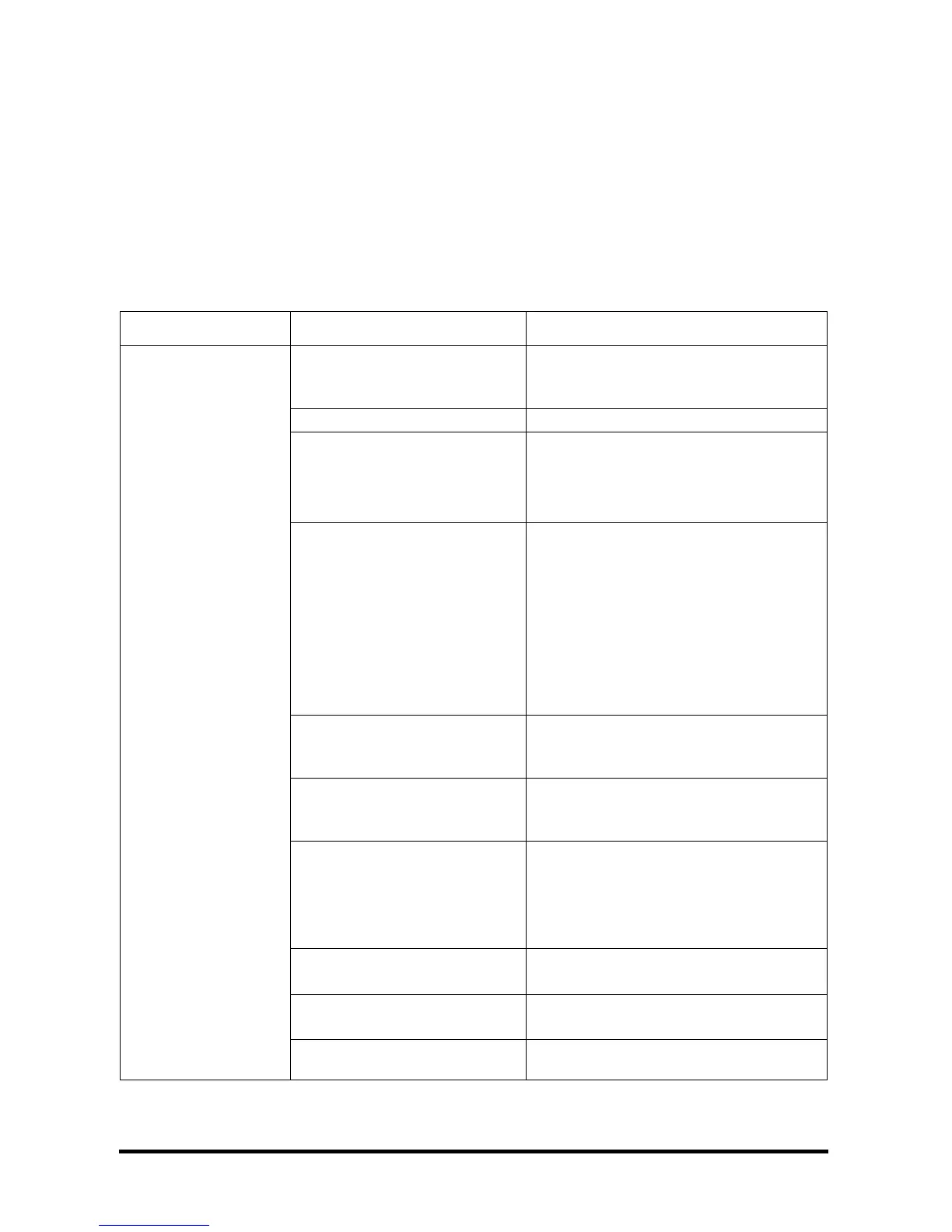
Problem Probable Cause Corrective Action
Engine Cranking
but Will Not Start
Fuel container empty Fill fuel container
z Do not exceed 80% of liquid
capacity
Liquid valve closed Slowly open liquid valve
Excess flow valve closed Reset excess flow valve
z Close liquid valve
z Wait for a “click” sound
z Slowly open liquid valve
Plugged fuel line Remove obstruction from the fuel line
z Close liquid fuel valve
z Using caution, disconnect the fuel
line (some propane may escape)
z Clear obstruction with compressed
air
z Re-connect fuel line
z Slowly open liquid fuel valve
z Leak test
Broken Fuse - SECM Replace Fuse for SECM
z See Maintenance Section, Fuses
replacement
Clogged fuel filter Repair/replace as required
z See Maintenance Section, LP Fuel
Filter replacement
Faulty vapor connection between
the pressure regulator/converter
and the mixer
Check connection
z Verify no holes in hose
z Clamps must be tight
z Look for kinked, pinched and/or
collapsed hose
Fuel Lock-off malfunction Repair/replace Fuel Lock-off
z See Engine Service Manual
Pressure regulator/converter
malfunction
Test pressure regulator/converter operation
z See Engine Service Manual
Incorrect air/fuel or ignition/spark
control
See Advanced Diagnostics



 To Next Page