DL06K Interim Tire-4 Diesel Engine Disassembly and Reassembly of Major Components
121
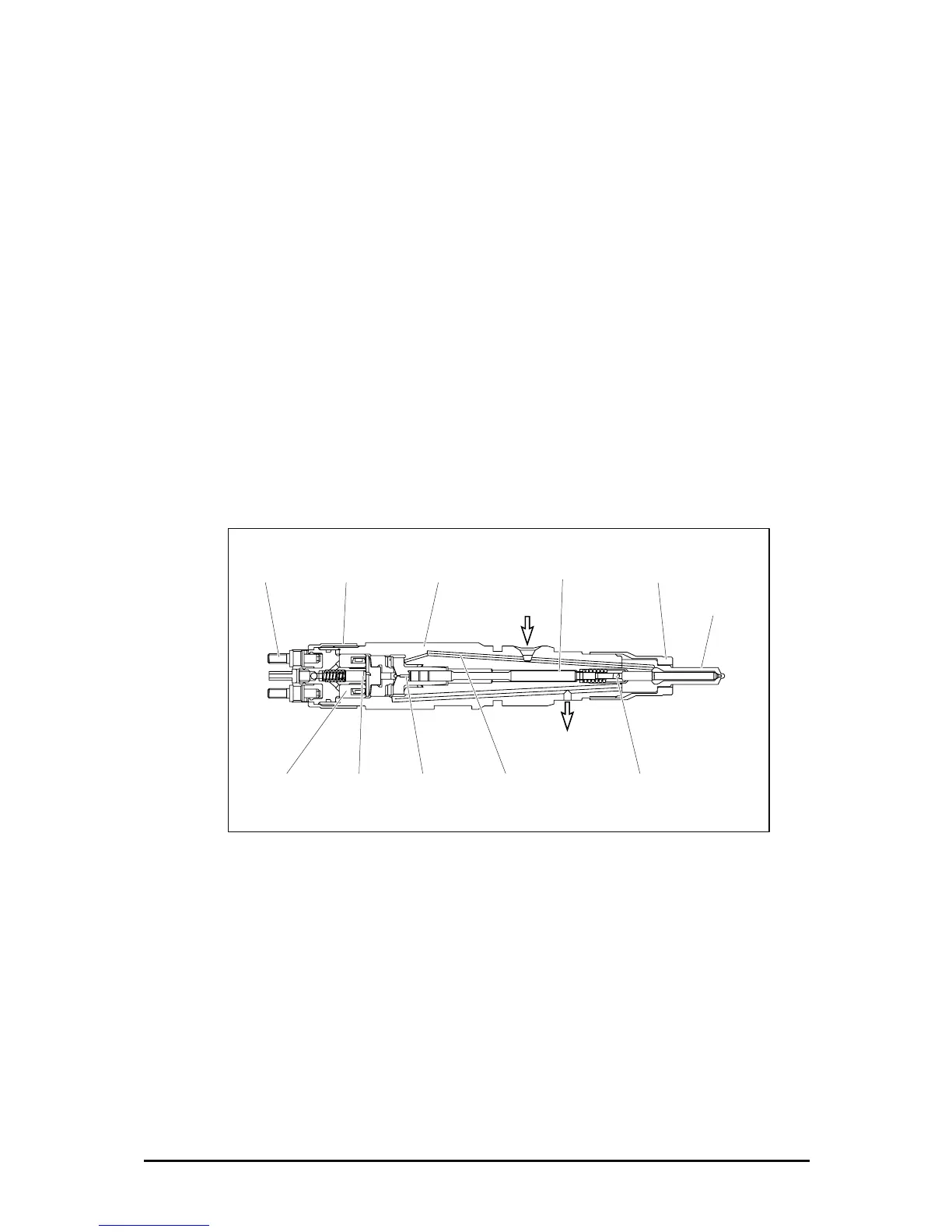
3.4.13. Injector
z The solenoid valve installed on the fuel injector adjusts the beginning of fuel
injection and injection quantity, and the fuel injector replaces the function of
existing engine's nozzle and nozzle holder. Fuel is supplied to the injector via the
high pressure connection connector installed on the cylinder head, and supplied
to the valve control chamber via the supply hole.
z The valve control chamber is opened by the solenoid valve, and connected to the
fuel return line via the outlet hole. Oil pressure force applied to the valve control
plunger while the outlet hole is closed exceeds pressure of the nozzle needle. As
a result, fuel supply to the combustion chamber is blocked by the force applied to
the contact surface of the nozzle needle.
z The outlet hole is opened when the injector solenoid valve is pulled. It drops pressure
of the control chamber, as well as oil pressure applied to the plunger. If oil pressure
becomes weaker than nozzle needle pressure, the nozzle needle will be opened. And,
fuel is injected into the combustion chamber via the injection nozzle hole.
z When controlling the nozzle needle using oil pressure, the force needed to open
the needle quickly is not directly generated by the solenoid valve. The fuel control
quantity needed to open the nozzle needle is added to the fuel amount that is actually
injected. And, used fuel exhausted trough the fuel return line via the hole of the
valve control chamber. Fuel loss occurs during control, and at the nozzle needle
and valve plunger guide. Fuel leaked during control, and fuel collected from the
line that is connected to the overflow valve, high pressure pump, and pressure
control valve return to the fuel tank via the fuel return line.
EE1OM101
Terminal Magnet nut Injector body
Fuel inlet
Nozzle retaining nut
Nozzle & needle
Magnet core Amature Control chamber High pressure bore
Fuel return
Intermediate pin
Valve control plunger



 To Next Page