DL06K Interim Tire-4 Diesel Engine Disassembly and Reassembly of Major Components
123
nozzle has now opened fully, and fuel is injected into the combustion chamber at
a pressure almost equal to that in the fuel rail. Force distribution in the injector is
similar to that during the opening phase.
(4) Injector closes (end of injection)
As soon as the solenoid valve is no longer triggered, the valve spring forces the
armature downwards and the ball closes the bleed orifice. The armature is a 2-
piece design. Here, although the armature plate is guided by a driver shoulder in
its downward movement, it can over spring” with the return spring so that it
exerts no downwards-acting forces on the armature and the ball. The closing of
the bleed orifice leads to pressure buildup in the control chamber via the input
from the feed orifice. This pressure is the same as that in the rail and exerts an
increased force on the control plunger through its end face. This force, together
with that of the spring, now exceeds the force exerted by the chamber volume
and the nozzle needle closes. The nozzle needle’s closing speed is determined
by the flow through the feed orifice. Injection ceases as soon as the nozzle
needle comes up against its bottom stop again.
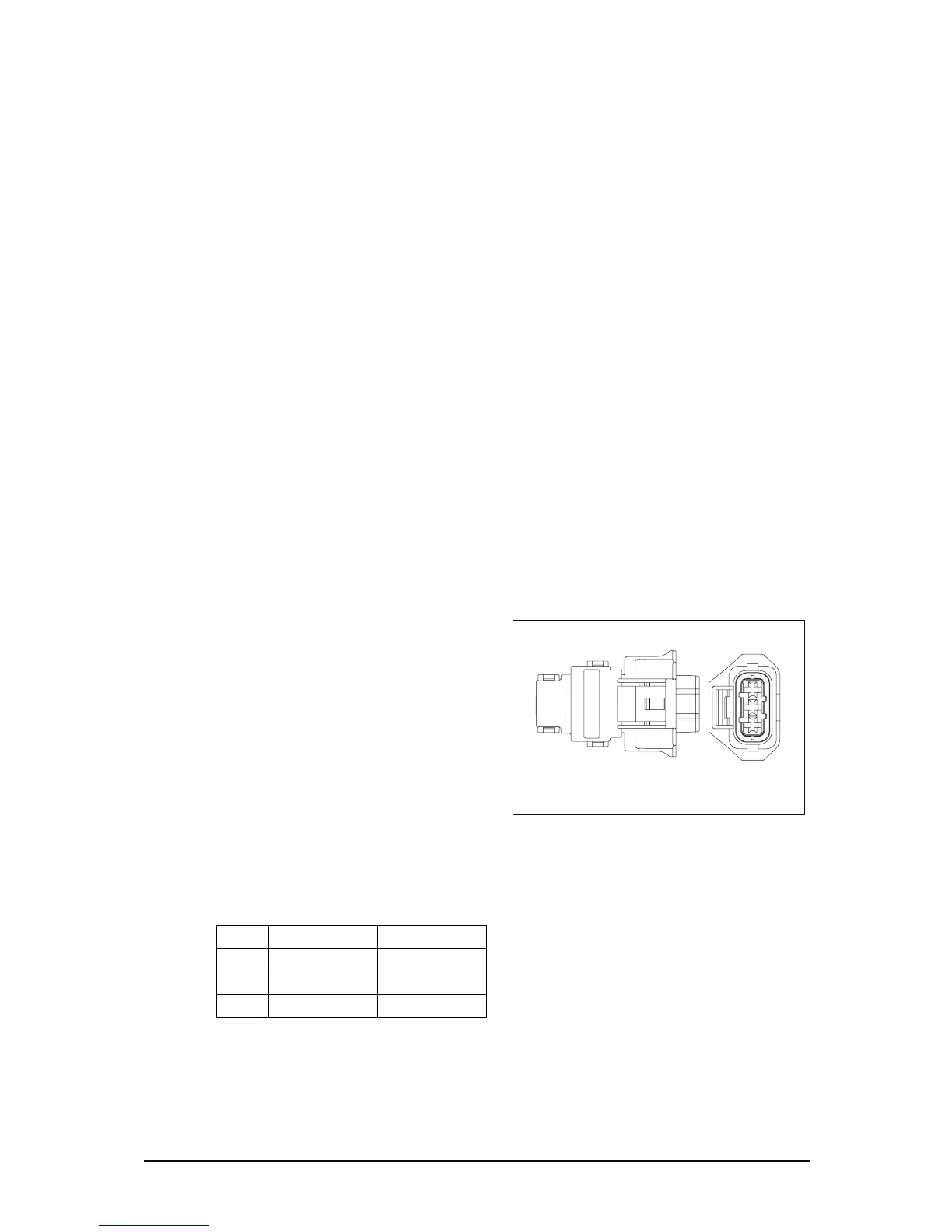
3.4.14. Crankshaft speed sensor
z The piston position in the combustion
chamber is decisive in defining the
start of injection. All the engine's
pistons are connected to the
crankshaft by connecting rods. A
sensor on the crankshaft can
therefore provide information on the
position of all the pistons. The
rotational speed defines the number of crankshaft rotations per minute. This
important input variable is calculated in the ECU using the signal from the
inductive crankshaft speed sensor.
No. ECU PIN Description
1 2.66 CRS POS
2 2.65 CRS NEG
3 2.69 Shield
EK4OM083
CRANK SHAFT SPEED SENSOR



 To Next Page