Introduction 3
New Challenges
The wider dynamic range provided by this standard also poses new
challenges in monitoring. The trend to obtain a “hotter” signal typically
involves more sophisticated processing and compression. The narrowing
gap between average level and peak level means more accurate monitoring
is necessary to obtain desired results.
Another important consideration in today’s digital recording and
broadcasting include monitoring the “crash point”, or the point of reaching
the maximum input level the system or equipment can handle.
The Dorrough Digital Level Meters have been designed to meet these needs
with unprecedented accuracy, flexibility and convenience in the Dorrough
tradition.
1.3. The Dorrough 280 and 380
The Dorrough model 280 and 380 Digital Loudness Monitors (DLMs)
provide the same basic functionality as the classic 40 series analog loudness
meter except that they accept a digital data signal and display two channels.
Horizontal or Vertical Mounting
The model 280 is designed for horizontal mounting while the model 380 is
designed for vertical mounting. Both models are offered with two scale
ranges, a standard 40 dB range (-D suffix), and an expanded 60 dB range
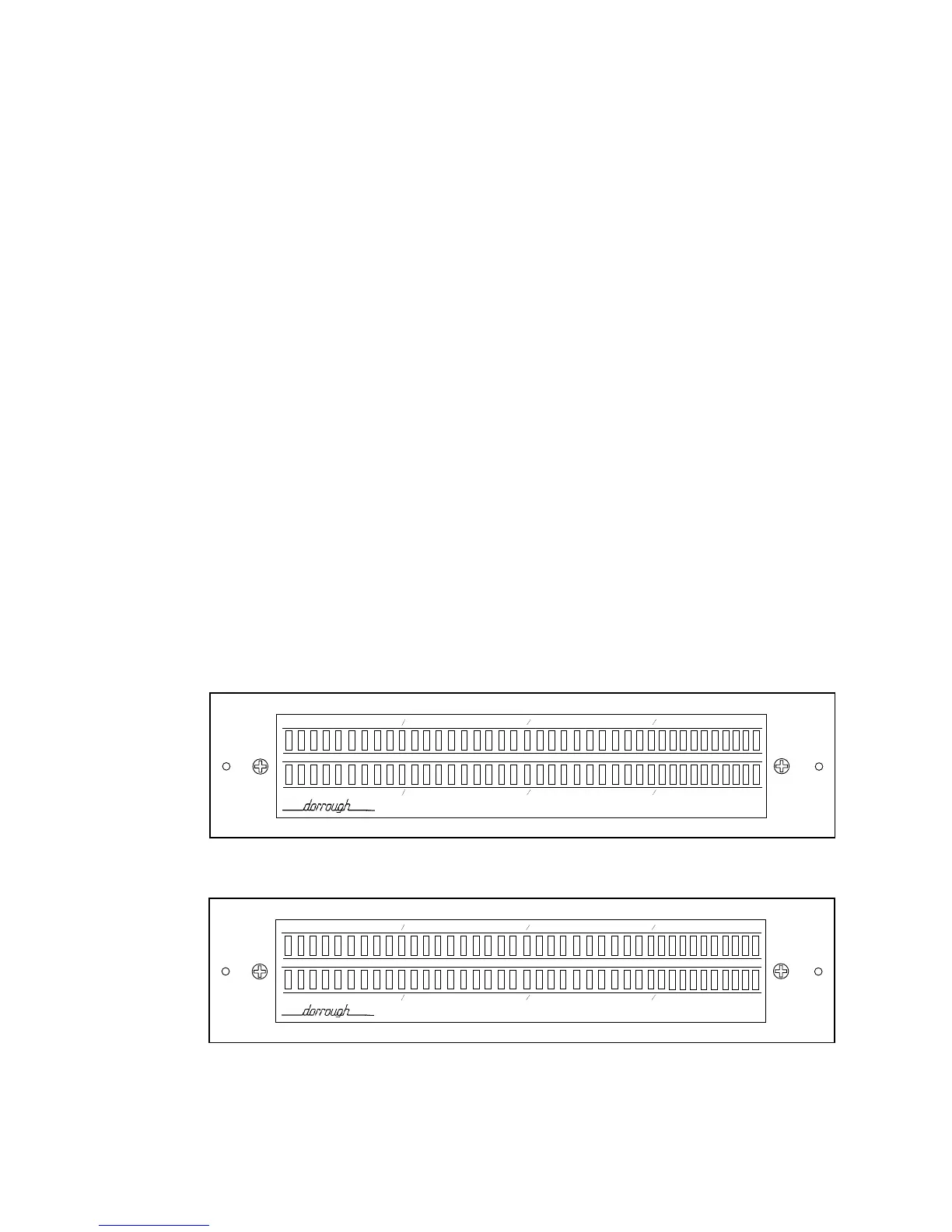
(-E suffix). Figure 1-1 illustrates the model 280 with both scale options,
while Figure 1-2 shows the model 380 with both scales.
Figure 1-1. 280 Front Vie
-57 -54 -51 -48 -45 -42 -39 -36 -33 -30 -29 -28 -27 -26 -25 -24 -23 -22 -21 -20 -19 -18 -17 -16 -15 -14 -13 -12 -11 -10 -9 -8 -7 -6 -5 -4 -3 -2 -1 0
-57 -54 -51 -48 -45 -42 -39 -36 -33 -30 -29 -28 -27 -26 -25 -24 -23 -22 -21 -20 -19 -18 -17 -16 -15 -14 -13 -12 -11 -10 -9 -8 -7 -6 -5 -4 -3 -2 -1 0
MODEL 280-E U.S.A.
-39 -38 -37 -36 -35 -34 -33 -32 -31 -30 -29 -28 -27 -26 -25 -24 -23 -22 -21 -20 -19 -18 -17 -16 -15 -14 -13 -12 -11 -10 -9 -8 -7 -6 -5 -4 -3 -2 -1 0
-39 -38 -37 -36 -35 -34 -33 -32 -31 -30 -29 -28 -27 -26 -25 -24 -23 -22 -21 -20 -19 -18 -17 -16 -15 -14 -13 -12 -11 -10 -9 -8 -7 -6 -5 -4 -3 -2 -1 0
MODEL 280-D U.S.A.
Model 280-D
Model 280-E


 To Next Page