- 11 -
It is necessary to check the safety valve each time before putting it into operation. It is checked
by manual moving of the membrane from the seat, turning the make-and-break device button
always in the direction of the arrow.
After being turned, the button must click back into
a notch. Proper function of the make-and-break device results in water draining through the
safety valve outlet pipe. In common operation, such a check needs to be implemented at least
once a month, and after each heater shutdown for more than 5 days. Water may be dripping
off the drain pipe of the safety valve; the pipe must be open into the air, pointed down;
environment temperatures must not drop below zero. When draining the heater, use the
recommended drain valve. First, close the water supply into the heater.
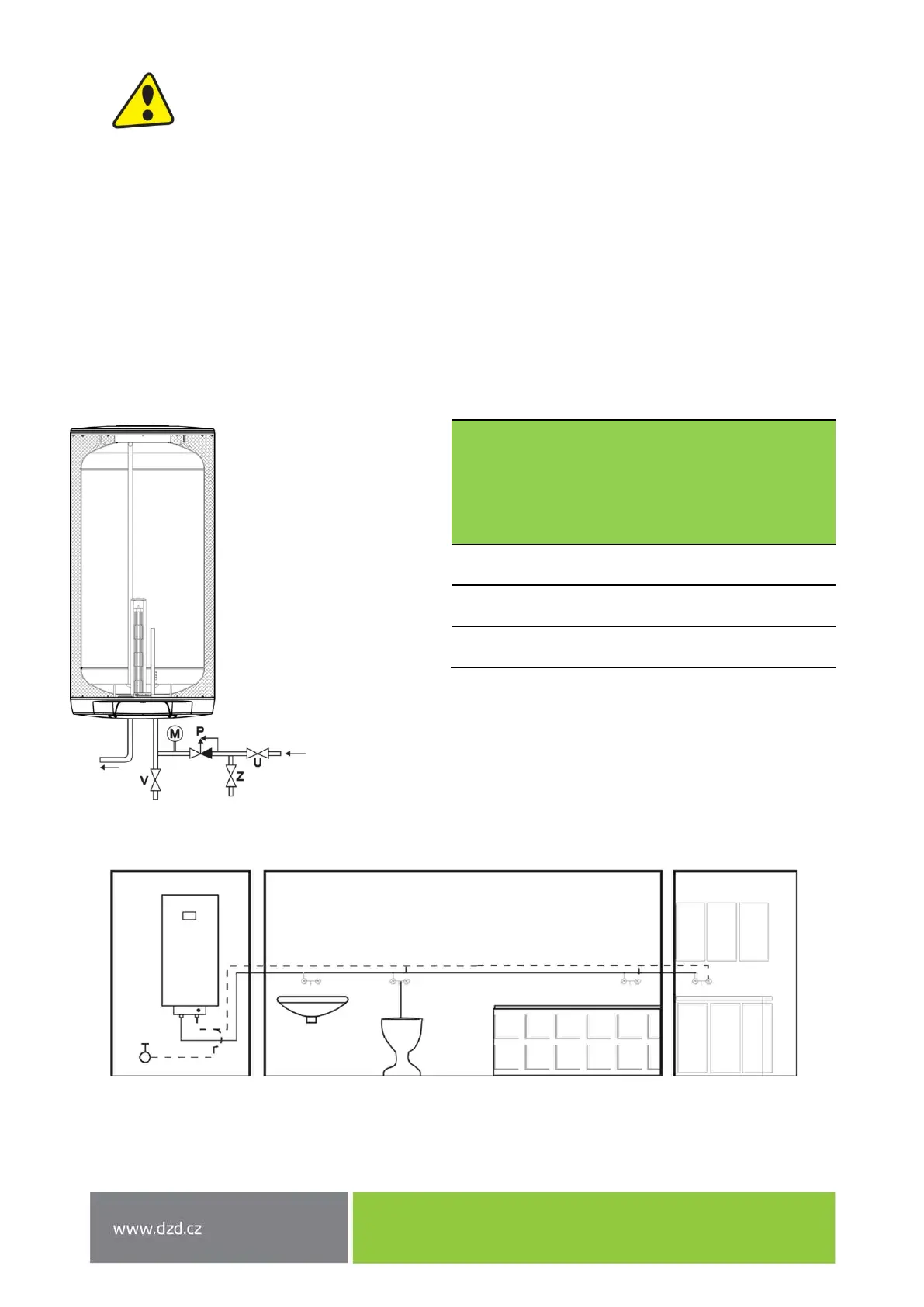
Find necessary pressure values in the below Table 4. For proper safety valve operation, a backflow valve
(
Figure 6) must be mounted on the inlet pipes, preventing spontaneous heater draining and hot water
penetrating back into the water main. We recommend that the hot water distribution from the heater was
as short as possible to minimise heat losses. At least one demountable joint must be mounted between
the tank and every supply pipe. Adequate piping and fittings with sufficiently dimensioned maximum
temperature and pressure values must be used.
Table 4
Heaters must be provided with a discharge valve
mounted on the cold service water inlet to the heater
for potential disassembly or repair. When assembling
the security equipment, follow the standard.
Figure 6
_________ Hot water
- - - - - - - - Cold water
Figure 7
SAFETY VALVE
START-UP
PRESSURE
[MPa]
OPERATING
OVERPRESSUR
E OF WATER
HEATER [MPa]
MAXIMUM
PRESSURE IN
COLD WATER
PIPES [MPa]
Water
heater
U - Closure
P - Safety valve with
backflow flap
M - Manometer
Z - Test valve
V - Drain valve



 To Next Page