4
www.DrillDoctor.com
Identifying Basic Drill Bits
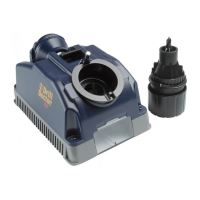
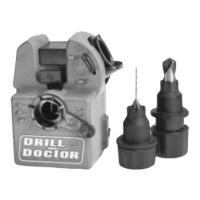
The Drill Doctor
®
is most efficient when used to sharpen a drill
bit’s original point angle. With its standard diamond sharpening
wheel it will sharpen high-speed steel, cobalt, TiN-coated,
carbide and masonry drill bits.
It has been designed and engineered to sharpen three of the
most common drill bit types:
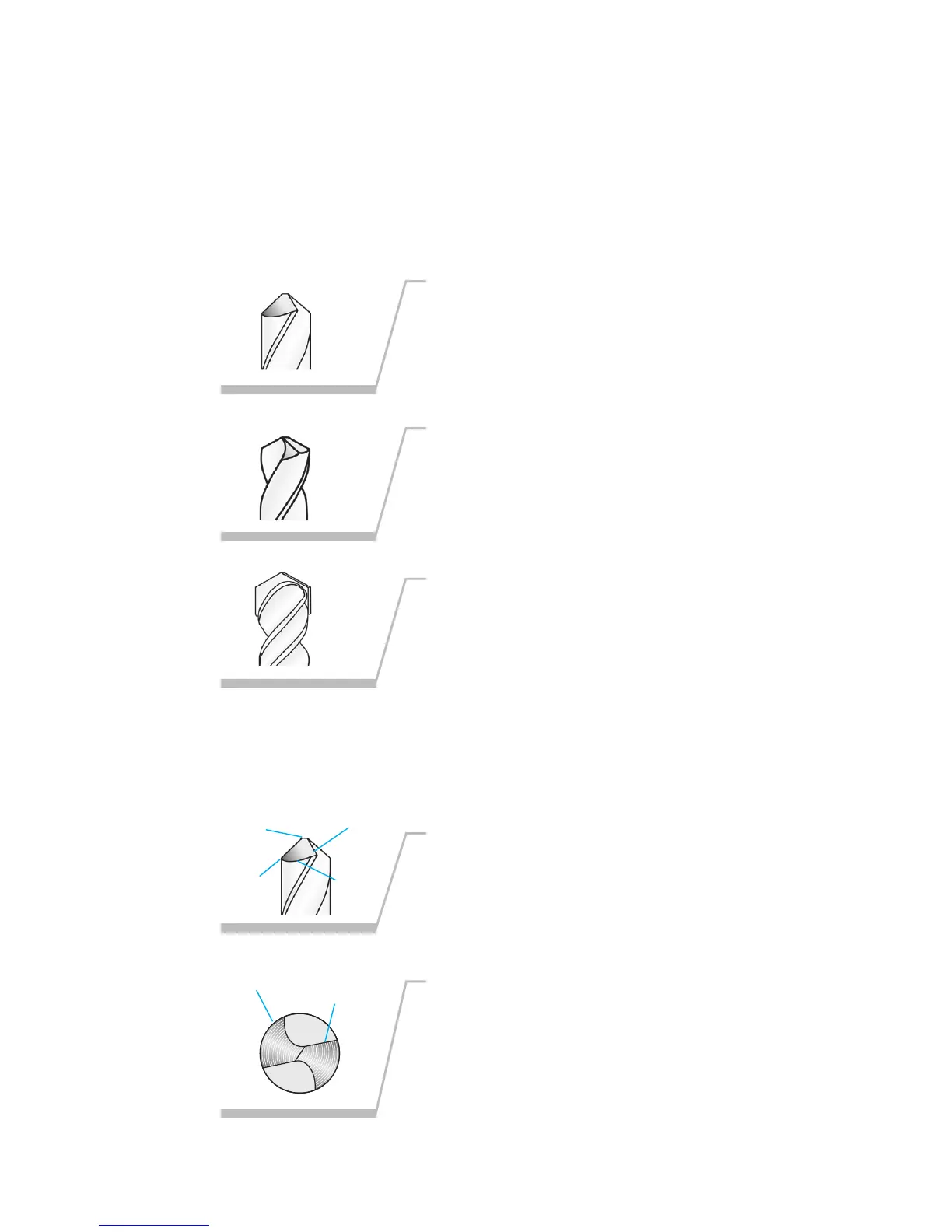
Standard Point
This general purpose point (normally
118°) is used for drilling softer
materials like cold rolled steel,
aluminum, and wood.
Masonry bits (normally 135°) have
a carbide insert at the point and are
used for drilling materials like cement,
brick, and ceramic.
Split point bits (normally 135+°)
are self-centering and are generally
used for tempered steels, hard alloys
or hard cast materials.
Anatomy of a Drill Bit
It is important to understand that
each bit has a Chisel Edge, a Cutting
Edge, a Heel, and a Relief Angle.
When viewing a well sharpened bit
from the end, the entire surface from
the Cutting Edge to the Heel will have
a finely ground surface without ridges
or indentations. The Heel will always be
lower than the Cutting Edge.
Heel
Chisel
Edge
Cutting
Edge
Heel
Cutting
Edge
Relief
Angle




 To Next Page