EasyManua.ls Logo

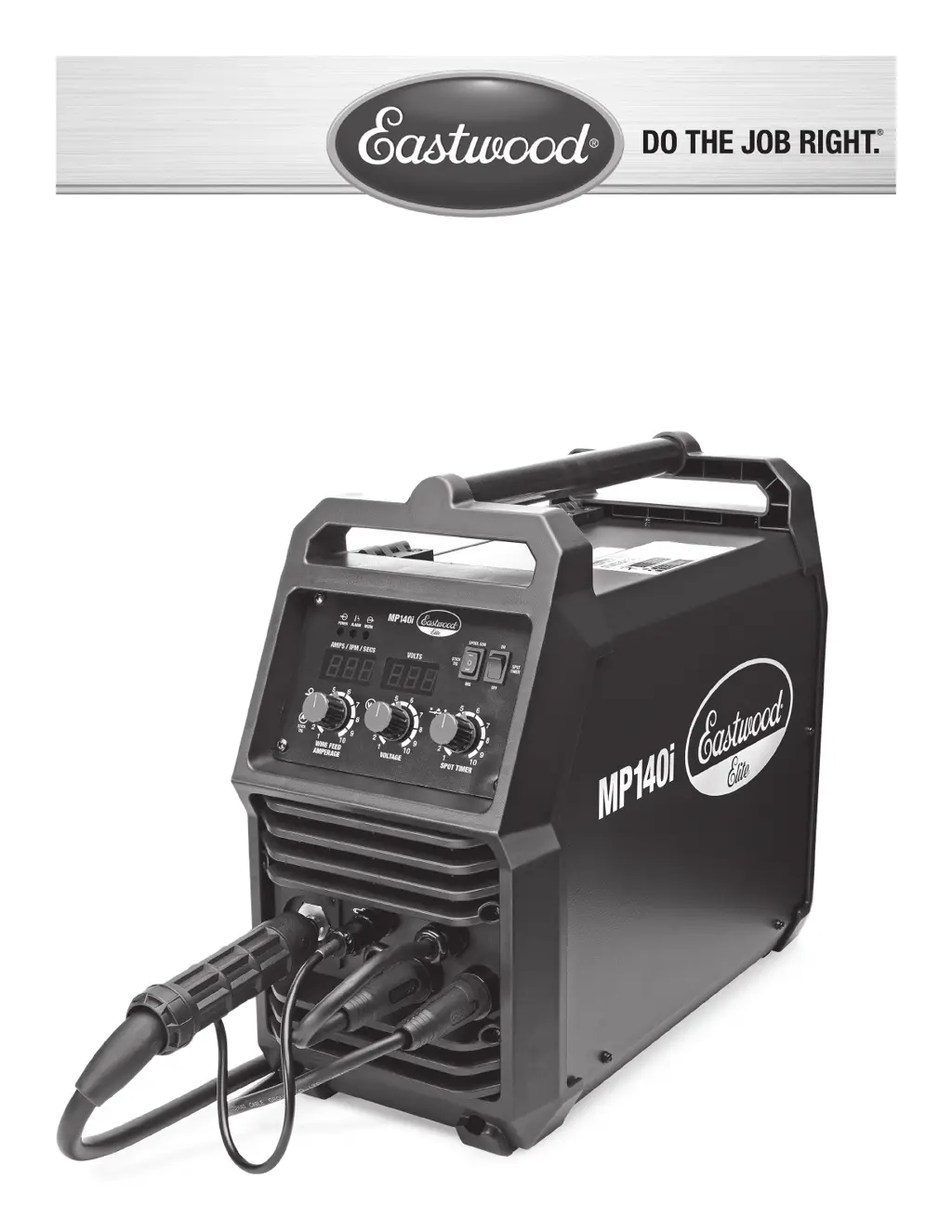
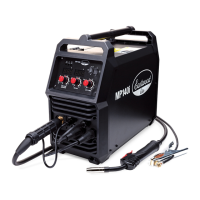
Eastwood MP140i - User Manual

Eastwood MP140i
32 pages
Print Icon
To Next Page IconTo Next Page
Loading...
MP140i WELDER
INS TRUCTIONS
Item #20559

Questions and Answers

  • G
    Gregory OlsenAug 17, 2025
    Why Eastwood MP140i Welding System arc is triggered but will not start?
    • A
      Audrey RodriguezAug 17, 2025
      An arc might be triggered but not start due to several reasons. It could be an incomplete circuit, so check the ground connection, ensuring it's on a clean surface near the welding area, and weld towards it. The issue might be the incorrect tungsten; consult the chart for the proper tungsten for your base metal (Thoriated is often used for steels). Finally, ensure your shielding gas cylinder is fully open with the correct flow rate.
  • B
    Bryan ShawAug 20, 2025
    What to do if there is porosity in the weld bead of my Eastwood Welding System?
    • K
      Kevin ArellanoAug 20, 2025
      Porosity in the weld bead can stem from several factors. First, adjust the shielding gas flow rate and inspect for loose fittings that could be leaking gas. Also, clean the filler metal to remove any oil, debris, or moisture. Ensure the base metal is clean, removing any oil, debris, coatings, or moisture. Shield the welding area from wind or fans that might blow the shielding gas away. Finally, adjust the tungsten so that 1/8” to 1/4” protrudes from the collet.
  • B
    buchananmaryAug 22, 2025
    How to fix arc wandering and difficulty concentrating heat in Eastwood MP140i?
    • E
      Ernest WilliamsAug 22, 2025
      If the arc wanders and concentrating heat is difficult, consider these points. Ensure the tungsten is correctly prepped. Adjust the shielding gas flow rate and check for gas leaks. Remove, break off any contaminated section, and resharpen the tungsten. Keep the tungsten 1/8 to 1/4 inch from the workpiece. Check the ground connection, ensuring it's clean and close to the welding area, and weld towards it. Clean the base metal to remove any oil, debris, coatings, or moisture; for aluminum, remove all oxide with a stainless brush or flap wheel.
  • T
    Thomas HurstAug 26, 2025
    How to prevent contamination in the weld bead of my Eastwood Welding System?
    • P
      Phillip DavidsonAug 26, 2025
      To prevent contamination in the weld bead, consider these steps: remove the tungsten from the torch, break off any contaminated section, and resharpen it. Clean the filler metal to remove any oil, debris, or moisture. Thoroughly clean the base metal, removing any oil, debris, coatings, or moisture; if using cold rolled steel, remove any mill scale.
  • L
    Leslie DiazAug 28, 2025
    Why is the weld bead cracking when using my Eastwood Welding System?
    • U
      usolisAug 28, 2025
      Cracking in the weld bead can be caused by: * Too much heat in the material: Reduce heat and allow more time between passes. * Base metal absorbing too much heat: Preheat the base metal (consult welding codes for specific requirements). * Incorrect filler wire: Use appropriate filler wire type and diameter for the joint being welded.
  • X
    xavier88Aug 31, 2025
    Why is the tungsten melting in my Eastwood Welding System?
    • J
      Justin RodriguezAug 31, 2025
      Tungsten melting can occur due to several reasons. It may be due to poor gas flow; adjust the shielding gas flow rate and check for loose fittings. The tungsten might be the wrong size; increase the tungsten diameter, referring to the chart for proper sizing. Finally, ensure you are using the correct shielding gas; use only 100% Argon when TIG welding.
  • K
    kimberly19Sep 2, 2025
    How to prevent material warping with Eastwood MP140i Welding System?
    • B
      Brenda WilliamsSep 2, 2025
      To prevent material warping: 1. Clamp the workpiece tightly and weld while clamps are in place. 2. Add more tack welds until rigidity and stiffness is developed. 3. Reduce heat by spreading the welding out around the area using stitch welding, alternating sides, and/or allowing the pieces to cool between passes.
  • M
    Marcus LoganSep 5, 2025
    What causes a crater at the end of the weld bead with Eastwood MP140i?
    • D
      dbrownSep 5, 2025
      A crater at the end of the weld bead can be due to insufficient shielding. Keep the torch on the base metal while the post-flow shielding gas flows to protect and cool the metal and tungsten. It may also be caused by not enough filler material. Reduce current and add more filler at the end of the weld, and consider back-stepping to prevent crater formation.
  • Z
    zrodriguezSep 8, 2025
    What to do if the tungsten is contaminated in Eastwood MP140i?
    • J
      Jeffrey RollinsSep 8, 2025
      If the tungsten is contaminated due to contact with the base metal, keep the tungsten 1/8 to 1/4” from the base metal. If contact occurs, break off the end and resharpen it immediately.
  • M
    misty11Sep 12, 2025
    What causes poor weld appearance in Eastwood Welding System?
    • E
      Eric WattsSep 12, 2025
      Poor weld appearance can result from incorrect positioning. The angle between the filler metal and the torch must be less than 90 degrees; otherwise, the filler metal will prematurely melt and glob off, causing a poor weld appearance.

Summary

Eastwood MP140 i Welder Instruction Manual

Eastwood MP140 i Limited Warranty Information

Warranty Coverage and Periods

Details warranty duration for various Eastwood products, including the MP140i welder.

Eastwood MP140 i Technical Specifications

Understanding Welder Duty Cycle

Explains the duty cycle of the Eastwood MP140i welder and its implications for usage.

Critical Safety Precautions for MP140 i

Key Hazards: Shock, Fire, and Health Risks

Details dangers of electric shock, fire, explosion, and health hazards associated with welding operations.

Eastwood MP140 i Control Panel Overview

Understanding Controls and Displays

Explanation of the welder's function controls, digital displays, and LED indicators.

MIG Welding Setup and Operation

Setting Up for MIG Welding

Instructions for connecting the welder and preparing it for MIG welding procedures.

Stick Welding Setup and Operation

Setting Up for Stick Welding

Instructions for setting up the welder and connecting components for Stick welding.

TIG Welding Setup Procedures

TIG Shielding Gas and Torch Setup

Procedure for connecting shielding gas and assembling the TIG torch.

Spool Gun Welding Setup

Connecting the Spool Gun

Steps for connecting the optional Spool Gun to the MP140i welder for aluminum welding.

Troubleshooting Welding Issues

Common Stick and MIG Welding Problems

Solutions for common issues encountered during Stick and MIG welding, such as porosity and penetration.

Common TIG Welding Problems

Diagnoses and corrects common TIG welding problems including arc start, contamination, and weld appearance.

Optional Accessories and Consumables

Eastwood MP140i Specifications

General IconGeneral
Input Voltage120V
Output Amperage140A
Duty Cycle20% at 90A
Amperage Range30-140A
Output Current Range30-140A
Welding ProcessesMIG, Stick

Related product manuals