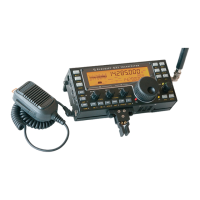
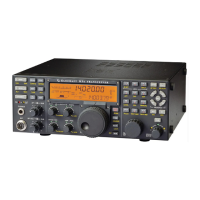
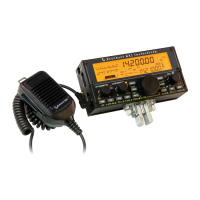
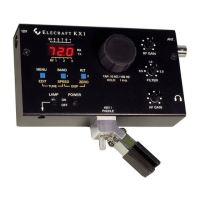
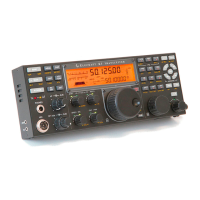
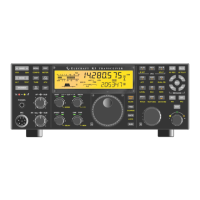
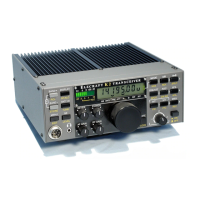
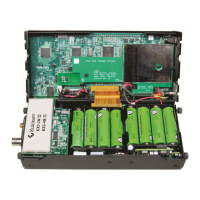
with the same display, knobs, and switches as the K4 itself, in an enclosure
just 4" deep.
When operating a distant K4, small network transport delays may come into
play. These vary depending on the quality of the connection and the distance
to the server radio. For example, you may perceive a tiny lag in response to
VFO movement. When using a keyer paddle in CW mode, the receive audio
stream you hear while keying, including audio due to QSK, will be slightly
delayed, but sidetone is not, as it is generated at the client. Network delays
can be tailored, in real time, to improve QSK performance by adjusting the
client-side "RX Audio Latency" (e.g. buffer size). You can also select between
TCP and UDP client protocol as discussed later in this section.
The steps needed to set up your K4 as a server or client are detailed below. In
the server case, you'll also need to configure your router for port forwarding.
Router Setup (at Server K4 Location Only)
To make your K4 accessible as a server radio, you'll need to set up your
router for port forwarding. Port number 9204 is used by the K4 to exchange
data (commands, audio, and panadapter streams) with clients. If you plan to
operate only as a client, see K4 Client Settings.
IMPORTANT ROUTER INFORMATION: Some routers may not allow port
forwarding, typically due to device IP address sharing via CGNAT. We
encourage K4 users to share information on workarounds, such as VPNs,
which are beyond the scope of this document. We will collect information on
some commonly used routers in a document on our K4 manuals page.
Generic Port-Forwarding Instructions: (1) Consult the router setup
documentation provided by either your Internet Service Provider (ISP) or by
the router's manufacturer. (2) To change settings, use the ISP's configuration
app, if applicable, or enter the router's IP address into a web browser
(typically 10.0.0.1 or 192.168.1.1). (3) Configure both TCP and UDP port
forwarding to the K4's IP address, at port 9204. Consult the K4's menu entry
if necessary to obtain the radio's IP address.
88


 To Next Page