This document serves as a Use & Care Guide for an Electrolux Gas Cooktop, providing essential information for its safe operation, maintenance, and troubleshooting.
Function Description
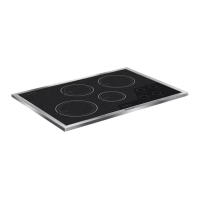
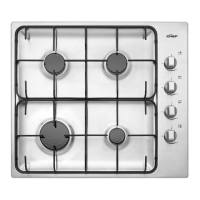
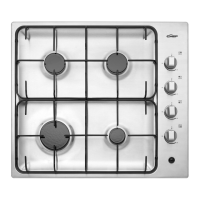
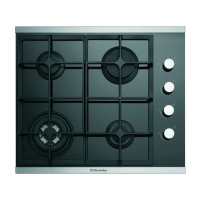
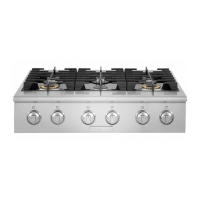
The Electrolux Gas Cooktop is designed for surface cooking using natural gas or propane gas. It features multiple sealed burners of varying BTU outputs, allowing for diverse cooking needs from simmering delicate sauces to boiling large quantities of liquid. The cooktop is equipped with 270° rotation flame control valves for enhanced flame adjustment. Each burner lights automatically via an electric ignitor when its control knob is turned to the LITE position. In the event of an electrical power outage, the surface burners can be lit manually using a lit match.
Usage Features
The cooktop offers several features to enhance the cooking experience:
- Burner Variety: The 30" cooktop includes a 5,000 BTU burner (right rear), a 14,000 BTU burner (left rear), and two 18,000 BTU burners (left front and right front). The 36" cooktop expands on this with a 5,000 BTU burner (center rear), a 9,500 BTU burner (right rear), two 14,000 BTU burners (left rear and center front), and two 18,000 BTU burners (left front and right front). This range of burner sizes accommodates different pan sizes and cooking requirements.
- Flame Control: The control knobs allow users to adjust the flame size from high (for starting most foods, boiling water, pan broiling) to medium (for slow boils, thickening sauces, steaming) to low (for keeping foods warm, poaching, stewing). It is crucial to adjust the flame so it does not extend beyond the edge of the utensil to prevent burns and improve efficiency.
- Specialty Accessories:
- Griddle: The cooktop comes with a griddle that can be used on both sides (one with grooves, one flat) for direct food cooking. It is placed on top of the burner grate, with notches aligning over the grate fingers. Users are cautioned not to use other cookware on the griddle to avoid damaging its finish.
- Wok Stand: A wok stand is provided to accommodate round-bottomed woks, ideally those with a 14-inch diameter or less. It is recommended to use the right front POWER burner with the wok stand for optimal performance. The wok stand is positioned on top of the grate, with its notches aligning over the grate fingers, ensuring stability. Flat-bottom woks can be used directly on the grates without the wok stand, provided they are stable. Round-bottom woks with a support ring are explicitly not recommended for use on the surface burner grates.
- Simmer Plate: The simmer plate is designed to diffuse lower burner temperatures, ideal for cooking delicate foods like chocolate, milk, or béchamel, or for long-period sauce cooking. It is placed on top of the burner grate, with its notches aligning over the grate fingers, and the utensil is then placed on the simmer plate.
- Utensil Guidelines: The guide emphasizes using flat-bottomed pans with straight sides, tight-fitting lids, and well-balanced handles that do not tilt the pan. Pan sizes should match the amount of food and burner size. Handles should be turned inward and not extend over adjacent burners to prevent burns and spills.
- Safety Precautions: The manual highlights numerous safety instructions, including never leaving children unattended near the cooktop, avoiding touching hot surfaces, wearing proper apparel, and not using water or flour on grease fires. It also warns against storing flammable materials on or near the cooktop and heating unopened food containers. Proper installation and grounding by a qualified technician are stressed.
Maintenance Features
Maintaining the Electrolux Gas Cooktop involves regular cleaning of its various components to ensure optimal performance and longevity:
- General Cleaning:
- Painted and Plastic Control Knobs: Clean with hot, soapy water and a cloth. For stubborn grease, apply liquid detergent, let it sit, then rinse and dry. Abrasive cleaners should be avoided.
- Glass Surface: Turn all controls to OFF before cleaning. The ceramic glass cooktop requires specific cleaning methods.
- Porcelain Enamel (Burner Grates, Burner Caps, Griddle, Simmer Plate, Wok Stand): Burner grates are dishwasher safe. For other porcelain enamel parts, gentle scouring with a soapy scouring pad is effective. A 1:1 solution of clean water and ammonia can be used for difficult spots, followed by scrubbing with a soap-filled scouring pad. Spray oven cleaners should not be used.
- Stainless Steel (Control Panel, Decorative Trim): Clean with hot, soapy water and a dishcloth. Rinse with clean water and dry. Cleaners with high concentrations of chlorides or chlorines, and harsh scrubbing cleaners, should be avoided. Rinse cleaners thoroughly to prevent bluish stains during heating.
- Burner-Specific Cleaning:
- Surface Burners and Burner Heads: The holes in the burner heads must be kept clean for proper ignition and flame. Routinely clean with a small gauge wire or needle, especially after spills.
- Burner Grates, Burner Caps, and Burner Heads: These parts should be completely cooled before removal for cleaning.
- Burner Grates: Dishwasher safe; remove excessive soils before placing in the dishwasher.
- Burner Caps: Lift off the burner heads. Clean heavy soils with an absorbent cloth, rinse with a damp cloth, and thoroughly dry, including the bottom and inside. Do not use harsh abrasive cleaners or clean in the dishwasher. Ensure caps are firmly seated on burner heads after cleaning to prevent improper flame.
- Burner Heads: These are secured to the cooktop and must be cleaned in place. Use a damp cloth to soak up spills. Remove food from between burner slots with a small non-abrasive brush (like a toothbrush) and wipe with a damp cloth. For stubborn soils in the slots, use a small-gauge wire or needle. If ignition problems occur, clear ignition port holes with a small wire gauge needle or paper clip.
- Ceramic Glass Cooktop Cleaning:
- Initial Use: Before first use, apply the recommended Cleaning Creme to the ceramic surface, buff with a paper towel. This creates a protective finish, making future cleaning easier and preventing scratches.
- Metal Marks: Marks from sliding aluminum or copper clad bottom pans should be removed immediately after the cooktop cools using cleaning cream to prevent them from becoming permanent.
- Rough Bottom Cookware: Avoid sliding cookware with rough bottoms (cast iron, metal, ceramic, glass) to prevent marks or scratches.
- Light to Moderate Soil: Apply a few drops of Cleaning Creme, clean with a paper towel, and ensure no residue is left.
- Heavy, Burned-on Soil: After initial cleaning, if soils remain, use a metal razor blade scraper (held at a 30-degree angle) to scrape soils, then remove loosened soils with cleaning cream and buff clean.
- Plastic or High Sugar Content Spills: These must be removed immediately from the hot surface using a razor blade scraper or metal spatula to prevent permanent damage (pitting).
- Avoid: Abrasive cleaners, scouring pads (metal or nylon), harsh cleaners (chlorine bleach, ammonia, oven cleaners), and dirty sponges/cloths/paper towels should not be used on the ceramic glass cooktop.
- Aluminum Foil and Utensils: Do not use aluminum foil on the cooktop. Exercise care with aluminum pots/pans; if allowed to boil dry, they may fuse to or damage the cooktop surface.
- Troubleshooting: The guide includes a section on common problems and their solutions, such as burners not lighting, flame lighting only halfway, or orange flames, often pointing to cleaning needs or proper knob operation.

 Need help?
 General

 To Next Page
