EasyManua.ls Logo

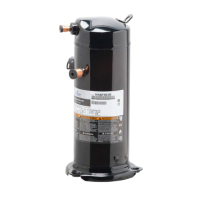
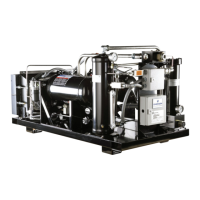
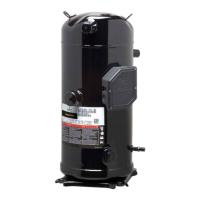
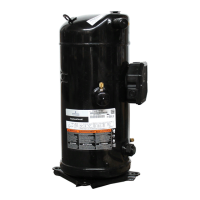
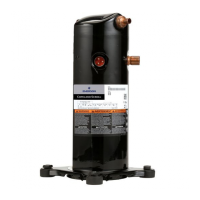
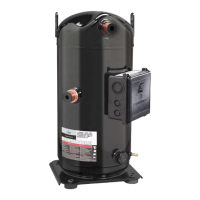
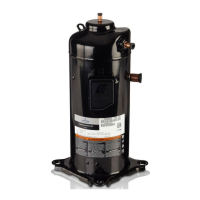
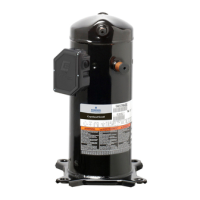
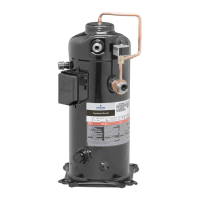
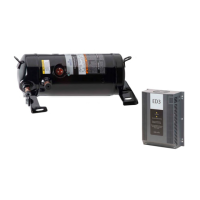
Emerson Copeland Scroll YBVH021 1U-3E9 - User Manual

Emerson Copeland Scroll YBVH021 1U-3E9
41 pages
Print Icon
To Next Page IconTo Next Page
Loading...
Copeland Scroll
Variable Speed
Horizontal Refrigeration Compressors
for R290 Applications
Application Guidelines

Table of Contents

Questions and Answers

  • N
    Norman AndersonAug 12, 2025
    What to do if my Emerson Air Compressor does not run and I hear a buzz sound?
    • M
      masonwilliamsonAug 13, 2025
      If your Emerson Air Compressor is buzzing but not running, the issue could stem from several causes. First, check the power supply at the compressor terminals to ensure voltage is present and trace the wiring. Low voltage (below 90% of the nameplate voltage) can also cause this; ensure the compressor receives the rated voltage. For single-phase motors, a defective capacitor or relay might be the culprit, so test these components. Also, check for shorted or grounded motor windings by performing a continuity check; replace the compressor if grounding is detected. Internal mechanical damage can also cause this issue. A crankcase heater and a pump-down cycle can protect against refrigerant migration. If acid is present, change the oil and install a suction filter.
  • R
    rojasteresaAug 16, 2025
    Why does my Emerson Air Compressor run continuously?
    • C
      Christopher FloresAug 16, 2025
      If your Emerson Air Compressor is running non-stop, it could be due to an excessive cooling or heating load, or inadequate insulation. Verify the load design and ensure proper insulation is in place. Alternatively, the control circuit may be inoperative. Check the thermostat by measuring the room temperature and comparing it to the thermostat setting; replace or recalibrate the thermostat as needed.
  • A
    Amy TaylorAug 20, 2025
    What to do if my Emerson Air Compressor does not run and there is no buzz sound?
    • L
      Leslie SmithAug 20, 2025
      If your Emerson Air Compressor isn't running and there's no buzzing sound, start by checking the system control components to ensure the pressure control or thermostat is working properly and not open. Then, inspect the power circuit for a tripped circuit breaker, an open fuse, or a disconnected switch. A burned motor winding could also be the issue, possibly due to undersized contactors with welded contacts. High discharge or suction pressure can also prevent the compressor from running. Check for system leaks, verify the system design, and ensure the discharge line is correctly sized. Also, check the fan motor for proper function and direction, and clean the condenser if it's clogged with dirt.
  • Z
    zpayneAug 25, 2025
    Why is the discharge temperature of my Emerson Air Compressor excessive?
    • D
      doughertytaraAug 25, 2025
      Excessive discharge temperature in your Emerson Air Compressor can be caused by insufficient cooling medium injected. For compressors using vapor injection, ensure the expansion valve is connected between 150 mm and 200 mm from the economizer inlet and at a position not lower than the inlet connection. Also, it could be due to the compressor operating with too high superheat. Ensure the compressor operates within the acceptable superheat range.
  • S
    Susan BrownAug 27, 2025
    Why does my Emerson Air Compressor trip on motor protection?
    • L
      Laura CollinsAug 28, 2025
      Your Emerson Air Compressor might be tripping due to the compressor operating outside its design limits. Check the suction and discharge pressures while the compressor is running to ensure they are within the specified operating envelope.
  • B
    benjamin08Aug 31, 2025
    Why is the discharge pressure of my Emerson Air Compressor low?
    • S
      sabrinariosSep 1, 2025
      Low discharge pressure in your Emerson Air Compressor can be attributed to low ambient temperature; consider fitting a fan cycling control system. Another cause could be a refrigerant undercharge. Inspect the system for leaks, observe the sight glass for bubbles, and add refrigerant until the sight glass is clear.
  • P
    Patricia SanchezSep 4, 2025
    Why is the suction pressure of my Emerson Air Compressor low?
    • R
      Ryan WilliamsSep 4, 2025
      Low suction pressure in your Emerson Air Compressor can occur if the system design load is too small. If the compressor is running in tandem or parallel, modulate the running process. It can also be caused by inadequate refrigerant flow to the evaporator. Check the selection of the expansion valve, as it may be undersized.
  • S
    Shane PerezSep 8, 2025
    What causes lubrication problems in Emerson Air Compressor?
    • J
      John SnyderSep 8, 2025
      Lubrication problems in your Emerson Air Compressor can stem from several issues. An oil trap may have formed due to incorrect piping layout or sizing. Check the piping layout design, as routing pipes over or around obstacles can create unwanted oil traps. Also, high cycling rates can pump out oil. Try to limit the number of cycles to a maximum of 10 per hour.

Summary

Safety Instructions

Product Description

Compressor Oil Filling and Level Guidelines

Details factory oil fill, acceptable oil levels, and visual indicators for YBVH* compressors.

Oil Return Test Procedure

Outlines the procedure for testing oil return behavior and levels in compressors.

Operating Envelope and Application Limits

Defines the operating envelope and limits for YBVH* compressors.

Installation Procedures

Compressor Brazing Procedure

Step-by-step instructions for brazing compressor connections safely.

Electrical Connection Guidelines

Electrical Installation Safety

Safety considerations for electrical installation of system components.

Terminal Connection Safety and Best Practices

Safety warnings and best practices for making terminal connections.

Molded Plug Cable Connection

Safety and procedural information for connecting molded plug cables.

Wiring Diagrams

Provides wiring diagrams for single-phase and three-phase drive configurations.

Pressure Safety Control Requirements

Requirements for high-pressure cut-out controls and their connection.

Low Pressure Protection Requirement

Requirement to fit low-pressure protection in the suction line.

Discharge Gas Temperature Protection

Importance and requirement for external discharge gas temperature protection.

Consequences of Excessive Discharge Gas Temperatures

Explains consequences of high discharge gas temperatures on oil and compressor.

Discharge Gas Temperature Sensor Installation

Details NTC-sensor installation for discharge gas temperature monitoring.

Start-Up and Operation Procedures

System Evacuation Procedure

Steps for evacuating the system to remove moisture and air.

Pre-Starting System Checks

Checklist for pre-starting system checks, including atmosphere and wiring.

System Charging Procedure

Procedures for charging the system with refrigerant, including safety.

Maintenance and Repair Procedures

Refrigerant Exchange Safety and Procedures

Safety warnings and procedures for exchanging refrigerant.

Compressor Replacement Procedures

Procedures and precautions for replacing a compressor.

R290 Compressor Replacement Steps

Specific steps for replacing an R290 compressor, including oil draining.

New;Replacement Compressor Start-Up

Guidelines for starting up a new or replacement compressor.

Lubrication, Oil Properties, and Disposal

Information on lubrication, oil properties, and proper oil disposal.

Emerson Copeland Scroll YBVH021 1U-3E9 Specifications

General IconGeneral
ModelYBVH021 1U-3E9
TypeScroll
BrandEmerson Copeland
RefrigerantR410A
Voltage208-230V
Phase1
Frequency60 Hz
Cooling Capacity21000 BTU/H
Oil TypePOE

Related product manuals