9
Operating Environment
Charging Temperature 0˚C~40˚C / 32˚F~104˚F
Discharging Temperature -20˚C~65˚C / -4˚F~149˚F
Suggested Storage Temperature -20˚C~20˚C / -4˚F~68˚F
Operating Humidity Range 10%RH~90%RH
Suggested Storage Humidity ≤70%RH
Suggested Storage Capacity
45%~50% (ex-factory capacity is ap-
proximately 50%)
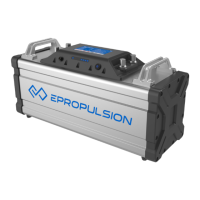
NAVY Charger
Rated input Voltage 90~264 V AC
Input Frequency 50 Hz / 60 Hz
Maximum Input Current 10 A
Output Power 1474 W
Temperature Range
Operation: -10˚C~40˚C / 14˚F~104˚F
Storage: -40˚C~70˚C / -40˚F~158˚F
Maximum Output Voltage 54.6 V DC
Maximum Output Current 27 A
Cutoff Current 1.35 A
Efciency >92%
Before storage, make sure the battery level is around 50%.
Battery lifespan will be shortened if it works in extreme temperature
range (such as below 0˚C or above 50˚C).
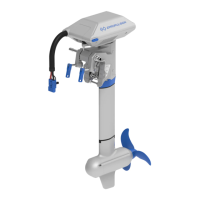
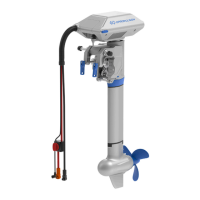
As the maximum discharging power of NAVY Battery is 3000W, so
when used with NAVY 6.0 outboard motors, it’s suggested to connect
two NAVY Batteries in parallel to provide 6000W of output power.
Charging Over-Temperature Protection ≥55˚C
Discharging Over-Temperature Protection ≥65˚C
Charging Low-Temperature Protection ≤0˚C
Discharging Low-Temperature Protection ≤-20˚C


 To Next Page