Need help?
Do you have a question about the Escene ES206 and is the answer not in the manual?
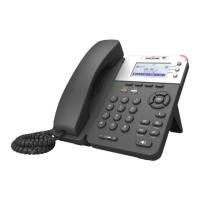
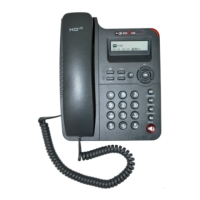
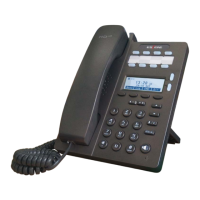
Provides an overview of the ESCENE ES206 IP phone, highlighting its features and design.
Lists key features like Multi-Language, HD Voice, Senior Calling Ability, and Phone Book support.
Details the components included in the phone's package for installation.
Guides users on installing the phone, attaching brackets, and connecting components.
Explains the functions and details of each hardware component of the IP phone.
Describes the information displayed on the phone's LCD screen, including time, date, line status, and icons.
Provides instructions on how to place calls using the handset, speakerphone, or headset.
Explains how to enable the anonymous call feature to hide caller identity.
Describes how to redial the last placed call using the REDIAL button or navigation.
Explains how to view call history, including missed, received, and dialed calls.
Details how to dial contacts from the Personal, Enterprise, LDAP, or Black List phone books.
Explains how to answer calls on multiple lines when the line button is flashing.
Guides on setting up the phone to auto-answer incoming calls for device modes like Speaker, Handset, or Headset.
Describes methods to end a call, such as hanging up or using the End soft key.
Explains how to put calls on hold, resume them, and switch between different calling lines.
Details how to transfer calls, including consult transfers and blind transfers.
Explains how to enable and disable the mute function during a call.
Guides on using the DND feature to block incoming calls globally or on a single line.
Explains how to set up and manage three-way conference calls.
Details how to access and use the voice mail function through the phone's menu.
How to search and call contacts from the Enterprise Phone Book.
Managing contacts, groups, and lists within the Personal Phone Book.
Configuring and using the LDAP directory for contacts, including filters and attributes.
Adding and managing contacts in the Black List to block calls.
Instructions for viewing, deleting, and saving call records from the phone's log.
Explains the Peer-to-Peer mode for calling without a SIP server.
Guides on switching the phone's display language between Chinese and English.
Explains how to create and check messages, including voice and text messages.
Details how to set the phone's time and date using SNTP or manual settings.
Describes how to set ring tones and adjust volumes for handset, speaker, and headset.
Explains how to configure and use Accurate Search and T9 Search for the phone book.
Overview of the web interface's main screen, showing system status and information.
Configuration options for the LAN port, including DHCP, Static IP, and PPPoE.
Configuration for port management, proxy servers, and paging settings.
Settings for the PC port, including Bridge and Router modes.
Configuration for VPN connections like L2TP and SSL_VPN.
Configuration for Virtual LAN settings on LAN and PC ports.
Basic configuration parameters for SIP accounts, including username, password, and server settings.
Settings related to call features like Do Not Disturb, Anonymous Call, and session timers.
Configuration for SIP and RTP encryption, and encryption algorithms.
Basic phone settings such as backlight, keyboard lock, hot line, and auto answer.
How to configure time and date settings using SNTP or manual settings.
Various call-related settings, including pickup, message, voicemail, DND, and transfer codes.
Configuration options for call forwarding based on Always, If Busy, or If No Answer.
Settings for Quality of Service (QoS) for SIP and Voice traffic.
Basic audio settings like volumes and country dial tone selection.
Advanced settings for ring types, audio codecs, and jitter buffer.
Customizing function keys for operations like Redial, DND, Call Forward, and Menu access.
Customizing soft keys displayed on the LCD for various actions like Send, Delete, and End.
Adding, editing, and deleting groups for organizing contacts in the phone book.
Managing individual contacts, including adding, editing, deleting, and moving to the ban list.
Configuring and using the LDAP directory for contacts, including filters and attributes.
Adding and managing contacts in the ban list to block unwanted calls.
Basic maintenance operations, with a note on not cutting power during upgrades.
How to upgrade software, kernel, and configuration files using HTTP.
Procedures for upgrading software, kernel, and configuration files via FTP.
Steps for upgrading software, kernel, and configuration files using TFTP.
How to restore the phone to its factory default settings.
Instructions on how to reboot the phone.
Setting up and sending logs for debugging and troubleshooting purposes.
Explains the auto-provision feature for automatic software and configuration updates.
Information on logging in or out of the web interface as a user or administrator.
How to select the phone's display language from a list of available languages.
Provides notes and tips on understanding register status, network status, and system information.
 General
| SIP Accounts | 2 |
|---|---|
| Ethernet Ports | 2 x 10/100 Mbps |
| Network Interface | 10/100 Mbps Ethernet |
| Protocols | SIP |
| PoE | Yes |
| Headset Port | RJ9 |
| Audio Codecs | G.723.1 |
| Power Supply | DC 5V/1A |
| Operating Temperature | 0°C to 40°C |
| Operating Humidity | 10% to 90% (non-condensing) |

 To Next Page