Need help?
Do you have a question about the Escene ES270-C and is the answer not in the manual?
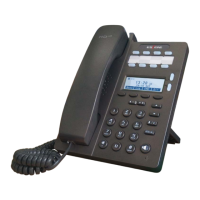
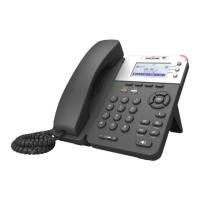
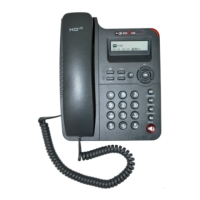
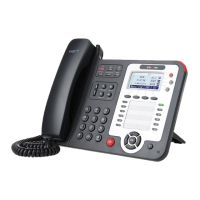
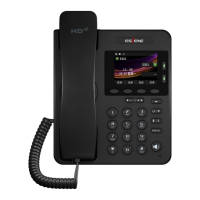
ESCENE ES270-C is a compact office IP Phone with rich features.
Highlights key features like Multi-Language, HD Voice, and Senior Calling Ability.
Details the components included in the ES270-C IP Phone package.
Provides instructions on how to assemble and connect the phone components.
Describes the main hardware components, including the LCD screen and keypad.
Explains information displayed on the IP Phone's LCD screen in idle status.
Covers network configuration options: DHCP, Static IP, and PPPoE.
Instructions for configuring a new SIP account on the IP phone.
Steps to disable an existing SIP account on the IP phone.
Guides on how to place calls using handset, speakerphone, or headset.
Details how to block caller identity for outgoing calls.
Instructions for redialing the last placed call.
How to view missed, received, and dialed calls.
Steps to dial contacts from the phone book.
Procedure for answering calls on multiple lines.
How to configure the phone to automatically answer incoming calls.
Methods for ending a call using handset, speakerphone, or headset.
How to put calls on hold and resume them.
Guidance on transferring calls to other recipients.
How to enable and disable the mute function during a call.
Steps to enable and disable the DND feature.
Instructions for setting up a three-way conference call.
How to access and manage voicemail.
Managing contacts and groups in the Enterprise Phone Book.
Adding, editing, and deleting contacts and groups in the personal phone book.
Setting up and using LDAP for contact directory.
Adding, editing, and deleting entries in the ban list.
How to view and manage call history records.
Details on making calls without a SIP server.
How to switch the phone's display language.
Instructions for creating and managing messages.
Configuration for SNTP, SIP Server, and manual time/date settings.
How to customize ring types and adjust volume levels.
Methods for searching contacts using Accurate or T9.
Lists features that cannot be configured via the keypad.
Overview of the main interface and displayed phone status information.
Detailed network configuration options for the phone.
Advanced network configurations like Port Management and Proxy settings.
Settings for the PC port, including Bridge and Router modes.
Configuration options for VPN connections.
Settings for configuring VLAN for phone and PC.
Core parameters for configuring SIP accounts: username, server, etc.
Configuration options for call behavior like DND and anonymous calls.
Security configurations for SIP and RTP encryption.
Basic configurations like backlight, keyboard lock, and hot line function.
Configuration for setting time mode, SNTP server, and daylight saving.
Parameters for pickup function, voicemail, and call display.
Settings for forwarding calls based on Always, Busy, or No Answer.
Quality of Service settings for SIP and Voice.
Configuration for audio parameters like tone, volume, and MIC levels.
Settings for ring types, uploading ring tones, and audio codecs.
How to assign functions to line keys.
Customizing the functionality of the programmable function keys.
How to enable and configure soft keys for various functions.
Configuring rules for outgoing calls, including send key and dial length.
Setting up IP-based rules for incoming calls.
Adding, editing, and deleting contact groups.
Adding, editing, and deleting contacts.
Setting up and using LDAP for contact directory.
Adding, editing, and deleting entries in the ban list.
General maintenance procedures for the phone.
Instructions for upgrading firmware via HTTP.
Instructions for upgrading firmware via FTP.
Instructions for upgrading firmware via TFTP.
Restoring the phone to factory default settings.
How to reboot the phone.
Configuring and retrieving system logs.
Setting up and managing automatic phone provisioning.
How to set administrator and user passwords for the web interface.
Navigating the web interface for user and logout options.
How to select the display language in the web interface.
Explanation of note tips found in function pages.

 To Next Page
 General