The chimney can be checked, before the stove is installed, with a smoke pellet. If the chimney doesn’t pull the
smoke it may suggest the chimney needs attention (see the Flue Diagnosis Table, next page).
The flue draught test hole must be drilled in the flue pipe as close to the stove as possible and before any flue
draught stabiliser.
FLUE DRAUGHT
The stove should be lit and allowed to warm the flue thoroughly. The air controls can then be set so that the stove
burns on a low setting. Allow the burning rate to become steady. The flue draught reading should now be taken with
the primary air intake closed and the airwash control fully open.
The primary air intake can now be opened to allow the stove to burn at maximum rate. Give the stove some time for
the burning rate to become steady and then close the primary air intake, make sure the airwash control is fully open
and take a flue draught reading immediately.
Ideally, the flue draught readings should range between 1mm and 2.5mm wg. Any readings significantly outside this
range may indicate the need for remedial action.
Low flue draught symptoms: difficult to light and smoke coming into the room.
CAUSE REMEDY
Cold chimney Line the chimney
Chimney too short Extend the chimney
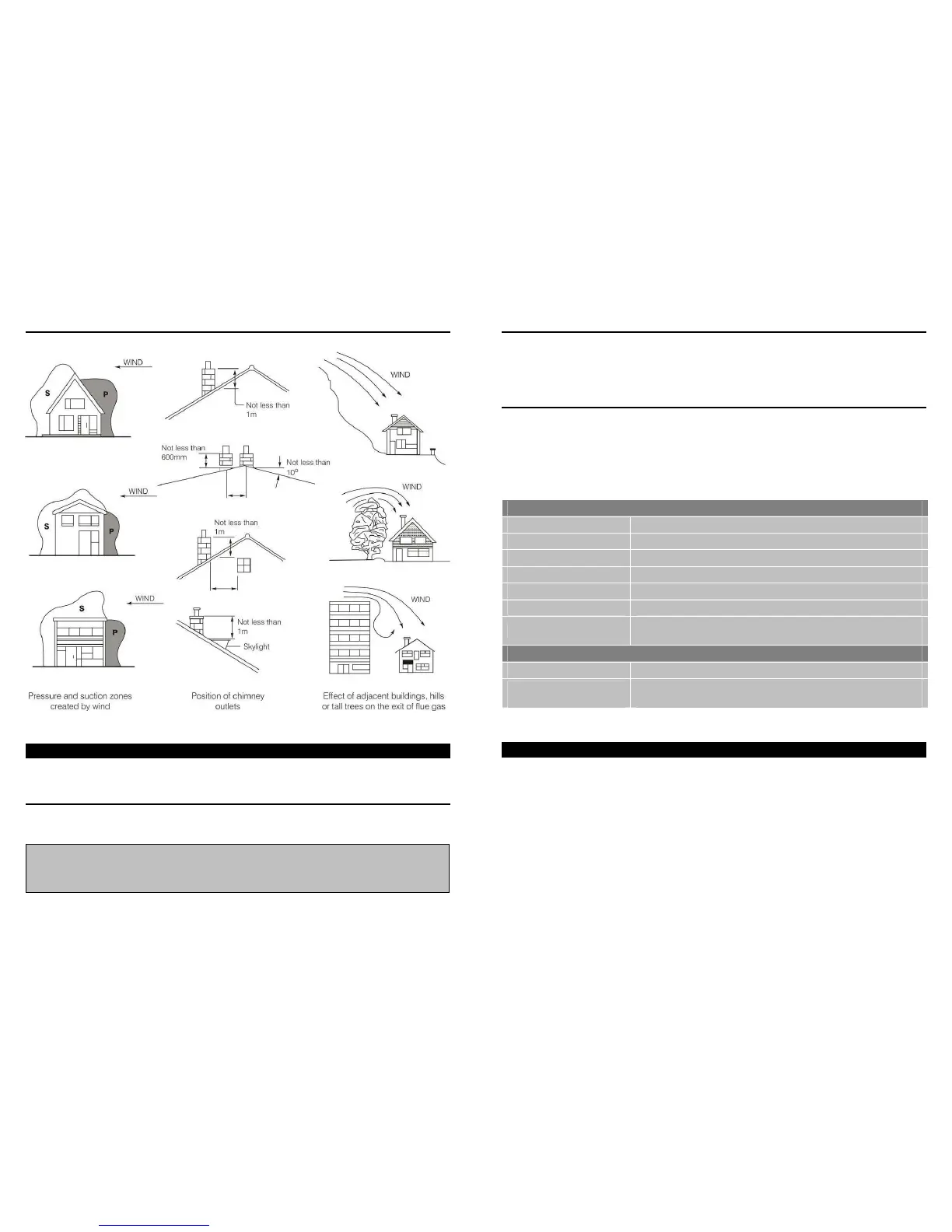
Down draught Relocate/extend chimney terminal. Fit an anti down draught cowl
Chimney diameter too large Line the chimney
Chimney obstruction Clear/sweep the chimney
Restricted air supply
Check for competing draughts (other chimneys, extractor hoods/fans).
Fit an air vent if the room Is sealed.
High flue draught symptoms: fire difficult to control, fuel will not last, stove too hot, stove damage, chimney fire.
CAUSE REMEDY
External wind conditions
combined with chimney terminal
Fit stabiliser cowl.
Fit flue draught stabiliser.
A flue stabiliser can be fitted to reduce the draught through the stove if the flue draught is too high. The flue
stabiliser should be:
• Fitted in the same room as the stove
• The same size as the flue pipe
• Fitted no closer than 700mm to the flue outlet of the appliance.
Minimum
Maximum


 To Next Page