Need help?
Do you have a question about the ETC Eos Apex 5 and is the answer not in the manual?
Explains naming and text conventions used in the manual for clarity.
Details the process of registering your console with ETC for updates and advisories.
Encourages participation in the ETC Eos Family User Forum for community support and knowledge sharing.
Provides contact information and steps for receiving assistance from ETC Technical Services.
Lists additional resources for learning more about the console's features and operations.
Introduces fundamental concepts essential for understanding console operation and system interaction.
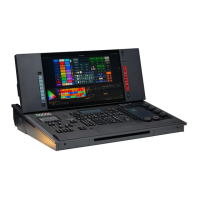
Provides an overview of the physical layout, components, and capacities of the Eos Apex 5 console.
Provides an overview of the physical layout, components, and capacities of the Eos Apex 10 console.
Provides an overview of the physical layout, components, and capacities of the Eos Apex 20 console.
Provides an overview of the physical layout, components, and capacities of the Eos Ti console.
Provides an overview of the physical layout, components, and capacities of the Gio console.
Provides an overview of the physical layout, components, and capacities of the Gio @5 console.
Provides an overview of the physical layout, components, and capacities of the Ion Xe console.
Provides an overview of the physical layout, components, and capacities of the Ion Xe 20 console.
Provides an overview of the physical layout, components, and capacities of the Element 2 console.
Provides an overview of the physical layout, components, and capacities of the Ion Classic console.
Provides an overview of the physical layout, components, and capacities of the Element Classic console.
Provides instructions on how to safely clean the console exterior.
Explains setup, navigation, and operation procedures for the console.
Step-by-step guide on how to power on the console.
Instructions for safely powering down the console through the browser menu.
Describes the CIA's default layout, including command line, parameter display, and browser.
Explains how to use the browser for functions like saving, loading, and opening displays.
Details methods for opening, closing, and navigating displays and tabs.
Explains how to configure independent display control across multiple monitors.
Explains how to create, open, and save show files using the Browser.
Provides instructions for creating a new show file via the browser.
Details how to open existing Eos Family show files from various storage locations.
Explains how to load partial components from a show file with advanced options.
Describes how to selectively open partial patch information or fixtures into a show file.
Explains how to merge other Eos family show files, including partial component merging.
Details how to save a show file or aspects of it to a PDF file for printing.
Provides instructions on how to save the current show data and indicates unsaved changes.
Explains how Eos supports importing various file types, including ASCII and CSV.
Describes how to export Eos Family show files to various formats like ASCII, CSV, and MLA.
Explains how to export logs for troubleshooting issues with ETC Technical Services.
Provides instructions on how to delete show files from the Show File Archive and File Server.
Introduces the File Manager utility in ECU for managing show files and software installers.
Explains Eos's concept of fixtures and channels, and the purpose of patching.
Describes how to open the patch display and its controls, including RDM and patch modes.
Details patching methods by channel and by address for conventional fixtures.
Explains the process for patching automated fixtures, requiring more detailed information.
Describes patching multicell fixtures, similar to automated fixtures but with differences.
Explains how to label channels or addresses using the command line or virtual keyboard.
Details how to choose and create custom scrolls/wheels using the picker and editor.
Provides optional fields for additional information about fixture configuration and attributes.
Explains how to enter additional information for query functions, including keywords.
Covers patch fields and properties specific to Augment3d.
Explains how to discover, configure, and monitor RDM and network devices.
Details dimmer feedback settings and requirements for CEM+, CEM3, and FDX 2000/3000.
Explains how to use the RDM Device List to discover and manage RDM devices.
Describes how to clear the patch entirely or create a 1-to-1 patch.
Explains how to update fixture profiles to incorporate library changes.
Covers creating and editing custom fixture types, including parameters and modes.
Details the components of the CIA: command line, parameter display, and browser.
Explains how to collapse or expand the CIA view for more screen space.
Describes how to lock the CIA in place to prevent accidental collapsing or viewing changes.
Explains the area where commands appear and how it displays in Live and Blind.
Explains how to search recorded targets, effects, and channels via the command line.
Shows available parameters for patched channels and how to select them for Live/Blind displays.
Describes how to attach alphanumeric labels to objects like cues, channels, and submasters.
Explains how to use page arrow keys or an external keyboard to move the cursor for label editing.
Introduces the browser as the interface for saving, loading, and opening displays.
Details how to navigate and use the browser, including submenus and color coding.
Explains how to access clear options from the browser and select record targets to clear.
Differentiates between clearing a patch to 1-to-1 and clearing only the patch.
Describes how to lock the face panel to prevent actions from the command line or CIA.
Explains how to access features and displays using softkeys located under the Browser.
Details how to access the second page of softkeys when more are available.
Defines terms related to console displays such as monitor, workspace, frame, tab, and display.
Explains independent display control across monitors and workspace configuration.
Describes how workspaces can be divided into frames, and their arrangement.
Explains how frames can have multiple tabs, categorized as Control and Display.
Details tools for managing tabs, including closing, replacing, and resizing.
Explains how to use the format button to rotate through available views and collapse/expand data.
Describes the summary view for large numbers of channels and intensity data.
Explains table view for displaying fixture types, channel details, and parameter levels.
Describes the {Preview} softkey for displaying intensity values from another cue.
Explains how to open the Channels in Use display and the information it provides.
Details the spreadsheet format for viewing channel data and trends in blind mode.
Identifies conventions for color and text indicators used in Live and Blind displays.
Explains how to use the Flexi key to view specific channels based on criteria.
Describes how to select specific channels to appear in a flexichannel state.
Explains how to select open displays using Tab, specific keys, or record target buttons.
Details how to zoom in and out on displays using the Format button and Level Wheel.
Explains how to move active displays between monitors using Tab and page arrow keys.
Describes how to interact with clickable cells in displays to select and place items.
Introduces various ways to select and command control channels within Eos.
Explains how to use channel faders on the Element console for controlling levels.
Details methods for selecting channels using keypad, direct selects, and groups.
Explains how to manually set channel intensity using keypad, palettes, or level wheel.
Describes setting non-intensity parameters using keypad, CIA, and encoders.
Explains how the parameter display is populated and used for editing parameters.
Details how to set parameter values numerically using the keypad.
Explains how to use the + and - keys to adjust parameters from the command line.
Describes using encoders for quick adjustment of non-intensity parameters.
Explains how the encoder display LCD shows parameters and their status.
Explains the difference between coarse and fine control for encoders.
Describes how to navigate through encoder pages for different categories.
Lists the softkeys available in each encoder section for parameter control.
Explains how to access the Home key for returning parameters to their default position.
Describes the use of Min and Max keys for linear parameters like shutter.
Explains how to use Next and Last keys for segmented parameters like gobo wheels.
Describes how to select different modes for encoder wheels like rotate or index.
Explains how the Expand button shows all media settings for a specific wheel.
Explains how the Flip button is used to flip objects in the Pan/Tilt section of the encoder LCD.
Describes how Form parameters affect beam quality and how to adjust them.
Explains how Image parameters affect the beam's contents like gobos and effects.
Details how to use shutter controls for fixtures with framing devices.
Explains how to open the shutter controls window and manipulate shutters.
Describes how to establish color manually using encoders, CMY, RGB, or color wheels.
Explains the six available color spaces and how to navigate them.
Details how to use the gel picker to select gels from a gel book.
Explains how to adjust color, saturation, and brightness using tinting tools.
Describes how to control color fades between cues using color paths.
Explains how to view and control parameters across the color spectrum.
Explains how to use [At] to select channels/parameters and remove move instructions.
Describes how to modify a cue by re-recording it entirely.
Explains how to use Record Only for selective storing and modifying cues.
Details the Update feature for modifying information and manual data.
Explains how to use the [Q Only/Track] key for updating cues.
Explains how Trace works to track changes backward through the cue list.
Describes how to update the current cue by pressing [Update] [Enter].
Explains how to update a source cue using trace.
Describes how to update inactive cues using the same commands as active cues.
Explains how to update from a current cue to a destination cue using [Update] [Thru].
Details how to view, change, and execute cues in blind display.
Explains how to use the cue list index to view and edit cues.
Describes how partitions can be assigned to a cue list and their effect on channels.
Explains how to use Solo Mode for editing cue lists after syncing with other cue lists.
Describes how to remove all auto-blocks from a single cue, range, or entire cue list.
Explains how to open the edit softkey for blind channel view and change display.
Details how to access and configure the Cue List Index menu.
Explains how to choose and order data in the Cue List Index columns.
Describes how to reset Cue List Index settings to default states.
Explains how cue list properties determine cue list interaction.
Explains how to use the Go button to execute the cue in the pending file.
Describes how to stop fader activity or step back through the cue list.
Explains the Blackout function and how grandmaster faders work.
Explains how to use Go To Cue 0 to reset intensity values and set the first cue pending.
Details how to use the Assert button to re-run active cues or regain control.
Explains how the Timing Disable button ignores timing data for activated cues.
Describes how to halt effect activity on faders or freeze a specific effect.
Explains how to stop effects on faders or specific channels.
Details how to collect playback faders for rate control and adjust rate dynamically.
Explains manual timing control for parameters and cue levels.
Explains groups as channel selection devices for fast recall of specific channels.
Details how to record groups of channels for fast recall, including labeling.
Explains how channels are ordered in a group and how it interacts with Next/Last.
Describes how to modify existing groups without recording or updating.
Explains how to create subsets of channels within a group using Shift & [/].
Details how to select groups from the control keypad or direct selects.
Provides syntax for deleting groups and their contents.
Explains how to open the group list for viewing and editing groups.
Describes how grouped channels are displayed and how to switch views.
Explains how to use the Group command to collect channels from submasters, cues, etc.
Explains how fan provides parameter and timing spread across selections.
Details how to adjust fan values with encoders or keypad.
Explains how to use command line for fan commands.
Describes how palettes and other reference lists are used for fanning.
Explains how fanning timing and delays work, similar to fanning parameters.
Explains how subgroups can be used with the Fan feature.
Explains how Mark automates presetting fixtures to required states before fading intensity.
Details the AutoMark feature, its system default, and conditions that trigger it.
Explains user-specified marks manually applied to channels or parameters.
Describes how to apply a mark flag to a previous cue.
Identifies symbols in the Mark flag column of PSD and Cue List Index.
Explains how to assign priority marking using softkeys.
Shows how to apply a mark flag to a previous cue.
Explains how the {Earliest} command marks a channel into the cue after the last intensity move.
Palettes are building blocks for presets, cues, and effects, offering reusable data.
Details the four types of palettes: Intensity, Focus, Color, and Beam.
Explains intensity palettes for channels with intensity parameter data.
Describes focus palettes for channels with focus parameter data, including Pan/Tilt or XYZ.
Explains color palettes for channels with color data, including CMY, RGB, and HS.
Details beam palettes for channels with beam parameter data.
Lists softkey options available when recording palettes: By Type, Absolute, Locked.
Explains By Type palettes created with default channels for fixture types.
Describes Absolute palettes where data is treated as absolute and never referenced.
Explains Locked palettes protected from accidental changes in Live.
Details methods for storing palettes in live or blind using Record, Record Only, or filters.
Explains how to store palettes using selective storing, specifying channels or parameters.
Details the selective record process for storing only manual parameter data to palettes.
Explains how to efficiently store palettes using direct selects on the touchscreen.
Describes how filters can modify data stored to a palette by a record action.
Explains how to recall palettes from the control keypad or direct selects.
Details how to view and edit all palettes in blind using table or spreadsheet views.
Describes how to open and edit palettes in list view, including adding labels.
Explains how to view and compare data between palettes in spreadsheet view.
Details how to edit palettes in intensity view, including using Move To and Copy To.
Explains how By Type palettes are created and edited in blind.
Provides instructions on how to remove specific channels from a palette.
Explains how to delete palettes and the effect on references in cues.
Describes presets as collections of data for channels to facilitate cue creation.
Lists softkey options available when recording presets: By Type, Absolute, Locked.
Explains By Type presets created with default channels for fixture types.
Describes Absolute presets where data is treated as absolute and never referenced.
Explains Locked presets protected from accidental changes in Live.
Details methods for storing presets live using keypad, direct selects, Record, or Record Only.
Explains how to store presets using Record, including selective storing and filters.
Details the selective record process for storing only manual parameter data to presets.
Explains how to recall presets from the control keypad or direct selects.
Describes how effects can be stored in presets and used in submasters or cues.
Details how to edit presets in live by rerecording or using Update.
Explains the conventions for rerecording presets using Record and Record Only.
Details how to use the Update command to record parameter modifications back to a preset.
Explains how to open and use the preset list for viewing and editing attributes.
Details how to view and edit presets in blind using table or spreadsheet views.
Explains how By Type presets are created and edited in blind.
Provides instructions on how to remove specific channels from a preset.
Explains how to delete presets and the effect on references in cues.
Explains how presets and palettes can be mapped to faders using the fader configuration display.
Defines a cue as a record target with channels, timing, and attributes.
Explains how Eos operates in Cue Only or Tracking mode and its impact on cue editing.
Details ways to number cues, including whole, decimal, and auto-numbering.
Explains how to store fixture parameters with non-home values into a target cue.
Explains the [Q Only/Track] key as an exception to cue only/track system settings.
Details how to modify cues using selective storing, specifying channels or parameters.
Explains how cue timing categories and discrete timing can be applied to cues or parameters.
Describes how to record cues with attributes like Follow, Hang, Link, Loop, etc.
Explains how flags like Block, Assert, AllFade, Mark, and Preheat can be applied to cues.
Details how to apply a block to a cue, part, channel, or parameter.
Explains the auto-block function to protect cue data from unwanted changes.
Describes assert as a way to make tracked or blocked values act as move instructions.
Explains the allfade attribute that commands intensity values to zero.
Details how to use external links to trigger macros, show control, or snapshots.
Explains how to modify cues live by rerecording or using Update.
Details the Update feature for modifying information and manual data.
Details how to view, change, and execute cues in blind display.
Explains how to use the cue list index to view and edit cues.
Describes how partitions can be assigned to a cue list and their effect on channels.
Explains how to use Solo Mode for editing cue lists after syncing with other cue lists.
Describes how to remove all auto-blocks from a single cue, range, or entire cue list.
Explains how to open the edit softkey for blind channel view and change display.
Details how to access and configure the Cue List Index menu.
Explains how to choose and order data in the Cue List Index columns.
Describes how to reset Cue List Index settings to default states.
Explains how cue list properties determine cue list interaction.
Explains how to use Go To Cue instructions to execute cues.
Details how Go To Cue uses setup timing and options.
Lists options for Go To Cue, including Manual, Scenes, Move Instructions, and Marks.
Introduces advanced features for manual control functions to save programming time.
Explains how to copy data from one channel to another or to a different record target.
Describes how to retrieve data from other locations, like recalling information from live.
Explains how to use Make Null to withhold parameter data from record or update actions.
Details how to convert live cue or submaster data into manual values.
Explains how to transform referenced data into absolute data.
Describes how to capture channel parameter data for manual control.
Explains how to select channels based on criteria using softkeys and the command line.
Describes how to revert certain operations performed in the software.
Explains effects as dynamic, repetitive actions applied to channels.
Displays all recorded effects and allows editing and viewing in CIA.
Shows effect properties and attributes for editing, accessible via the effect list.
Displays currently running effects and allows editing while running.
Allows overriding effect properties per channel at the cue level.
Explains step effects as chases with on-state and off-state actions.
Describes absolute effects as progressive actions, specifying exact behavior.
Explains relative effects as continuous offsets from current parameter values.
Details focus effects for impacting pan and tilt parameters.
Explains color effects impacting only color parameters like hue and saturation.
Describes linear effects as references to linear diagrams applied to any parameter.
Explains how to define shapes for relative effects using the editor.
Provides the process for programming a new relative effect.
Lists preprogrammed rainbow effects for RGB and CMY parameters.
Explains how to apply an existing effect to selected channels.
Details how to edit a running effect using the effect status display or editor.
Explains how to stop all effects or specific effects from operating.
Describes how to select channels currently running in a selected effect.
Explains how to replace an effect with another, preserving overrides.
Provides instructions on how to delete effects and return them to default values.
Explains how to store effects in presets.
Details how to record an effect into a cue or cue part.
Explains how to load channels running effects onto a submaster.
Describes how to place a delay on an effect in a cue or submaster.
Introduces variables for StepBased and Absolute effects for altering effects on the fly.
Explains how park allows setting channels/parameters to a specific value, prohibiting overrides.
Describes how to access the park display to view parked channels and addresses.
Details how channels and parameters can be parked and unparked from the live display.
Explains how scaled parked values allow proportional modification of intensity output in live.
Details how DMX addresses can be parked in Live.
Explains how to park and unpark channel parameters or addresses from the park display.
Explains how submasters store parameter data for channels and can be controlled by faders or keypad.
Details how to page through available submasters on Element 2 and classic consoles.
Explains how to record current stage contents directly to a submaster.
Describes how to access the submaster list for viewing and editing.
Details how to edit the contents of a submaster in Blind edit mode.
Explains how faders can be mapped to submasters and their properties.
Details available configuration options for submaster faders and buttons.
Shows submaster number, label, priority, and other information in the fader status display.
Explains how to label submasters using the Label key.
Describes how to load cues, presets, or palettes onto faders as submasters.
Explains how bump buttons can have different timing values for submasters.
Details how to take control of submasters manually, even with recorded time.
Explains how the execute list for submasters can trigger actions like macros or cues.
Describes how to halt effect activity or stop effects on submasters.
Explains how to move and copy submasters using Move To and Copy To.
Details methods for releasing content from a playback fader.
Explains how to make changes to submasters in Live mode using Update.
Provides instructions on how to delete a submaster and its contents.
Provides detailed information regarding selected elements in About mode.
Displays general system information when About is pressed with a clear command line.
Opens user documentation on the console, typically found in Tab 100.
Lists all network devices connected to Eos, including consoles and gateways.
Displays information about a selected channel, including current values and parameters.
Shows information about a selected address, including RDM and Sensor Feedback.
Displays information about a selected cue list, including attributes and active cues.
Shows information about a selected cue, including timing, flags, and attributes.
Displays information about a selected curve, including its number and label.
Shows information about a selected effect, including its number and label.
Displays information about a selected group, including its number and label.
Lists information displayed when a submaster is selected.
Shows a list of cues that will execute a selected macro.
Displays information about palettes used in cues and presets.
Shows information about a selected preset, including channels and usage.
Displays information about a selected color path, including its number and label.
Displays currently active DMX values when [Live] is held with [About].
Explains curves as relationships between timing and output level for fades.
Details how to select or create a new curve using the curves display.
Explains how to edit curves using the keypad or touchscreen.
Details how to apply curves to any intensity parameter in patch.
Explains how curves applied to cues affect percent completion for fade calculations.
Describes how curves can be applied to a scroller fan for output control.
Provides instructions on how to delete curves from the curve display.
Snapshots are record targets storing the current state of the Eos control surface.
Details how to store the current state of the console by recording a snapshot.
Explains how to view and recall snapshots from the snapshot list.
Describes how to edit or preview the contents of a snapshot.
Provides syntax for deleting snapshots.
Explains macros for composing programming actions and executing them later.
Details the most effective way to store a macro using live mode and macro [Learn] mode.
Explains how to use the [Learn] key to place the console in macro learn mode.
Describes how to edit macros from the macro editor display.
Explains how to create a new macro from the macro editor display.
Details how to edit the content of a macro by removing or adding commands.
Explains how to play a macro from the command line, direct selects, or another macro.
Describes how to stop a macro while it is running.
Provides syntax for deleting macros from the macro editor or any display.
Explains magic sheets as user-created displays for viewing and programming data.
Details how to open the magic sheet browser to view and edit magic sheets.
Explains how magic sheets can be accessed from direct selects.
Describes how to open the magic sheet list for viewing created magic sheets.
Lists tools for magic sheets available via right-clicking or double tapping the tab.
Explains how to navigate magic sheets using mouse, keyboard, or touchscreen.
Details how to create and edit magic sheets using the editing tools.
Allows a magic sheet to be viewed fullscreen, with options available from the gear menu.
Provides examples of magic sheets created using the feature.
Introduces Augment3d as a tool for configuring and focusing virtual fixture representations.
Lists the hardware and software requirements for running Augment3d on consoles, PC/Mac, and iOS/Android.
Explains how to run Augment3d natively on consoles or in tether mode on PC/Mac.
Defines specific terms and features unique to Augment3d.
Details keyboard and mouse controls for navigating the Augment3d space.
Describes Control Mode as the default view for visualization and navigation.
Explains Edit Mode for editing and configuration of models, fixtures, and objects.
Lists toolbar options for altering Augment3d fixtures and objects.
Explains that fixtures must be patched in Eos before being displayed and controlled in Augment3d.
Details how to manually add fixtures to Augment3d using the Eos Patch screen.
Explains how Augment3d calculates rotation and XYZ position using calibrated points.
Describes how to import fixtures into Augment3d from a Vectorworks file.
Details how to manually add fixtures to Augment3d via the Eos Patch screen.
Explains position (local/world) and orientation data for fixtures in Augment3d.
Describes how to edit fixture position and rotation in Augment3d Edit Mode.
Explains how to aim static lighting fixtures at the correct point in Patch.
Details how Eos automatically configures fixture location and orientation using FPE.
Explains how FPE associates points with Focus Palettes for fixture location estimation.
Describes FPE points as known physical locations measured relative to the XYZ & Origin.
Explains how FPE Points can be arranged in sets for multiple spaces or touring shows.
Details how to calculate FPE once FPE Points are matched to Focus Palettes.
Explains how FPE recalculates positions for all or selected fixtures in a show file.
Addresses accuracy issues in FPE calculation due to fixture profiles or measurements.
Provides best practices for selecting FPE Point positions for optimal calculation.
Introduces the virtual media server feature for creating pixel maps and layouts.
Explains how image, video, HTML, and text files can be applied to a pixel map.
Details methods for adding media content via import functions or File Manager.
Lists supported image and video formats for virtual media.
Explains the automatic method for importing all pixel map media from a device.
Describes the manual method for importing media using the File Manager.
Explains how pixel maps determine fixture layout and media interpretation.
Lists limitations for pixel maps: 40 per show, 12 layers, 16,384 pixels.
Details how to assign server channel, media layer, and effect layer to channels.
Explains how to define array and fixture types, assign starting address/channel.
Lists options for changing pixel map mapping, including order and borders.
Explains how to open the Pixel Map Preview display and use encoders or ML Controls.
Details controls for Server Channel, including Intensity, Pan/Tilt, Color, and Crossfade.
Explains controls for Layer Channels, including Intensity, Pan/Tilt, Color, and Negative.
Describes synchronizing media archives between primary, backup, and client consoles.
Provides steps for configuring a multi-console system, including primary and backup setup.
Explains how to view media playback by importing media to backup/client archives.
Explains how partitioned control allows discrete channel control between multiple programmers.
Details the primary use of partitioned control for simultaneous work without data conflicts.
Explains how to enable or disable partitioned control system-wide.
Describes how to view the partition list display and select partitions.
Provides instructions on how to create new partitions.
Explains how to delete partitions using command line syntax.
Details how partitions are set on a user level and their effect on data access.
Explains how fader configurations and loaded content are shared across devices.
Describes how partitions can be assigned to a cue list.
Explains the 'Partitioned' flexi mode when partitioning is enabled.
Outlines procedures for using multiple Eos Family control devices simultaneously on a network.
Familiarizes users with terms used in multi-console setup, including Primary, Backup, Client, etc.
Provides settings adjustments for optimal functionality when using multiple Eos devices.
Explains how to designate one Eos device as primary, others as backup or clients.
Details how Eos can provide a DHCP server for network devices.
Explains how to change the device name for network identification.
Describes how the backup switches automatically if the primary goes offline.
Enables the backup to take over at a higher priority if the primary goes offline.
Adjusts the timeout period before a backup takes control from the primary.
Explains how to give each Eos device a unique IP address.
Enables or disables local DMX port output for consoles in client or backup mode.
Details how Eos consoles can act as separate or same users.
Explains how User ID is defined for unique or shared operation.
Details how to change the User ID for console operation.
Explains the benefit of show data backup for system security.
Describes how to activate synchronized backup for show data security.
Provides steps for setting up synchronized backup, including assigning a backup to a primary.
Discusses backup scenarios like Console/Console and RPU/Console.
Explains how to remotely install software to all devices in a multi-console system.
Describes how to remotely power on and off Eos devices.
Explains how to mirror displays of another device.
Details how a client without a dongle connects and operates in mirror mode.
Explains how to configure a device to connect in Mirror mode.
Describes how monitors match between mirroring device and host.
Covers the ECU's uses for system configuration and basic level test functions.
Describes the starting screen of the ECU for choosing modes and changing settings.
Explains the primary mode for single or networked console operation.
Assigns a console as backup, taking control if the primary fails.
Assigns the console as a client to a console in primary mode.
Details client mode requiring a dongle for mirror mode connection.
Puts the console in Offline mode for editing without network connection.
Available for ETCnomad software without a dongle, for visualizer use.
Opens the ECU Settings for network and general configuration.
Allows running Augment3d on a computer connected to a console.
Powers the console down following a confirmation.
Covers settings for device name, 24-hour clock, and time.
Details network configuration settings, including IP address and DHCP.
Covers maintenance functions like Deep Clear, Reclaim Disk Space, and Save Logs.
Explains configuration for RPU and Face Panel buttons.
Details setup for Net3 Radio Focus Remote (RFR) to work with Eos.
Provides an overview of show control types and general setup information.
Allows adjustment of settings for MIDI Show Control, time code, analog, and serial functions.
Explains creation of event lists and processing of incoming show control events.
Details how Eos consoles receive internal or external time code to execute event lists.
Explains how RTC events are used to run actions at specific times or based on astronomical events.
Describes how to accept analog input through Net3 I/O Gateway or built-in ports.
Explains how Eos consoles trigger relay outputs on Net3 I/O Gateways or built-in relay output.
Points to additional settings in ECU>Settings>Network for interface protocols.
Explains how Eos receives streaming sACN level information for show control actions.
Details how Eos consoles receive and transmit MIDI Show Control data.
Explains sending and receiving RS232, UDP, and ACN strings.
Describes OSC as a protocol for network communication with audio, video, and lighting devices.
Explains how to send OSC commands directly with arguments.
Details how OSC direct selects are virtual buttons mapped separately from console direct selects.
Explains how fader banks share mapping with Eos, but have different paging.
 General
| Type | Lighting Control Console |
|---|---|
| Master Playbacks | 10 |
| Output Protocols | DMX, sACN, Art-Net |
| Connectivity | Ethernet, USB |
| Screen Size | 15.6 inches |
| DMX Outputs | 4 |
| Ethernet Ports | 2 |
| USB Ports | 4 |
| Audio I/O | Line In, Line Out |
| External Monitor Support | Yes |
| Operating System | Eos |
| Processor | Intel i7 |
| Memory | 16GB RAM |

 To Next Page