EasyManua.ls Logo

Everlast Power i-MIG 353DPi - User Manual

Everlast Power i-MIG 353DPi
47 pages
Print Icon
To Next Page IconTo Next Page
Loading...
EVERLAST
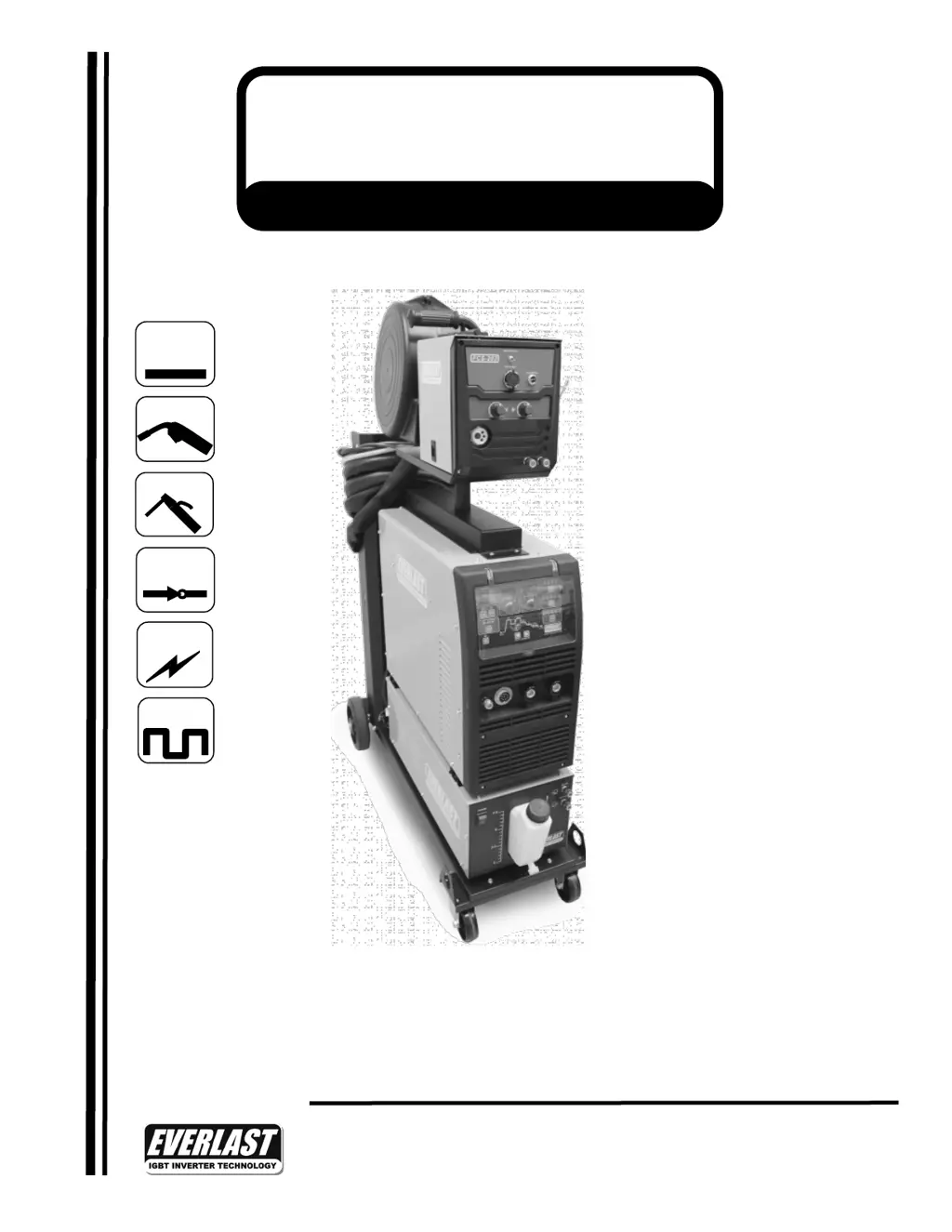
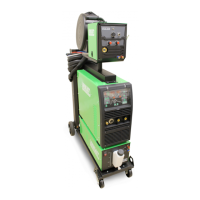
POWER i-MIG 353DPi
Rev. 1 0 10713-20
everlastwelders.com
1-877-755-9353
Specications and Accessories subject to change without notice.
380 Swift Ave Unit 12. South San Francisc0, CA 94080 USA
Operators Manual for the Power i-MIG 353DPi
Safety, Setup and General Use Guide
A Digitally-Controlled Synergic Pulse MIG with Stick Function
PULSE
DC
CC
CV
GMAW
IGBT
SMAW

Questions and Answers

  • M
    Maria AllenAug 20, 2025
    What to do if my Everlast Welding System is overheating and the fan does not work?
    • K
      Kristin ShawAug 20, 2025
      If your Everlast Welding System is overheating and the fan isn't working, it could be due to a damaged fan. Inspect the fan housing and the fan itself, and replace if necessary. Another possible cause is a loose fan power connector; in this case, tighten the wires and check for any dislodged connectors.
  • A
    Ashley SotoAug 25, 2025
    What to do if no gas flows when I press the torch switch on my Everlast Power i-MIG 353DPi Welding System?
    • M
      Matthew SanchezAug 25, 2025
      If your Everlast Welding System torch switch is pressed, but no gas flows, it could be due to several reasons. First, check if there is gas in the gas cylinder, and replace it if empty. Second, a gas pipe might be leaking, so resolve any leaks. Third, the gas solenoid valve could be damaged, so check, clean, or replace it. Fourth, the torch switch itself might be damaged, requiring repair or replacement. Finally, the control board could be damaged, so inspect the circuit.
  • D
    Duane PerryAug 27, 2025
    Why does my Everlast Power i-MIG 353DPi Welding System stop welding and the warning light is on?
    • V
      Victoria BoothAug 27, 2025
      If your Everlast Welding System is welding and then stops, and the warning light is on while the wire continues feeding without an arc, it means the self-protection has engaged. Check for over-voltage, over-current, over-temperature, lower-voltage, and over-temperature conditions. If the unit has overheated, allow it to cool. If it's an over-current issue, use a shorter wire stick out, a smaller diameter wire, or reduce power settings with large diameter wires. Check the power plug for problems. If the over-current trips easily, the resistor value might be too low. Contact Everlast if the over-current is tripping regularly with normal settings.
  • K
    Kevin MyersAug 28, 2025
    How to fix intermittent arc on Everlast Welding System?
    • R
      Robin CoxAug 28, 2025
      If you're experiencing intermittent or wandering arcs with your Everlast Welding System, it could be because the work clamp isn't secure or is damaged, or it's too windy or breezy. Check and/or replace the work clamp, change its position, and attach it directly to the work. Also, move out of the wind.
  • S
    Stephanie DodsonAug 30, 2025
    Why is my Everlast Power i-MIG 353DPi producing excessive spatter?
    • A
      Ashley PhelpsAug 30, 2025
      If you're getting excessive spatter with your Everlast Welding System, it could be due to several factors. The voltage might be too high, the arc force too high, or the wire speed too high. Adjust by lowering the voltage or increasing the wire speed. Also, check the torch angle, ensuring it's less than 15° push or pull. Adjust the arc force settings to reduce spatter and change the nozzle size.
  • D
    Dr. Jamie LewisAug 31, 2025
    Why is the welding voltage/current uncontrollable on my Everlast Welding System?
    • S
      Sharon DeleonAug 31, 2025
      If the welding voltage or current on your Everlast Welding System is uncontrollable, it might be due to a damaged potentiometer, which would need repair or replacement. Another possibility is a damaged control board, so check the circuit.
  • H
    Holly RothSep 2, 2025
    Why does my weld look sooty or oxidized when using my Everlast Power i-MIG 353DPi Welding System?
    • C
      Carlos KaneSep 2, 2025
      If your Everlast Welding System is producing sooty or oxidized-looking welds, it could be due to poor metal preparation, poor gas flow, too much torch angle, the wrong gas type, windy or breezy conditions, a plugged nozzle, or pulling instead of pushing the gun. To fix this, thoroughly clean the metal, check the gas flow and reposition the gun to prevent turbulence. Move indoors if necessary and reposition the welder to prevent the fan from blowing on the weld area. Clean the nozzle.
  • J
    Jennifer HouseSep 4, 2025
    How to stop bird nesting of the wire around the drive roll of Everlast Welding System?
    • B
      Beverly HillSep 4, 2025
      If the wire is bird nesting around the drive roll of your Everlast Welding System, it could be due to a jammed gun liner, wire that's too soft (like aluminum), a kinked or tightly coiled gun hose, or too much tension/pressure on the wire feeder. Reduce the wire feed tension so that the drive will slip if it encounters too much resistance. Check the gun and liner, replacing if necessary, and straighten the cable.
  • M
    mcolemanSep 6, 2025
    Why does the wire feed irregularly on my Everlast Welding System?
    • K
      Kristin Lopez PhDSep 6, 2025
      If your Everlast Welding System's wire feeds irregularly, it could be due to the wrong drive roller or wrong size drive roller, too little tension on the wire, or the wire being in the wrong groove. Check and match the wire size to the groove size, increase tension on the drive rollers, and ensure the wire isn't riding on the shoulder of the drive roller.
  • A
    ashleyfergusonSep 8, 2025
    What causes wire to burn back and seize in tip of Everlast Welding System?
    • S
      Samantha GutierrezSep 8, 2025
      If the wire burns back and seizes in the tip of your Everlast Welding System, it could be due to the wrong contact tip size or too much burn back time set. Match the tip size to the wire diameter and reduce the burn back time. If using with aluminum, use a tip designed for aluminum or use one size larger tip than the wire.

Summary

Letter to Customer

Safety Precautions

High Frequency Electromagnetic Disturbances

Discusses potential interference from HF waves with electronic equipment and pacemakers.

Introduction and Specifications

General Performance Specifications

Details performance parameters like amp range, voltage, wire feed speed, and welder type.

Electrical Specifications

Outlines electrical requirements, input voltage, protection, and cooling method.

Duty Cycle and Over Current Explanation

Explains duty cycle ratings and how over-current protection functions.

General Product Information

Provides an overview of the welder's pulse MIG capabilities and design features.

General Features and Terms

Defines key functions like Pre/Post Flow, Burn-Back, GMAW, SMAW, and Synergic MIG.

Setup Guide

Polarity Recommendations

Provides general polarity recommendations for MIG, Flux Core, and Stick welding processes.

Gas Selection Guide

Lists recommended shielding gases for different MIG welding applications.

DC Stick Operation Guide

Offers guidance on amperage settings for DC Stick welding based on electrode size.

MIG Wire, Gun Connection & Wire Feeder

Details connecting the MIG gun, wire feeder, and power source, including wire setup.

Water-Cooler Accessory Information

Information on the Power-Cool 400 water cooler and its connection to the welder.

Rear Panel Connections and Power Input

Explains rear panel ports, input power selection, and connection notices/warnings.

Main Panel Controls Overview

Describes the functions of buttons, displays, and LEDs on the welder's front panel.

Welding Functions Explained

Details specific welding functions like Hot Start, Inductance, and Pulse Time-On.

Basic MIG Operation Guide

Covers fundamental MIG welding setup, parameters, and weld characteristics.

Pulse MIG Operation

Explains single and double pulse MIG welding, synergic control, and parameters.

MIG Control Features and Modes

Details trigger modes (2T/4T) and control features for various MIG welding processes.

Stick Operation Guide

Covers stick welding starting methods and arc force control.

General Operation Notes

Provides specific operational notes for aluminum welding and flux core use.

36 Series MIG Torch Overview

Details the components and assembly of the 36 Series MIG Torch.

Torch Consumable Cross Reference

Lists interchangeable consumables for the 36 Series MIG Torch.

Troubleshooting Guide

Everlast Power i-MIG 353DPi Specifications

General IconGeneral
BrandEverlast
ModelPower i-MIG 353DPi
CategoryWelding System
LanguageEnglish

Related product manuals