EasyManua.ls Logo

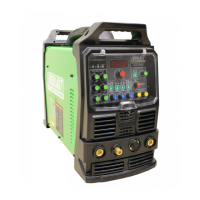
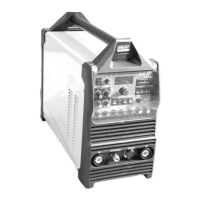
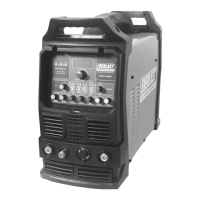
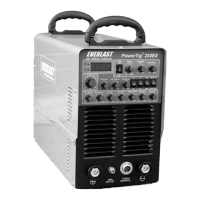
Everlast PowerTig Series - User Manual

Everlast PowerTig Series
25 pages
Print Icon
To Next Page IconTo Next Page
Loading...
1
EVERLAST
POWER TIG ® SERIES
TIG (GTAW) AND MMA (SMAW)
WELDERS
2
SHUDWRUV0DQXDOIRU3RZHU7LJp$&'&:HOGHUV
,
QFOXGHV3RZHUL7LJp'&0RGHOV







6
DIHW\6HWXSDQG*HQHUDO8VH*XLGH
5HY

Questions and Answers

Summary

Safety, Setup and General Use Guide

General Information

High Frequency Electromagnetic Disturbances

Notes on High Frequency (HF) waves generated by welding processes and their potential impact on electronic equipment and pacemakers.

Safety Precautions

UV Radiation and Eye Protection

Details on ultraviolet radiation hazards and the importance of appropriate eye protection, including safety glasses and welding helmets.

Hearing Protection

Emphasizes the necessity of hearing protection due to high noise levels during welding and cutting operations.

Personal Protective Clothing

Outlines requirements for flame-proof clothing, leather boots, and insulated gauntlet gloves for comprehensive personal protection.

Pacemaker and EMF Warnings

Warning for individuals with pacemakers regarding EMF radiation from welding and plasma cutting processes.

Inhalation Risks and Ventilation

Highlights inhalation risks from welding fumes and gases, stressing the need for adequate ventilation and respiratory protection.

Hazardous Materials Warnings

Warnings against welding on materials like galvanized steel, beryllium, titanium, and around chlorinated solvents due to toxic fumes.

Cylinder Safety

Guidelines for safe handling, storage, and use of gas cylinders, including securing them properly and avoiding hazards.

Electrical Shock Hazards

Crucial warnings about electrical shock, emphasizing proper grounding, cable condition, and avoiding wet conditions.

Trip Hazards and Fire Prevention

Addresses trip hazards from cables and hoses and provides essential fire prevention measures for welding areas.

Equipment Maintenance and Safety

Stresses the importance of proper equipment maintenance, servicing by qualified personnel, and avoiding misuse.

Introduction and Specifications

Product Feature Comparison

A detailed comparison of features across different Everlast PowerTig models, including amperage, duty cycle, and specialized functions.

Manual Overview and Usage Guidelines

Provides an overview of the manual's purpose, emphasizing safe and practical machine use and general operational suggestions.

Unit Inspection and Serial Number Recording

Instructions for inspecting the unit upon receipt for damage and recording the serial number for warranty purposes.

PowerTig Technology and Arc Characteristics

Explains the inverter-based technology, IGBT transistors, and advantages like non-contact starts and precise arc control.

Duty Cycle and Cooling Fan Operation

Details on understanding duty cycles to prevent overheating and the importance of keeping cooling fans and vents unobstructed.

Know Your Machine

Panel Face Overview (EX Series)

Detailed explanation of the front panel controls and features for an EX series unit, including power indicators and digital display.

Pulse Power Control

Describes the 3-position rocker switch for pulse control (Off, Low, High) and its function in amperage cycling.

Pulse Frequency Control

Explains the pulse frequency control that governs the number of pulse cycles per second (Hz) for precise amperage modulation.

Pulse Amperage and Pulse Time On

Details on Pulse Amps control for proportional amperage and Pulse Time On (Width) for cycle time ratio.

Main Amperage and Arc Force Controls

Explains the main amperage control for welding current and the Arc Force control for arc intensity and penetration.

AC Frequency and AC Balance Controls

Information on AC Frequency control for arc narrowing and AC Balance control for DCEN/DCEP cycle adjustment.

AC;DC and 4 T;2 T Rocker Switches

Describes the rocker switches for selecting AC/DC current modes and 4T/2T weld cycle control via torch trigger.

Spot Timer and TIG;Stick Switch

Explains the Spot Timer for automated spot welds and the TIG/Stick switch for selecting welding modes.

Pre Gas Flow and Post Flow Timers

Details on Pre Gas Flow for purging and Post Flow for shielding gas after welding to prevent contamination.

Up Slope and Down Slope Controls

Describes Up Slope for ramping current and Down Slope for controlling the end of the weld to prevent crater cracking.

Start Current and End Current

Explains Start Current for initial puddle development and End Current for filling the weld crater at the end of the weld.

Lower Panel Overview

Details the lower front panel connectors, including positive/negative lugs and quick connect gas outlet.

Rear Panel Overview

Describes the rear panel components such as serial number, power switch, fan, gas inlet, and power cord connections.

Getting Started

General Use and Maintenance Guidelines

Basic guidelines for unit operation and maintenance, stressing safety rules and prohibiting untrained personnel operation.

Shielding Gas Selection

Crucial information on selecting the proper shielding gas for TIG welding to protect the weld pool from atmospheric contamination.

Regulator;Flow Meter Selection and Connection

Guidance on choosing and connecting a regulator/flow meter for shielding gas tanks, ensuring correct gas flow and type.

Regulator;Flow Meter Adjustment

Instructions for adjusting the regulator/flow meter to the recommended settings for optimal gas flow during welding.

Machine Setup and Grounding

Details on power plug installation, wiring for 220V, and the importance of proper grounding for HF interference.

Tungsten Electrode Selection

Guidance on selecting the correct tungsten electrode type and size for TIG welding, including material properties and recommendations.

Tungsten Electrode Suitability Table

A table providing information on electrode diameter, direct current (DC) polarity, and alternating current (AC) suitability for various tungstens.

TIG Torch Assembly and Components

Identification and explanation of the parts of a typical TIG torch assembly, including cap, collet, cup, and gas insulator.

TIG Operation and Principles

Basic principles of TIG welding, emphasizing safety gear, practice, and the fundamental steps of creating a weld bead.

Tungsten Sharpening Techniques

Instructions and diagrams on correctly sharpening tungsten electrodes for DC and AC welding applications to ensure arc stability.

Filler Rod Selection and Arc Initiation

Guidance on selecting filler rods and the initial steps for starting a TIG arc using High Frequency, including amperage adjustment.

Weld Bead Formation and Movement

Steps for forming a weld bead, managing the keyhole, adding filler material, and maintaining consistent torch movement.

Weld Termination and Crater Filling

Proper techniques for terminating a weld, filling the crater, and preventing cracking or weld failure at the end.

MMA;Stick (SMAW) Machine Operation

Instructions for operating the machine in MMA/Stick (SMAW) mode, including electrode insertion, amperage setting, and striking an arc.

Arc Force and Amperage Adjustment for Stick Welding

Using Arc Force and Amp adjustments to alter arc qualities and achieve desired weld finish in stick welding.

Electrode Selection for Stick Welding

Guidance on electrode classification (AWS system), selection criteria, and practicing with different electrodes for stick welding.

Proper Weld Identification and Troubleshooting

Identifying common weld defects like overlap and undercutting and using destructive testing to improve skill.

Trouble Shooting

Machine Not Turning On or Welding

Solutions for the machine not turning on or running but not welding, checking cords, clamps, and switch settings.

Display Issues and Tungsten Consumption

Troubleshooting for non-illuminating displays, rapid tungsten consumption, and dull/contaminated tungsten.

Weld Quality Issues and Arc Stability

Addresses issues like porosity, discoloration, poor weld quality, unstable arcs, and nearby electronic interference.

Addendum

Foot Pedal Operation

Detailed explanation of foot pedal usage, its interaction with torch switch settings, and potential malfunctions.

Water Cooler System Use

Information on the necessity and use of water cooler systems for high amperage operation to protect torches and consumables.

Torches and Consumables Compatibility

Details on compatible torches and consumables, including aftermarket options and connector types for the welders.

Everlast PowerTig Series Specifications

General IconGeneral
Pulse FunctionYes
TIG WeldingYes
Stick WeldingYes
AC Frequency20-250 Hz
AC Balance ControlYes
AC/DC CapabilityYes
Welding ProcessesTIG, Stick
Input Voltage120/240V

Related product manuals