Testing the Motor
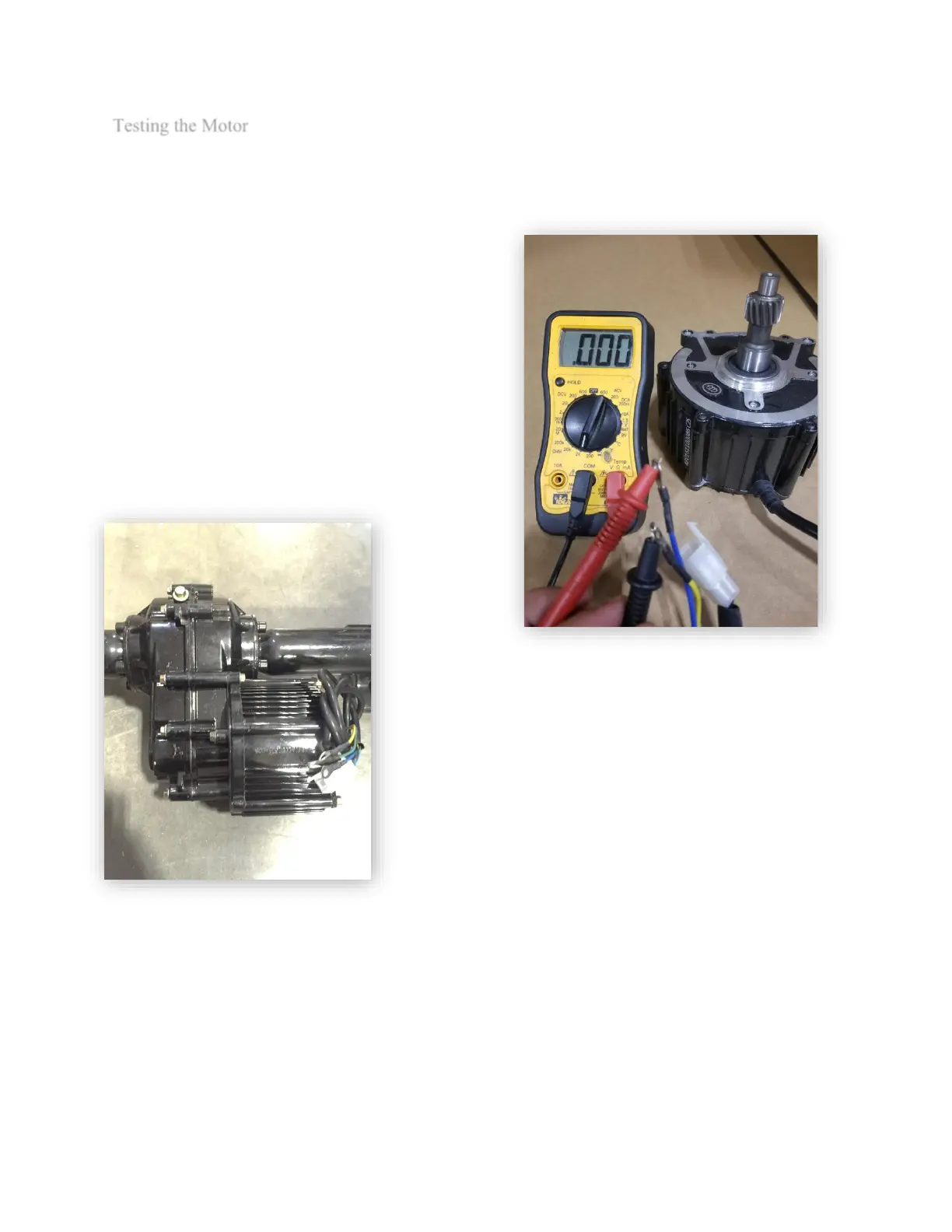
Start by testing the resistance at the motor phase lines using all color combinations. If your meter
displays any resistance levels other than infinite/zero, then the motor needs to be replaced.
Next, check that the Hall Effect positioning sensor’s
voltage is decreasing when the wheel is being
rotated. Rotate the wheel by hand, not with the
throttle.
While under a full load (with the throttle pulled all
the way) the motor should respond if the controller,
harness, and throttle have already been tested, and
the brake sensors and rheostat have already been
checked. If not, the motor needs to be replaced.
Going internal with the motor to determine if the
differential, transfer case, motor hall sensors, or other
internal components is the issue is not recommended for
field service technicians. Typically, the labor costs for
disassembling, testing, and reassembling will exceed the
cost for a replacement motor. If the control unit is emitting
the proper power to the motor under load, the brake sensor
is not activated, and the rheostat is unplugged, and the
motor is not engaging, replacement is recommended.



 To Next Page