3
PRODUCT SPECIFIC SAFETY WARNINGS
Electrical/Grounding
> Connect only to a properly grounded outlet,
preferably a GFCI outlet. In the event of a malfunction
or breakdown, grounding provides a path of least
resistance for electric current to reduce the risk of electric
shock. This tool is equipped with an electric cord having an
equipment-grounding conductor and a grounding plug. The
plug must be plugged into a matching outlet that is properly
installed and grounded in accordance with all local
codes and ordinances.
> Do NOT modify the plug provided – if it will not fit the outlet,
have the proper outlet installed by a qualified electrician.
Do NOT use a three-prong-to-two-prong adapter.
> Improper connection of the equipment-grounding conductor
can result in a risk of electric shock. The conductor with
insulation having an outer surface that is green with
or without yellow stripes is the equipment-grounding
conductor. If repair or replacement of the electric
cord or plug is necessary, do NOT connect the
equipment-grounding conductor to a live terminal.
> Check with a qualified electrician or service personnel if
the grounding instructions are not completely understood,
or if in doubt as to whether the tool is properly grounded.
> Use only three-wire extension cords that have
three-prong grounding plugs and three-pole
receptacles that accept the tool’s plug. Do NOT
use a three-prong-to-two-prong adapter.
> Make sure the Main Power Switch is in the OFF position
before connecting the machine to the power source.
> Do NOT pull or carry by cord, use cord as a handle, close
a door on cord, or pull cord around sharp edges or corners.
Do NOT run heavy objects over cord. Keep cord away from
heated surfaces.
> Do NOT unplug by pulling on cord. To unplug, grasp
the plug, not the cord.
> Do NOT handle plug or appliance with wet hands.
> Repair or replace damaged or worn cord immediately.
> The use of extension cords is discouraged; try to position
the machine near the power source. If you must use an
extension cord, make sure that it is in good condition and
is heavy enough to carry the current your product will
draw. An undersized cord will cause a drop in line voltage
resulting in loss of power, overheating and fire. If you must
use an extension cord with this tool, use at least a 12-gauge
cord that’s no longer than 50'. Remember, the smaller the
gauge number, the heavier the cord.
Product Specific Safety Warnings continued on page 4
Safe Use
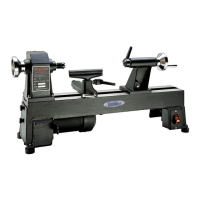
> Do NOT lift more than you are able. If the Excelsior Mini
Lathe feels too heavy for you to lift on you own, obtain the
help of another adult to lift the unit into position. Use proper
lifting techniques.
> Make sure that the bench or table holding the lathe is strong
enough to bear the weight and that it is solid and rigid. The
lathe is heavy, and serious injury could result if the support
were to fail.
> Keep tool guards in place and in working order.
> Remove adjusting keys and wrenches. Form a habit of
checking to see that keys and adjusting wrenches are
removed from the tool before turning it on.
> Keep your work area clean. Cluttered areas and benches
invite accidents.
> Don’t use in a dangerous environment. Don’t use power
tools in damp or wet locations or expose them to rain. Keep
work area well-lighted.
> Keep children and pets away. All visitors should be kept
safe distance from the work area.
> Make your work area kid-proof with padlocks or master
switches or by removing starter keys.
> Don’t force the tool. It will do the job better and more safely
at the rate for which it was designed.
> Use the right tool. Don’t force the tool or attachment to do a
job for which it was not designed.
> Wear proper apparel and contain long hair to avoid
entanglement. Do NOT wear loose clothing, gloves,
neckties, rings, bracelets, or other jewelry that might get
caught in moving parts. Nonslip footwear is recommended.
Wear protective hair covering to contain long hair.
> Always wear OSHA-approved safety glasses and a face
shield. Also use a dust mask if cutting operation is dusty.
Everyday glasses only have impact-resistant lenses; they
are NOT safety glasses.
> Make sure your workpiece is fully secured on the lathe
between centers, with a faceplate and screws of sufficient
length, or in four-jaw chuck with appropriate jaws. An
inadequately secured workpiece could come off the lathe
at high velocity, potentially causing serious injury.
> Don’t overreach. Always maintain proper footing and
balance.


 To Next Page
 Loading...