4 5
English
Intended purpose
The F&P Nova Micro™ mask is intended to be used as a patient
interface in a non-invasive positive airway pressure (PAP) therapy
system to deliver pressurized air from the breathing tube to the
patient’s upper airway.
The patients are intended to be adults weighing ≥66 lb (30 kg).
The mask is intended to be used for single patient re-use in the home
for the treatment of a respiratory condition and multi-patient re-use in
a hospital or other clinical setting to investigate the optimal pressure
required for the treatment of a respiratory condition.
Contraindications
None.
General warnings and cautions
Any serious incident must be reported to the competent authority and
your Fisher&PaykelHealthcare representative.
Warning: Do not use the mask unless the PAP device is
turned on and operating properly as this may result in excessive
carbon dioxide inhalation.
Warning: This mask is not suitable for life support ventilation as
this may result in death.
Warning: Do not administer drugs or medications into the
device or breathing tube, with the exception of supplemental
oxygen, as it may impact the efficacy of the medicine.
Warning: Do not use the mask outside of the intended purpose
as this may result in a range of harms, some of which are severe.
Caution: Therapy may be compromised if your airway is
congested. Use of a different mask may be recommended in this
situation. Consult your healthcare provider.
Caution: Discontinue use and consult your healthcare provider
or physician if you are experiencing:
• Discomfort or irritation near your eyes as this may result in
an eye injury.
• Excessive leaks between the cushion and your face as this
may result in compromised therapy.
• An adverse reaction after using the mask, including an
allergic reaction.
Possible side effects
While using the F&P Nova Micro mask, you may experience:
• Difficulty sleeping.
• Facial irritation (pressure sores, skin redness, skin dryness and/
or abrasion).
• Oral pain (toothache and/or gum soreness).
• Dental deformation (tooth movement and/or misalignment).
• Claustrophobia and/or anxiety.
• Eye dryness, swelling and/or redness.
If you experience any of the above side effects, including any not listed
in these instructions, discontinue using the F&P Nova Micro mask and
consult your physician immediately.
Any other serious incidents must be reported to the competent
authority and your Fisher & Paykel Healthcare representative.
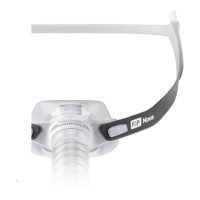
Mask parts and features
i
Refer to the mask diagram in these instructions.
(A)
Headgear
(B)
Cushion
(C)
Frame Assembly
(D)
Exhaust Holes
(E)
Cushion Tab
(F)
Tube
(G)
Swivel
(H)
Frame
Operating instructions
Please refer to the Warnings and Cautions within these
instructions. Failure to follow the operating instructions may
compromise the performance and safety of the mask. Only use your
mask for its intended purpose as directed in these instructions.
Conditions of use
The operating pressure range of your mask is 4 to 25 cmHO.
Warning: Only use the mask within the specified pressure range.
Use outside of this range may result in excessive carbon dioxide
inhalation or excessive leak which may result in an eye injury.
Warning: Your mask should only be used with approved PAP
equipment recommended by your physician or respiratory
therapist. Using the mask with any other medical device could
decrease the safety or alter the performance of the mask.
The operating temperature range of your mask is 5 to 40 °C
(41 to 104 °F).
Store your mask dry in clean conditions. The storage temperature of
your mask is -20 to 50 °C (-4 to 122 °F).
Caution: Do not store your mask in direct sunlight as this may
compromise the function of the mask.
The expiry date is printed on the label of the plastic bag. Do not use
your mask after its expiry date.
For single patient use in the home, replace the mask no later than
12months after the date of first use.
Before use
Before using your mask the first time, remove all packaging.
Before using your mask each time:
Warning: Make sure the air path through the mask is free from
blockages that may prevent or restrict airflow as this may result
in excessive carbon dioxide inhalation.
Warning: Inspect the Exhaust Holes (D). Ensure air is flowing
through the exhaust and do not use if blocked as this may result
in excessive carbon dioxide inhalation.
Caution: Inspect it for damage or deterioration. If there is any
visible deterioration (cracking, tears, etc.), do not use the mask
and seek replacement part(s) from your healthcare provider
as using the mask may result in lacerations or compromised
therapy.
Caution: Inspect the mask for soiling and dust and, if present,
follow the cleaning instructions to remove the soiling or dust,
asthis may result in a range of harms, some of which are severe.
Fitting your mask
ii
Refer to the fitting diagrams in these instructions.
1. Position the Cushion (B) in your nose, then pull the Headgear
(A) over your head.
2. Ensure that the rear straps are spaced apart for stability.
3. Gently adjust the side straps until a comfortable fit is achieved.
4. Ensure that:
• The Cushion (B) is securely located into your nostrils.
• The Cushion Tab (E) is facing upward.
• The mask name on the side straps is upright.
Useful tips:
• If you are experiencing mask leaks, you may need to lift the
cushion o your face and reposition it.
• For a comfortable fit, the mask should be worn as loose as
possible, without excessive leak.
Warning: Do not overtighten the mask as this may result in
facial deformation.
Caution: Failure to follow fitting instructions or using the
incorrect mask size may result in pressure sores or excessive leak
causing eye injury.
Taking off your mask
Pull the mask away from the nose, lifting up and over the head.
Disassembling your mask
iii
Refer to the disassembly diagrams in these instructions.
1. Remove the Cushion (B) by lifting the Cushion Tab (E) and
peeling away from the Frame (H).
2. Remove the Headgear (A) by pulling the side strap forward so
that the opening stretches over the frame post.
Caution: The Frame (H), Tube (F) and Swivel (G) components
are permanently connected together and are not intended to
be disassembled. Attempting to disassemble these components
may compromise the function of the mask.
Assembling your mask
iv
Refer to the assembly diagrams in these instructions.
1. Attach the Cushion (B) by hooking the bottom corners over the
Frame (H) and pulling the Cushion Tab (E) over the frame lip.
2. Attach the Headgear (A) by hooking the strap opening over the
frame post, then pulling back to secure in place.
Useful tip:
• Take care to correctly orientate the Headgear (A) during
assembly. The printed headgear text and the Cushion Tab
(E) should both be facing upwards.
Cleaning your mask at home
After each use: Wash the Cushion (B) and Frame Assembly (C).
After 7 days of use: Wash the Headgear (A).
1. Disassemble for cleaning as described in the ‘Disassembling
your mask’ section.
2. Hand-wash the mask parts in soap dissolved in lukewarm water.
Do not soak for more than 10 minutes.
3. Rinse thoroughly in fresh water. Ensure that all soap residue has
been removed.
4. Inspect all parts to ensure they are visibly clean. If necessary,
repeat the cleaning steps until all parts are visibly clean.
5. Leave all parts to dry out of direct sunlight before reassembling.
Warning: Do not share your mask with another person when
using it at home as it may result in the transfer of biological
agents such as viruses or bacteria.
Caution: Only clean the mask with cleaning products specified in
the cleaning instructions of this guide, as any other products may
result in an adverse reaction if cleaning residue is left behind.
Caution: Do not clean the mask with products containing
alcohol, antiseptic, bleach, chlorine or moisturizer as these may
compromise the function of the mask.
Caution: Do not clean the mask in a dishwasher, as this may
compromise the function of the mask.
Caution: Failure to fully disassemble the mask prior to cleaning
may compromise the effectiveness of cleaning and may result
in a range of harms, some of which are severe.
Multi-patient cleaning instructions
These instructions are intended for multi-patient use of the
F&PNova Micro mask in a hospital, or other clinical setting, where
proper disinfection of the device must occur between patients.
Your F&P Nova Micro mask is provided patient-ready. To
reuse between patients please follow guidelines below or visit
www.fphcare.com/disinfection. If you do not have internet access,
please contact your Fisher & Paykel Healthcare representative. When
using the mask for single patient use in the home, please refer to
your F&P Nova Micro Instructions for Use under ‘Cleaning your mask
at home’.
Warning: Deviations from the recommended methods of
reprocessing may result in inadequate disinfection/sterilization
and adverse health effects.
Warning: Frequency of cleaning, methods of cleaning or
the use of cleaning agents, other than those specified in
the accompanying documents, or exceeding the number of
processing cycles can have an adverse effect on the mask and
consequently the safety or the quality of the therapy.
Caution: Only clean the mask with cleaning products specified in
the cleaning instructions of this guide, as any other products may
result in an adverse reaction if cleaning residue is left behind.
Caution: Do not clean the mask with products containing
alcohol, antiseptic, bleach, chlorine or moisturizer as these may
compromise the function of the mask.
Caution: Do not clean the mask in a dishwasher, as this may
compromise the function of the mask.
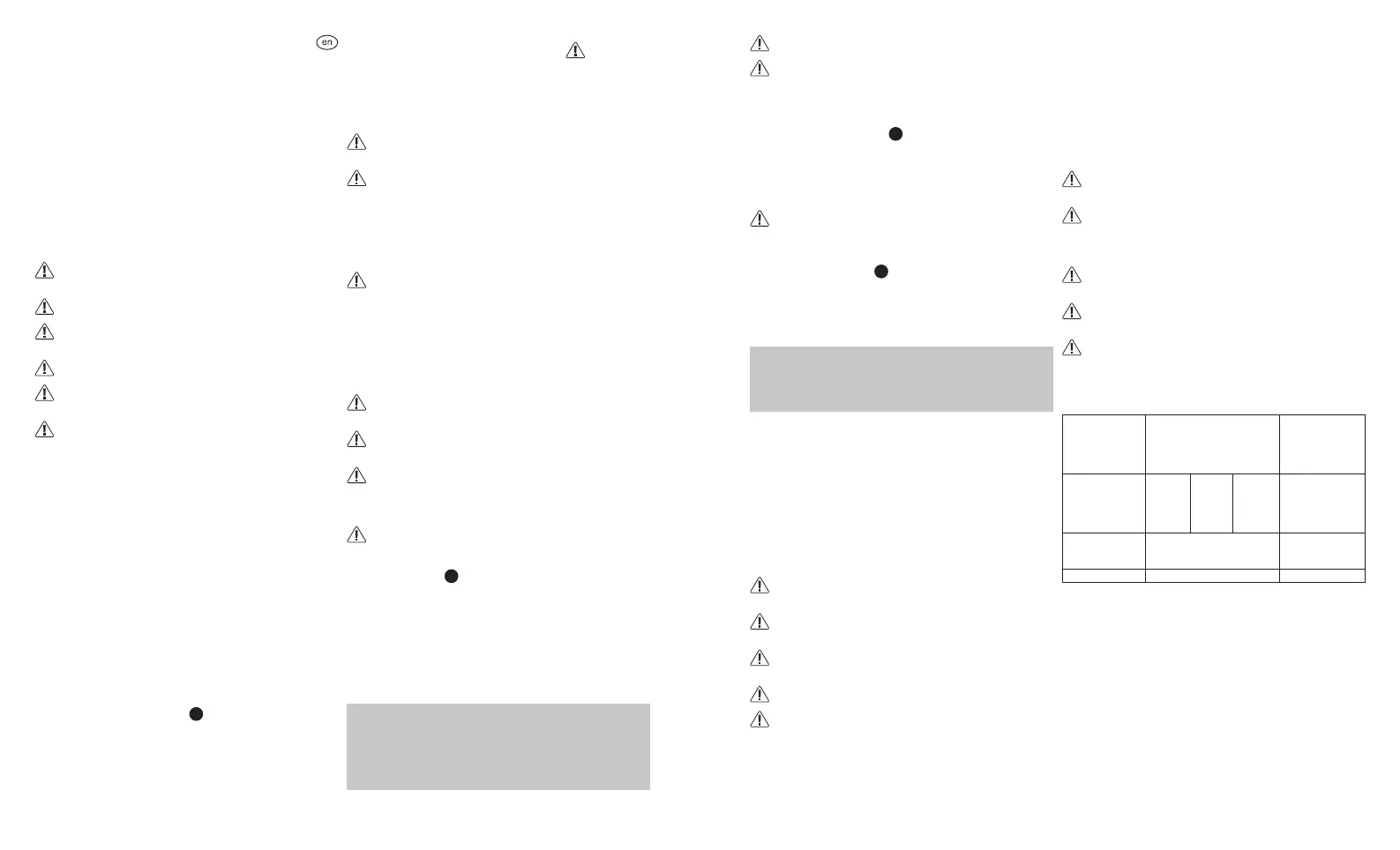
Overview of reprocessing methods
To disinfect the F&P Nova Micro mask, use one of the methods
outlined in the table below. Each cycle is limited to one day of use.
Thermal Disinfection
In line with EN ISO 15883,
the uncertainty range for
disinfection temperature is
-0°Cand+5°C
Chemical
Disinfection
1 min
at
90 °C
(194 °F)
10 min
at
80 °C
(176 °F)
30 min
at
75 °C
(167 °F)
CIDEX® OPA,
MetriCide™ OPA
Plus
or RAPICIDE™
OPA/28
Cushion (B)*,
Frame
Assembly (C)
Maximum of 25 cycles
Maximum of
25 cycles
Headgear (A)** Maximum of 25 cycles -
*Replace the cushion if it becomes discolored.
** If contaminated with blood, please replace the contaminated
component between patients.
1
CIDEX is a trademark of Advanced Sterilization Products, a division
of Ethicon Inc., a Johnson & Johnson Company.
2
MetriCide is a trademark of Metrex Research LLC.
3
RAPICIDE is a trademark of Medivators Inc.
Validated disinfection procedures
These instructions have been validated as being capable of
preparing the masks for reuse.
Fisher & Paykel Healthcare does not recommend any deviations
from the recommended method of reprocessing.
Point of Use (optional): Any gross soiling on the mask may be
removed by wiping or rinsing with potable water.
Disassembly: Disassemble the mask according to the ‘Disassembling
your mask’ instructions provided, then peel open the straps on the
Headgear (A).


 To Next Page
 Loading...