EasyManua.ls Logo

Fellow Stagg - User Manual

Fellow Stagg
2 pages
Print Icon
To Next Page IconTo Next Page
Loading...
Important Safety Notes
Safety and Use Guide
Stagg is meant for home use. Please read this guide completely
before using. Improper handling may result in an accident.
Please keep this guide for future reference.
• Check your kettle to ensure that all parts are accounted for and installed
correctly. Do not use if parts are missing.
• Do not use kettle if you see any sign of cracking, chipping, denting, or any
other abnormality.
• This kettle is only intended for boiling water. Do not use with other liquids.
• Keep kettle away from children while boiling water and soon after boiling water.
Water Levels:
• The max fill line (1.0 L / 33.8 oz) is marked on the inside surface just below
the handle. Do not fill above this line.
• Only boil between
1
/3 - 1.0 L (11.3 - 33.8 oz) of water. Under boiling and
over boiling the kettle may lead to discoloration, damage, melting of parts,
or burn injury.
• Do not over boil your kettle. Since the pour spout and lid ventilation holes are
small, there is a risk of water boiling out from these openings.
• Never heat kettle while empty. Dry boiling may deform or damage the kettle,
or cause damage to your cooking range and increase the risk of fire.
General Usage:
• Hold lid while pouring.
• Ensure thermometer is fully seated in the lid.
• Do not align lid ventilation holes with spout. Hot water may come out of these
holes while pouring. If this happens, carefully remove and re-orient the lid.
• Do not use if large gaps exist between the lid and kettle. Hot water may come
out of these gaps. Ensure that the lid is secure and fits snugly onto kettle.
• Do not put hand over lid area or remove lid while kettle is still heating or
when water is boiling. Hot steam may be released and cause burn injury.
• Do not grab kettle body after heating. This could result in burn injury.
• The handle may become hot while boiling water or soon after boiling water.
Please use a pot holder to avoid burn injury.
• If the handle cap is loose, screw the cap back into the handle. Do not use
kettle if cap remains loose and handle weight is exposed.
• Do not shake kettle up and down, side to side, or twist the handle.
This may loosen the handle.
• The spout contains a functional sharp edge and care should be taken
during use.
Preparation Before Use:
• Apply liquid dish soap to a soft sponge. Wash and rinse kettle thoroughly.
Cleaning and Maintenance:
• Hand wash kettle after each use, using only liquid dish soap.
Do not use chlorine, bleach, or other chemicals to clean the kettle.
Let air or towel dry thoroughly.
• Using a coarse sponge, brush, or other rough surface will scratch the finish.
• Do not submerge any part of the kettle in water. The body, handle, or
thermometer may become damaged.
• White spots may appear as you keep using the product. This is caused by
magnesium and calcium residue contained in tap water. This is not harmful
to your health. Wash and dry kettle thoroughly after each use to avoid.
• Allowing traces of salt or oil to remain in contact from other products made
of steel or aluminum may cause corrosion to develop.
• If any sign of corrosion is discovered, apply some compounding polish on
a soft sponge and rub. Rinse thoroughly afterwards.
Using Stagg On Various Cooking Ranges:
• Wipe away any water on the bottom of the kettle before heating.
• Take care to place the kettle at the center of the heater.
• Always point the spout away from you when heating and boiling.
Electric Ranges: Do not use a burner that is larger than the bottom
diameter of the kettle. Excessive heating may melt or damage the
handle and lid.
Gas Ranges: Do not spread the flame beyond the bottom of the kettle body.
The handle and lid may over heat and melt if the flame is too large.
Use Instructions
Stagg is compatible with the following cooking ranges:
Please do not use with the following:
Microwave Oven
GasElectric
Dishwasher
Please be aware that placing product on rough or unclean
surfaces, as well as normal daily use on cooking ranges, will
damage finish on bottom of kettle. This is normal wear and
does not affect functionality.
Stagg
Pour-Over Kettle
TWN Pat. No. 104216797
CHN Pat. No. 201520832260.5
USA Pat. No. D796,888 S

Question and Answer IconNeed help?

Do you have a question about the Fellow Stagg and is the answer not in the manual?

Summary

Stagg Pour-Over Kettle Safety and Use Guide

Important Safety Notes

Essential safety precautions and warnings for kettle operation and handling, including checks for damage and correct usage.

Water Levels

Guidelines on proper water filling levels to prevent boiling over, damage, or burn injury.

General Usage

Instructions for safe operation, handling hot parts, lid usage, and spout considerations.

Use Instructions

Preparation Before Use

Steps for initial cleaning and preparation before the first use of the kettle.

Cleaning and Maintenance

Procedures for hand-washing, avoiding chemicals, and dealing with residue and scratches.

Using Stagg On Various Cooking Ranges

Guidance on using the kettle on electric and gas stovetops safely to prevent damage.

Pour-Over Perfected

Water Temperature Is Critical

Guidance on filling the kettle and heating water to the optimal brew range for pour-over coffee.

Freshly Ground Beans Are Best

Recommendations for weighing and grinding coffee beans for a 12 oz cup.

Prep The Dripper

Instructions on preparing the pour-over dripper with a filter and wetting it with hot water.

The Bloom Is Key

Steps for the initial pour to allow coffee grounds to bloom and release CO2.

The Perfect Pour

Guidance on continuing the pour evenly over the coffee grounds for optimal extraction.

Overview

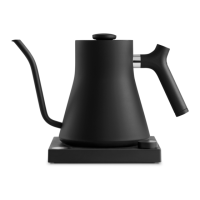
The Stagg Pour-Over Kettle is a specialized kitchen appliance designed for home use, primarily for boiling water for pour-over coffee preparation. It is compatible with electric and gas cooking ranges but should not be used in microwaves, ovens, or dishwashers.

Function Description:

The primary function of the Stagg Pour-Over Kettle is to heat water to precise temperatures for brewing coffee, particularly using the pour-over method. Its design, including a gooseneck spout, allows for controlled and even pouring, which is crucial for optimal coffee extraction. The kettle features an integrated thermometer to monitor water temperature, ensuring it reaches the ideal brewing range of 195°-205°F. It is designed exclusively for boiling water and should not be used with other liquids.

Usage Features:

  • Water Level Management: The kettle has a maximum fill line (1.0 L / 33.8 oz) marked on the inside surface, just below the handle. Users are instructed to only boil between 1/3 and 1.0 L (11.3 - 33.8 oz) of water. Boiling outside this range can lead to discoloration, damage, melting of parts, or burn injury. Over-boiling should be avoided as the small pour spout and lid ventilation holes can cause water to boil out. The kettle must never be heated while empty, as this can deform or damage the kettle, damage the cooking range, and increase the risk of fire.
  • Temperature Monitoring: An integrated thermometer ensures the water reaches the critical brewing temperature range of 195°-205°F. The thermometer should be fully seated in the lid during use.
  • Controlled Pouring: The gooseneck spout is designed for precise and even pouring, essential for the pour-over coffee method. Users are advised to hold the lid while pouring.
  • Lid Management: The lid should not be aligned with the spout, as hot water may come out of the ventilation holes. If this occurs, the lid should be carefully removed and re-oriented. Users should ensure the lid is secure and fits snugly, as large gaps can allow hot water to escape. Hands should not be placed over the lid area, nor should the lid be removed while the kettle is heating or boiling, due to the risk of hot steam and burn injury.
  • Handle Safety: The kettle body should not be grabbed after heating to avoid burn injury. The handle may also become hot, so a pot holder should be used. If the handle cap is loose, it should be screwed back into the handle; the kettle should not be used if the cap remains loose and the handle weight is exposed. The handle should not be shaken, twisted, or moved side-to-side, as this can loosen it.
  • Spout Safety: The spout has a functional sharp edge, and care should be taken during use.
  • Cooking Range Compatibility: The kettle is designed for use on electric and gas ranges. When using electric ranges, the burner size should not exceed the bottom diameter of the kettle to prevent excessive heating that could melt or damage the handle and lid. On gas ranges, the flame should not spread beyond the bottom of the kettle body, as this can overheat and melt the handle and lid. Before heating, any water on the bottom of the kettle should be wiped away, and the kettle should be placed at the center of the heater. The spout should always be pointed away from the user when heating and boiling.
  • Coffee Brewing Process: The manual outlines a detailed pour-over coffee brewing process:
    1. Water Temperature: Heat water to 195°-205°F.
    2. Bean Preparation: For a 12 oz cup, use 24 grams of medium-coarse ground coffee. A table provides recommended coffee quantities for different water volumes (8-20 ounces).
    3. Dripper Preparation: Place a filter in a pour-over dripper on a cup. Wet the filter and warm the dripper with hot water, then empty the cup. Add coffee grounds to the dripper and shake lightly to flatten.
    4. Bloom: Pour about 50 grams of water (or twice the coffee amount) onto the grounds, starting from the center and moving outwards. Wait 30 seconds for the coffee to "bloom" and release CO2.
    5. Pour: Continue pouring evenly from the center outwards in a circular path for an additional 2:30-3 minutes, stopping when the cup is full (e.g., 12 oz).

Maintenance Features:

  • Initial Preparation: Before first use, the kettle should be washed thoroughly with liquid dish soap and a soft sponge, then rinsed.
  • Regular Cleaning: After each use, the kettle should be hand-washed with liquid dish soap. Chlorine, bleach, or other chemicals should not be used for cleaning. The kettle should be air-dried or towel-dried thoroughly.
  • Surface Care: Coarse sponges, brushes, or rough surfaces will scratch the finish. No part of the kettle, including the body, handle, or thermometer, should be submerged in water, as this can cause damage.
  • Mineral Deposits: White spots may appear due to magnesium and calcium residue from tap water. This is not harmful but can be avoided by washing and drying the kettle thoroughly after each use.
  • Corrosion Prevention: Traces of salt or oil from other steel or aluminum products can cause corrosion. To prevent this, ensure the kettle is clean and free of such residues. If corrosion is discovered, a compounding polish can be applied with a soft sponge and rubbed, then rinsed thoroughly.
  • Bottom Finish: Users should be aware that placing the kettle on rough or unclean surfaces, as well as normal daily use on cooking ranges, will damage the finish on the bottom of the kettle. This is considered normal wear and does not affect functionality.

Fellow Stagg Specifications

General IconGeneral
Capacity0.9L
MaterialStainless steel
Temperature ControlYes
Power1200W
Voltage120V
Dimensions11.5 x 6.75 x 8 inches
Temperature Range60°C - 100°C
Cord Length76 cm
Base Type360° swivel base
Weight1.27 kg

Related product manuals