
 Need help?
Do you have a question about the Fender Power Stage 100 and is the answer not in the manual?
Adjusts signal levels for inputs and overall output volume.
Fine-tunes audio frequencies to reduce noise and shape tone.
Includes headphone output and sound enhancement options.
Connects microphones (XLR) and instruments (1/4 inch).
Handles line-level signals from audio sources.
Includes output jacks, insert point, and power connections.
Shows status for Phantom Power and main unit power.
Details gain, input levels, impedance, and phantom voltage for each channel.
Defines corner frequencies and slopes for low cut and notch filters.
Details frequency boost for Enhance and output power for headphones.
Lists power output, frequency response, THD, and unit dimensions/weight.
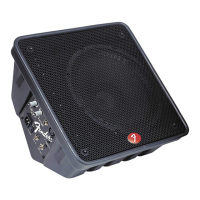
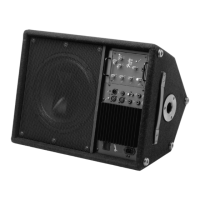
The Fender Power Stage 100 is a professional powered monitor system designed for a variety of sound reinforcement applications, from personal monitoring to small club PA systems. This versatile unit combines a 100-watt power amplifier, a 3-channel preamp, a power supply, and a full-range coaxial speaker system within a durable, carpet-covered cabinet. Its design emphasizes flexibility and ease of use, making it suitable for musicians and audio professionals alike.
The core function of the Power Stage 100 is to provide clear and powerful audio monitoring. It features a 100-watt power amplifier that drives a coaxial speaker system, delivering robust sound. The integrated 3-channel preamp allows for multiple input sources, accommodating microphones, instruments, and line-level audio.
Channel 1 is dedicated to microphones, offering a balanced XLR input and phantom power for condenser microphones. It also includes an XLR output, allowing the microphone signal to be sent to a main mixing console without affecting the monitor's volume.
Channel 2 is a dual-purpose input for microphones and instruments. It features a balanced XLR input for microphones and a 1/4-inch TS unbalanced input for instruments like acoustic guitars, keyboards, or drum machines. This channel also provides phantom power for microphones.
Channel 3 handles line-level and stereo inputs. It includes a 1/4-inch TRS balanced input for auxiliary devices and unbalanced phono (RCA) input jacks for stereo sources such as tape or CD players. These stereo inputs are summed to mono for output.
A unique feature of the Power Stage 100 is its detachable wired remote control panel, which serves as the "brain" of the system. This remote allows users to control all volume levels and frequency shaping from their "performance position," whether handheld or mounted on a mic stand. This eliminates the need to constantly adjust controls on the main unit, providing convenience during live performances.
The unit also includes an insert patch point (1/4-inch TRS) for connecting external signal processing devices like digital delays or reverb units. A 1/4-inch phone output jack is provided for connecting an optional PowerStage Xpander 100, expanding the system's capabilities. For personal monitoring, a 1/4-inch stereo headphone jack is available on the remote control panel.
The Power Stage 100 is designed for intuitive operation with several features to optimize sound quality and prevent common audio issues.
Input Versatility: The combination of XLR, 1/4-inch TRS, 1/4-inch TS, and RCA inputs allows for connection of almost any audio source, from microphones and instruments to playback devices. Phantom power on microphone inputs supports a wide range of condenser microphones.
Detachable Remote Control: The wired remote control panel is a key usability feature. It provides access to all critical controls, including individual channel volumes, master volume, and frequency shaping, directly from the user's position. This is particularly useful in live settings where quick adjustments are necessary.
Frequency Shaping Controls: The remote panel includes several frequency shaping tools:
Multiple Orientation Angles: The cabinet is designed with three angles of orientation (45°, 25°, and 0°), allowing it to be positioned as a floor monitor, tilted back, or upright, adapting to various stage and room configurations.
Headphone Monitoring: The stereo headphone jack on the remote control panel enables private monitoring, which is useful for sound checks or personal practice without disturbing others.
System Expansion: The 1/4-inch Line Output jack allows for easy connection to an optional PowerStage Xpander 100, enabling the creation of a larger PA system for small clubs or intimate settings.
Grounding and Hum Reduction: The manual emphasizes the importance of proper grounding and cable management to minimize hum and buzz. It recommends keeping all electronics on the same electrical circuit, routing audio cables away from AC power cords, using balanced cables where applicable, and always plugging the unit into a grounded AC outlet.
The Power Stage 100 is built with durability in mind, featuring a tough metal grille to protect the speaker and a carpet-covered cabinet for long life and good looks.
Cabinet Care: The carpet covering is soil-resistant and can be cleaned with a brush to remove smudges or dirt. For stubborn stains, a sponge with a light soapy solution can be used. It is crucial to unplug the unit before cleaning and ensure it is completely dry before plugging it back in. Users should avoid spilling liquids on the operating surface, heat sink, grille, volume and tone controls, switches, and speakers.
Troubleshooting Guide: The manual provides a comprehensive troubleshooting section to help users diagnose and resolve common issues. This includes checking power connections, volume levels, instrument power, microphone status (including phantom power), cable integrity, and effects processor connections. If issues persist, users are advised to consult an authorized Fender Service Center.
Safety Precautions: The manual highlights important safety warnings, such as not exposing the unit to rain or moisture, referring servicing to qualified personnel only, and ensuring the unit is earth grounded. These precautions are essential for safe operation and longevity of the device.
 Power
Power| voltage (120 V version) | 120 VAC, 60 Hz 360 W |
|---|---|
| voltage (230 V version) | 230 VAC, 50 Hz 360 W |
| voltage (240 V version) | 240 VAC, 50 Hz 360 W |
 Preamp Specifications
| system gain Mic 1 | 0 dB to +90 dB |
|---|---|
| preamp gain Mic 1 | 0 dB to +60 dB |
| input level nominal Mic 1 | -28 dBV |
| system gain Mic 2 | 0 dB to +90 dB |
| preamp gain Mic 2 | 0 dB to +60 dB |
| input level nominal Mic 2 | -28 dBV |
| system gain Aux Line | 0 dB to +60 dB |
| preamp gain Aux Line | 0 dB to +28 dB |
| input level nominal Aux Line | -21 dBV |
Filter Specifications| low cut corner frequency | -3 dB @ 30 Hz to 270 Hz |
|---|---|
| low notch center frequency | 200 Hz to 2 kHz |
| high notch center frequency | 600 Hz to 6 kHz |
 Headphones
| maximum output 8 Ω | 14 mW |
|---|---|
| maximum output 300 Ω | 165 mW |
Power Amp| nominal power | 100 W into 8 Ω |
|---|---|
| maximum power | 108 W into 8 Ω |
| frequency response | +0 dB, -3 dB 20 Hz to 40 kHz |
 Weight and Dimensions
| height | 18 in 45.7 cm |
|---|---|
| width | 23.5 in 59.7 cm |
| depth | 12 in 30.5 cm |
| weight | 45 lbs 20.4 kg |


 To Next Page
