8 Ferm
PLUNGE CUTTING
Plunge cutting is only possible with soft materials such as
plasterboard, wood and aerated concrete etc.
- Practice. Before plunge cutting on the workpiece
practice on scrap material first to determine if it’s sui-
table for the material/blade being used.
- Use short blades only.
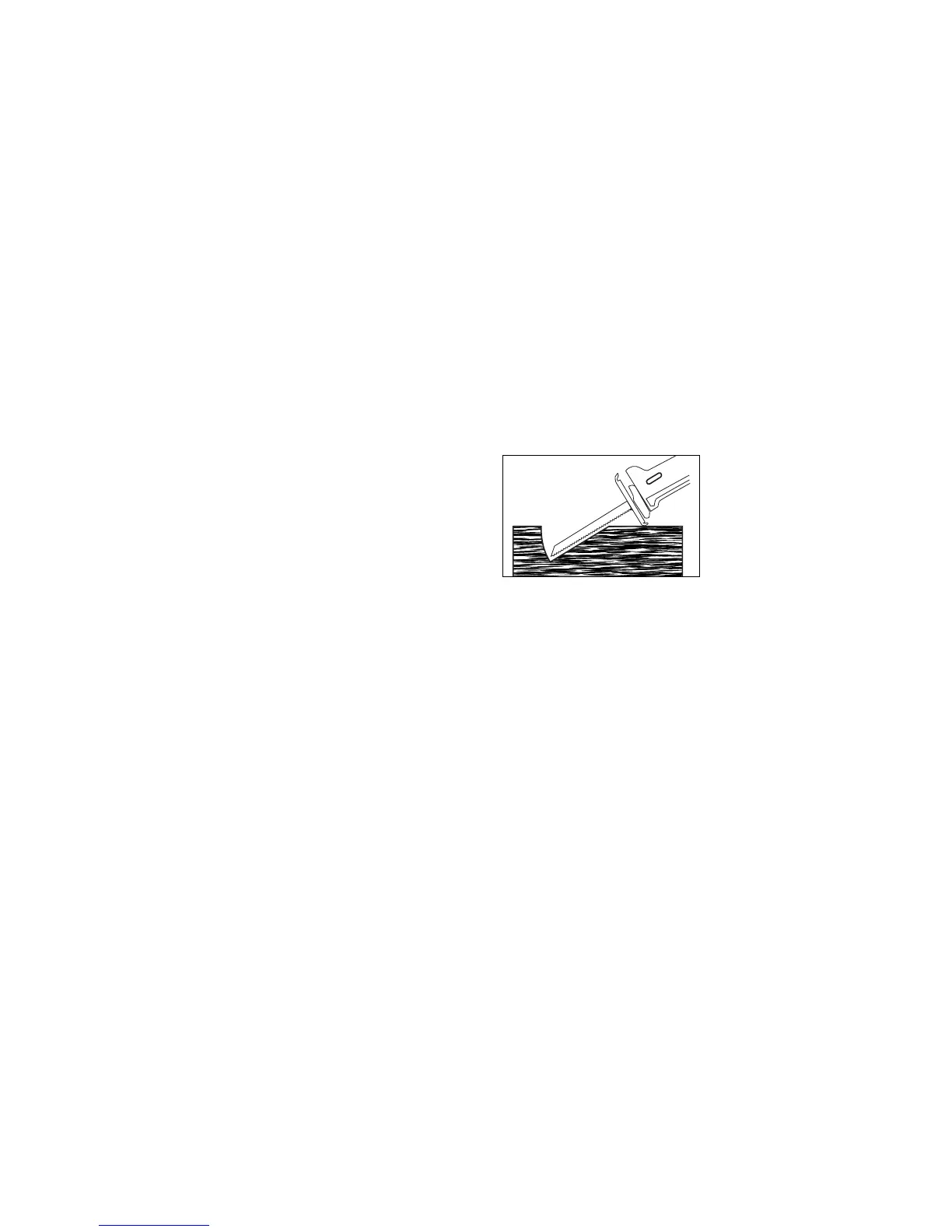
- Ensure the bottom edge of the footplate rests on the
workpiece as shown below.
- Start off slowly at a shallow angle, gradually moving
the saw to 90 degrees angle to the surface and conti-
nue along the cutting line.
- When the cut is finished, switch off and withdraw the
saw when the blade has stopped moving.
FLUSH SAWING
Flexible bi-metal blades allow you to cut projecting
objects like pipes or bars flush to the surface.
- Make sure the blade is suitable for flush sawing.
- Apply the flat surface of the saw blade directly to the
surface bending it so the footplate rests on the sur-
face but not the object to be cut.
- Start off at slow speed and apply the blade using
gentle constant pressure and a suitable speed to cut
the workpiece.
- When the cut is finished switch off and move the
blade away when it’s stopped moving
DURING USE
- Place the blade gently onto the work piece –
this is a powerful machine and will kick if the
blade is pressed too hard, jammed in the cut
or the tip of the blade touches the workpiece
when the saw is running.
- Always use two hands to control the machine.
- Adjust the stroke rate to suit the material and profile
of the cut.
- Tight radius cuts require narrow saw blades.
- Check material for foreign bodies
- For example check wood, plasterboard and building
materials for nails screws etc.
- Check for services. Make sure that there no electri-
cal wires, water or gas pipes in the material being cut.
- Apply suitable lubricant, when cutting metal or hard
materials.
- Do not use water as a lubricant/coolant.
- Clamp material properly. Do not use hand or foot to
support the work piece.
- Keep the footplate on the surface of material.
- Use constant gentle pressure.
- If the blade seizes in the cut, switch off and open the
cut with a suitable tool before pulling the blade out –
never switch the saw on with the blade jammed.
- Reciprocating blade. Be aware of backlash if you
touch the floor or workpiece with the saw running.
- Do not put the machine down with the motor still
running.
- Do not put the machine down on a dusty surface –
dust will get into the air vents and damage the motor.
- Regularly inspect the blade during use (switch off
first) for signs of damage or wear and replace when
required.
- Switch the machine off before removing the plug
from the mains socket.
- Be careful. Do not point the saw at yourself or other
people. Keep your hands away from the blade. Saw
away from yourself.
Ferm 5


 To Next Page