EasyManua.ls Logo

Ferno 26-S - User Manual

Ferno 26-S
28 pages
Print Icon
To Next Page IconTo Next Page
Loading...
User and
Maintenance Manual
26-S Self-loading Stretcher
Rel. 241115
English
Read this manual
carefully and keep it
for future reference.
Question and Answer IconNeed help?

Do you have a question about the Ferno 26-S and is the answer not in the manual?

Overview

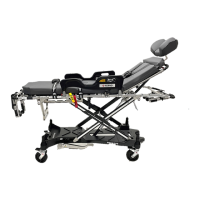
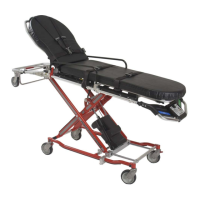
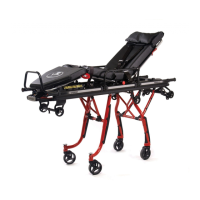
The Ferno 26-S Self-loading Stretcher is a Class I medical device designed for handling and transporting patients in emergency situations, particularly within an ambulance. It is intended for professional use by at least two trained and qualified operators to reduce the risk of back injuries to healthcare workers. The stretcher is designed to be used exclusively with Ferno ambulance locking systems.

Function Description:

The 26-S stretcher facilitates the secure transport of patients using a system of safety restraints. Its self-loading mechanism aids in transferring patients into and out of ambulances. The stretcher features an adjustable backrest, collapsible side rails, and an anti-shock frame that allows for the Trendelenburg position (legs raised). It is equipped with a leg-locking system for "sedan chair" style transport over rough terrain or obstacles.

Important Technical Specifications:

  • Loading Capacity: 181 kg (400 lbs)
  • Weight (without mattress and restraints): 33 kg (73 lbs)
  • Patient Height (Maximum Setting): 800 mm (31 in)
  • Patient Height (Minimum Setting): 450 mm (17 in)
  • Length (Maximum): 1920 mm (77.56 in)
  • Length (Minimum): 1957 mm (77 in)
  • Width (Total): 550 mm (21.65 in)
  • Wheels: Diameter 100 mm (3 in), Width 40 mm (1.6 in)
  • Materials: Aluminium structure, ABS panels, sealed wheel bearings
  • Loading Height: 610/640 mm (24/25 in)
  • SWR (Strength to Weight Ratio): 5.5
  • Safety Factor: 1.5
  • Compliance: European Directive 93/42/EEC for medical devices.

Usage Features:

  • Operator Requirements: Requires a minimum of two trained and qualified operators. Operators must have specific experience in patient immobilization, handling, and recovery procedures.
  • Control Levers: Two control levers at the foot end operate the leg closing and opening mechanism. The right-hand lever controls the head-end legs, and the left controls the foot-end legs.
  • Safety Rod: Located under the patient on the operator's right side, this rod prevents accidental leg closure and locks automatically when the stretcher moves from "closed" to "open" position.
  • Carrying Handle: Located at the foot end for guiding and moving the stretcher.
  • Folding Front Frame: Allows reduction of stretcher length for use in confined spaces (elevators, narrow corridors).
  • Wheels: Four large, swivelling wheels (100 mm diameter) facilitate loading into vehicles. The two rear wheels have an integrated brake system.
  • Integrated Brake System: Red levers on the rear wheels lock the stretcher to prevent accidental movement during patient transfer or medical procedures, especially on uneven surfaces.
  • Backrest Adjustment: Adjustable up to 80° using a red release lever. Restraints must be loosened and the backrest supported during adjustment.
  • Collapsible Side Rails: Located on both sides, they can be raised or lowered using release pins. Side rails are not suitable for lifting the stretcher; the main frame should be used for lifting.
  • Anti-shock Frame: Allows positioning the patient in the Trendelenburg position (legs raised). Requires detaching or loosening restraints before lifting or lowering.
  • Leg-locking System: Ensures legs remain in the folded position for "sedan chair" style transport over rough terrain.
  • Restraints: Requires special restraints (e.g., 4-point and 2-piece restraints) for patient security. Restraints must be fastened and adjusted correctly to prevent patient falls and injury.
  • Loading and Unloading: Requires coordinated effort from two operators. For heavy patients (minimum 90 kg), additional operators are recommended. The stretcher must be locked into the ambulance using the SLAM locking system after loading.
  • Transport: Ensure restraints are applied, side rails are raised and locked, and the patient is secured. Carry carefully over uneven surfaces. For high obstacles or difficult terrain, additional help or lower height levels may be necessary.

Maintenance Features:

  • Routine Maintenance: Annual maintenance by Ferno skilled technicians is recommended.
  • Preventive Maintenance: User-performed operations include disinfection, cleaning, inspection, and lubrication.
  • Disinfection: After each use, clean surfaces with a non-abrasive surface disinfectant. Do not immerse the stretcher. Ensure all components are dry before reuse. Avoid products containing chlorine, phenols, and iodine.
  • Cleaning: Remove restraints and mattress. Clean all surfaces with a cloth, warm water, and mild detergent soap. Remove stains with a stiff bristle brush (non-metal) or light solvent. Dry with a cloth. Do not wash with high-pressure water.
  • Inspection: Before and after each use, and at least monthly when not in use. Check for presence of components, secureness of fasteners, correct movement of parts, worn parts, proper wheel function (including brakes), and condition of restraints and mattress.
  • Lubrication: Lubricate specific points (backrest belt, backrest locking pin, collapsible side rail locking pin) with white lithium grease or WRL-191-S adhesive synthetic lubricant. Do not lubricate backrest tube or side rail mounting.
  • Storage: Store in a dry, indoor environment when not in use.
  • Repairs: Only Ferno-authorized personnel should perform repairs. Use only Ferno original parts. Unauthorized modifications or repairs void the warranty and may compromise safety.
  • Warranty: 24-month warranty against manufacturing defects, 12 months for replacement parts. Consumables and parts prone to wear are excluded or have a 90-day warranty.

Ferno 26-S Specifications

General IconGeneral
BrandFerno
Model26-S
CategoryMedical Equipment
LanguageEnglish

Related product manuals