
 Need help?
Do you have a question about the Ferno POWERFlexx and is the answer not in the manual?
General warnings about potential hazards and operator responsibilities for safe use.
Important notices regarding usage, maintenance, and installation advice.
Notice about reducing exposure to bloodborne diseases through proper cleaning procedures.
Information on combining different cot and fastener products to avoid injury and damage.
Lists the necessary skills and knowledge for operators using the cot.
Requirements for trainees, including following training programs and reading the manual.
Discusses how operator height affects lifting and the need for assistance.
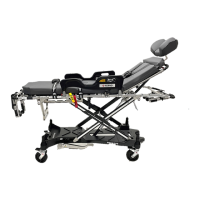
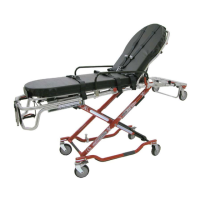
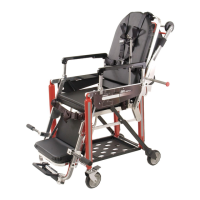
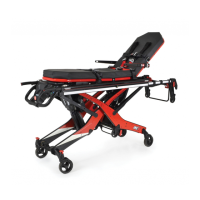
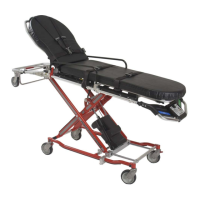
General description of the POWERFlexx Hydraulic Cot and its primary purpose.
Provides detailed technical specifications like bed height, load limit, and weight.
Identifies and illustrates the various parts and components of the cot for user familiarization.
Explains the different height ranges for loading, patient transfer, and storage.
Instructions for attaching the mattress and patient restraints to the cot.
Detailed steps for installing the safety hook on the ambulance floor for securement.
Guidelines for correctly positioning the safety hook within the ambulance to ensure proper engagement.
Step-by-step instructions for physically attaching the safety hook to the ambulance floor.
Instructions on how to update older model fasteners for compatibility with current Ferno cots.
Overview of the hydraulic system, battery usage, and essential safe practices.
Location and operation of the main power switch for the hydraulic system.
Explains the function and operation of the touch pad controls for raising and lowering the cot.
How to interpret the battery charge indicator and its implications for cot operation.
Instructions for using the manual mode for raising/lowering without hydraulics.
Information on the battery charger, charging time, and battery life.
Procedure for removing and replacing the power pack module.
Describes the uses and adjustments of the drop frame for maneuverability and security.
Explains the location and function of the safety bar release handles for unloading.
Instructions on how to adjust the backrest angle for patient comfort.
Information on sidearm functionality, intermediate stops, and weight limits.
Instructions for raising and lowering the shock frame to elevate patient legs.
How to adjust the foot-end lift bar for operator comfort and control.
How to use and store the lead handle for moving the cot.
How to engage and disengage the wheel locks for securing the cot during transfers.
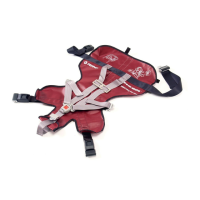
Details on the types of patient restraints and their proper use for patient safety.
Instructions for attaching and securing the mattress to the cot.
Pre-operational checks and setup requirements before placing the cot into service.
Essential operating procedures, communication, and safety practices for cot use.
Step-by-step instructions for adjusting the cot's height, including powered and non-powered methods.
Detailed procedure for safely transferring a patient onto the cot.
Guidelines and steps for safely rolling the cot with a patient.
Recommendations for using additional personnel for lifting, balance, and control.
Information on compatible fasteners for the cot and their configuration.
General guidelines and preparation steps required before loading or unloading the cot.
Step-by-step instructions for loading the cot into an ambulance.
Step-by-step instructions for unloading the cot from an ambulance.
Procedure for loading/unloading an empty cot with a single operator.
Instructions for loading/unloading using manual mode to conserve battery power.
Outlines the schedule and intervals for required maintenance tasks.
Procedures for cleaning and disinfecting the patient restraints according to their manuals.
Instructions for disinfecting and cleaning the cot mattress.
Steps for disinfecting all surfaces of the cot, including inspection for damage.
Detailed instructions for cleaning the cot surfaces, excluding specific parts like slider tubes.
Guidance on waxing the cot frame for appearance maintenance.
Checklist and procedure for regular inspection of the cot's components and functions.
Identifies lubrication points and specifies lubricants, noting areas not to lubricate.
Instructions on how to connect and charge the cot's batteries for optimal performance.
Procedure for adjusting the manual mode cable tension for proper function and responsiveness.
Contact information and procedures for ordering parts and service in the US/Canada.
Contact information and procedures for ordering parts and service outside North America.
A comprehensive list of available parts with their corresponding part numbers.
Visual diagrams illustrating the location of various cot components and parts.
Lists various accessories that can be mounted directly onto the cot.
Lists available restraint types, harness, guide strap, and touch-up paints.
Recommends a specific disinfectant product for cleaning the cot.
Summarizes the warranty coverage periods for different cot components.
Information on obtaining customer service and product support details.
 General
| Type | Powered Ambulance Cot |
|---|---|
| Width | 24 in (61 cm) |
| Material | Aluminum |
| Frame Material | Aluminum |
| Weight Capacity | 700 lbs |
| Height - Maximum | 41 in (104 cm) |
| Features | Powered lifting |
| Wheel Size | 6 in |
| Power Source | Rechargeable Battery |



 To Next Page