CHILD RESTRAINTS
Children 12 years or younger should ride properly buckled up in a rear seat, if available.
According to crash statistics, children are safer when properly restrained in the rear seats
rather than in the front.
Every state in the United States and all Canadian provinces require that small children ride
in proper restraint systems. This is the law, and you can be prosecuted for ignoring it.
NOTE:
• For additional information, refer to www.Seatcheck.org or call:
1-866-732-8243
• Canadian residents should refer to Transport Canada’s website for additional informa-
tion: http://www.tc.gc.ca/eng/motorvehiclesafety/safedrivers-childsafety-index-53.htm
LATCH — Lower Anchors And Tethers For CHildren
Your vehicle is equipped with the child restraint anchorage system called LATCH, which
stands for Lower Anchors and Tethers for CHildren.
All rear seating positions have lower anchors and top tether anchors.
LATCH Weight Limit
You may use the LATCH anchorage sys tem
until the combined weight of the child and
the child restraint is 65 lbs (29.5 kg). Use
the sea t belt and tether anchor instead of
the LATCH system once the combined
weight is more than 65 lbs (29.5 kg).
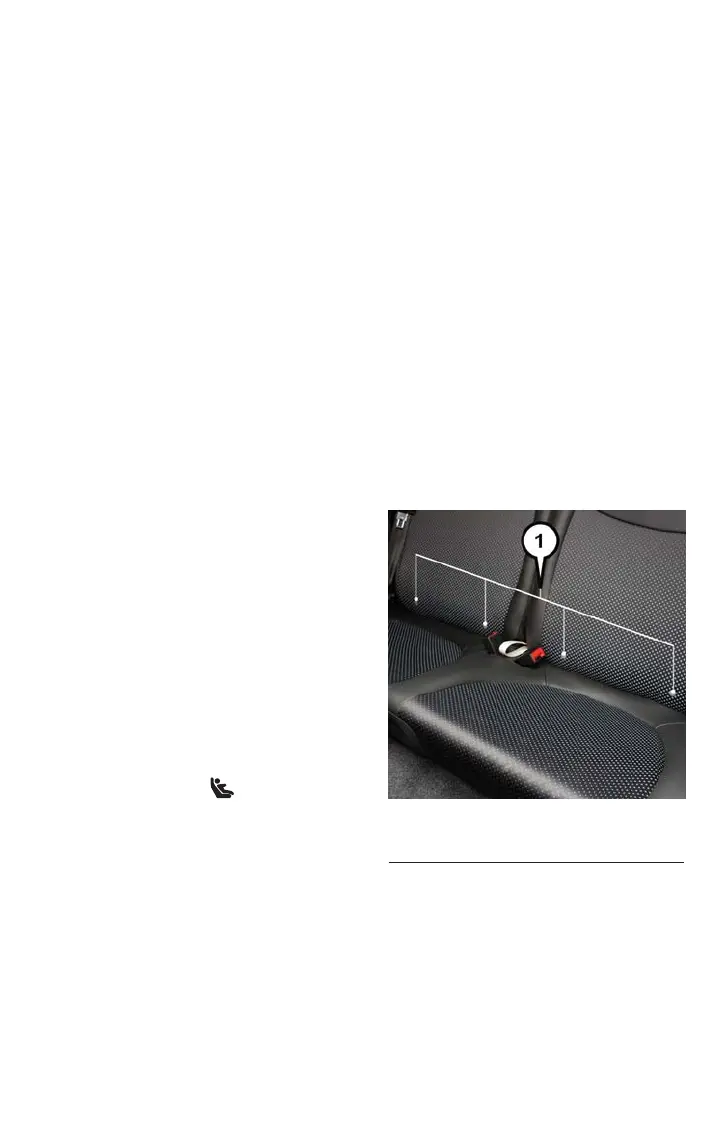
Locating LATCH Anchorages
The lower anchorages are round bars that
are found at the rear of the seat cushion
where it meets the seatback, below the
anchorage symbols
on the seatback.
They are just visible when you lean into the
rear sea t to install the child restraint. Yo u
will easily feel them if you run your finger
along the gap between the seatback and
seat cushion.
LATCH Lower Anchorage Locations
1 — Lower Anchors
GETTING STARTED
17


 To Next Page