Need help?
Do you have a question about the First Data FD 150 and is the answer not in the manual?
Cable used for telephone line connection to the terminal.
Roll of paper for the terminal's printer.
Accessory for the terminal's privacy screen.
Includes two parts for powering the terminal.
Cable for Ethernet network connection to the terminal.
Access the ports by removing the cover from the bottom of the device.
Plug Ethernet or phone cable into the yellow or blue port respectively.
Connect the other end of the network cable to a router or wall jack.
Assemble the two parts of the power cable before plugging in.
Connect the power cable to the adapter port and replace the back cover.
Lift the hatch to open the paper tray for loading.
Insert the paper roll with the leading edge feeding downwards.
With paper sticking out, close the lid securely.
Plug the power cord into an outlet; terminal turns on automatically.
This document provides a comprehensive setup guide for the First Data FD 150 Terminal, a device designed for processing transactions. The guide outlines the contents of the box, steps for connecting the terminal to necessary networks, and instructions for loading paper, ensuring the device is ready for use.
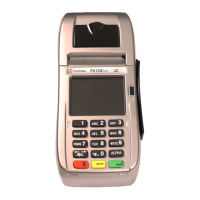
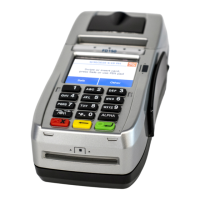
The First Data FD 150 Terminal is a point-of-sale (POS) device primarily used for processing electronic transactions. Its core function is to facilitate secure payments by connecting to a processor via either an Ethernet or telephone line. This connectivity allows the terminal to send and receive transaction data, enabling businesses to accept various forms of payment from customers. The device is equipped with a printer for issuing receipts, a display screen for user interaction, and a card reader for processing different card types. It is designed to be a reliable and essential tool for businesses requiring efficient and secure payment processing capabilities. The terminal's ability to connect through multiple network types offers flexibility, ensuring that it can be integrated into various business environments, whether they rely on wired internet or traditional telephone lines for communication.
The First Data FD 150 Terminal is designed for straightforward use, guiding the operator through the transaction process with clear on-screen prompts.
Network Connectivity: The terminal offers dual connectivity options: Ethernet and telephone line. To connect, an Ethernet cable is plugged into the yellow port on the bottom of the device, and/or a phone cable is plugged into the blue port. The other end of the Ethernet cable connects to an open port on a router or modem. If using a telephone line, the phone cable connects to a wall jack, ideally one not shared with other devices, to ensure a stable connection. This dual capability provides flexibility for businesses with different network infrastructures.
Power Connection: The device is powered by a two-part power cable. First, the two parts of the power cable are connected. Then, the power cable is plugged into the power adapter port located on the side of the terminal. Once connected, the back cover of the device is replaced. The terminal automatically powers on when plugged into a power outlet, simplifying the startup process.
Transaction Processing Readiness: After powering on, the terminal performs an automatic startup sequence. It indicates its readiness to process transactions when the screen displays the prompt "SWIPE OR INSERT CARD." This clear message guides the user on how to initiate a payment, whether by swiping a magnetic stripe card or inserting a chip card. The device is designed to be intuitive, minimizing the learning curve for new users.
Paper Loading for Receipts: The terminal includes an integrated printer for issuing transaction receipts. To load paper, the hatch on the top of the device is lifted to open the paper tray. A paper roll is then dropped into the printer tray, ensuring the leading edge of the paper feeds down from the bottom of the roll. Once the paper is correctly positioned with the end sticking out, the lid is closed, securing the paper roll in place. This process is designed to be quick and easy, allowing for efficient paper replacement during busy periods.
Maintaining the First Data FD 150 Terminal primarily involves ensuring its connectivity and keeping the paper supply stocked.
Connectivity Management: Regular checks of the Ethernet and/or telephone line connections are crucial for uninterrupted service. Ensuring that cables are securely plugged into their respective ports on the terminal and into the router/modem or wall jack prevents communication errors. For telephone line connections, using a dedicated wall jack helps maintain a stable connection, as shared lines can sometimes lead to interference or dropped connections. Periodically verifying that the network infrastructure (router, modem, telephone line) is functioning correctly will help prevent terminal connectivity issues.
Paper Roll Replacement: The most frequent maintenance task is replacing the paper roll for the receipt printer. The guide provides clear steps for this, emphasizing the correct orientation of the paper roll (leading edge feeding down from the bottom). Keeping a supply of compatible paper rolls on hand is essential to avoid interruptions in transaction processing. The design of the paper tray with a liftable hatch makes this a user-friendly process, allowing for quick and easy paper changes without requiring specialized tools or technical expertise.
Cover Management: The setup process involves removing and replacing the bottom cover of the device to access the connectivity ports. Ensuring this cover is properly secured after connecting cables helps protect the internal components from dust and minor physical impacts. While not a frequent task, proper handling of the cover contributes to the device's longevity.
Troubleshooting Guidance: Although not explicitly detailed as a maintenance feature, the guide implies a basic level of troubleshooting by ensuring all connections are made correctly. If the terminal does not power on or display the "SWIPE OR INSERT CARD" message, checking the power cable connection and outlet would be the first step. Similarly, if transactions fail, verifying the network connections (Ethernet or phone line) would be a primary diagnostic action. The simplicity of the setup suggests that many common issues can be resolved by re-checking these fundamental connections.
In summary, the First Data FD 150 Terminal is a user-friendly and robust device designed for efficient payment processing. Its intuitive setup, clear operational prompts, and straightforward maintenance procedures make it an accessible solution for businesses seeking reliable transaction capabilities. The emphasis on proper connectivity and paper management ensures continuous operation, supporting smooth business transactions.
 General
| Connectivity | Ethernet |
|---|---|
| Card Reader | Magnetic stripe, EMV, NFC |
| Power Supply | AC adapter, battery |
| Printer | Thermal printer |
| Security | PCI PTS compliant |
| Display | 3.5" color touch screen |

 To Next Page