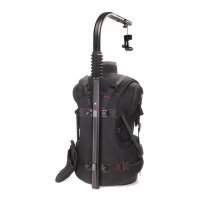
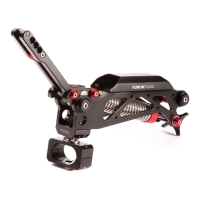
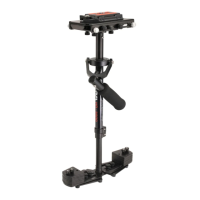
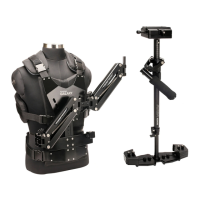
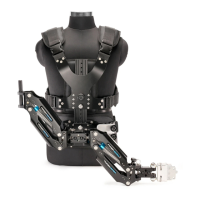
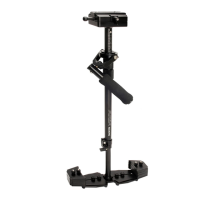
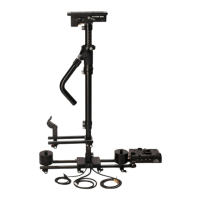
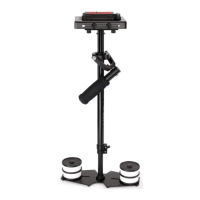
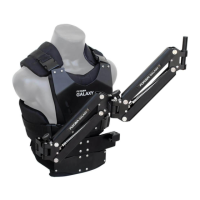
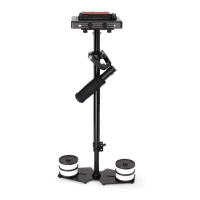
The Flycam Flowline with Stabilizing Arm (FLCM-FLN-PA) is a body-worn camera support system designed to provide stable and comfortable operation for professional videographers. This system combines the benefits of a body-worn vest with a stabilizing arm to distribute the weight of the camera setup, reduce operator fatigue, and enable smooth, cinematic camera movements.
Function Description
The core function of the Flycam Flowline system is to offload the weight of a camera and gimbal setup from the operator's arms and shoulders to their hips and back. This weight distribution is achieved through a robust support jacket and a tension-adjustable rope system. The stabilizing arm, specifically the Placid Arm, further enhances stability by absorbing vertical shocks and oscillations, allowing for fluid up-and-down camera movements and reducing the impact of the operator's footsteps. This combination enables operators to shoot for extended periods without discomfort, maintaining consistent shot quality.
The system is particularly beneficial for dynamic shooting scenarios where handheld operation would be tiring or prone to excessive shake. It allows for a natural walking motion while keeping the camera stable, making it suitable for following subjects, tracking shots, and long takes in various environments. The design aims to provide a "floating" camera effect, similar to a Steadicam, but with a simpler setup and a focus on weight relief and vertical stabilization.
Usage Features
The Flycam Flowline with Stabilizing Arm offers several features designed for ease of use, comfort, and adaptability to different shooting requirements:
- Body Support Jacket: The system includes a comfortable and adjustable body support jacket. This jacket is worn like a backpack and features buckles at the waist and chest to ensure a secure and snug fit for operators of various body types. Proper adjustment of these buckles is crucial for effective weight distribution and comfort.
- Push-Fit Assembly: The support bar easily joins with the support jacket using a push-fit technique, simplifying the initial setup process. Similarly, the front section connects to the support bar with ease.
- Height Adjustment: The support bar's height can be adjusted using four knobs located on the back of the support jacket. This feature allows operators to position the camera at their desired eye-level, ensuring ergonomic operation and optimal viewing of the camera monitor.
- Tension Adjustment: A spring mechanism at the back of the support jacket allows for adjustment of the rope's tension. This is a critical feature as it enables operators to fine-tune the system to match the specific weight of their camera setup, ensuring proper weight relief and responsiveness. Releasing the spring tension is the first step in disassembling the Placid Arm.
- Camera Attachment Hook: The system provides a secure hook for attaching the camera setup. This hook is designed for slip-free connection, and a tightening knob ensures the camera remains firmly in place during operation.
- Rope Management: The rope system is integral to the Flowline's function. It can be easily detached from the hook by loosening a knot, allowing for maintenance or reconfiguration.
- Placid Arm Integration: The Placid Arm is a key component for enhanced stabilization. It is mounted onto the Flowline arm, and its position is secured with an Allen bolt, tightened using an Allen key. The rope is then carefully passed through the Placid adapter and aligned with the pulley of the Placid Arm. This ensures that the arm effectively absorbs vertical movements.
- Secure Placid Arm Connection: The Placid Arm is further secured to the Flowline Arm using a provided tie, ensuring a slip-free connection and preventing accidental dislodgement during dynamic movements.
- Extension Arm Reconfiguration: The Flowline's extension arm can be re-attached upside down, and its knob tightened properly, indicating flexibility in how the system can be configured to suit different camera setups or operator preferences.
- Quick Camera Mounting: Once the system is set up, the camera can be quickly mounted onto the hook of the Flowline, and the knob tightened to secure it. This allows for efficient transitions between shots or setups.
- Optional Accessories: The system is designed to be compatible with optional accessories, allowing users to customize their setup further to meet specific production needs.
Maintenance Features
While the manual primarily focuses on assembly and usage, several aspects imply ease of maintenance and durability:
- Modular Design: The system's components, such as the support bar, support jacket, tensioner spring, and Placid Arm, appear to be modular. This modularity simplifies assembly and suggests that individual parts could be replaced or serviced if necessary, rather than requiring replacement of the entire unit.
- Robust Construction: The visual cues, such as the sturdy buckles, metal components of the Placid Arm, and the overall design, suggest a durable construction intended for professional use. This inherent robustness reduces the frequency of maintenance.
- Adjustable Components: The presence of adjustable knobs for height, tension, and camera attachment implies that wear and tear on these mechanisms can be managed through proper adjustment and tightening, extending their lifespan.
- Spring Mechanism: The tensioner spring is a critical functional component. Its adjustability allows for compensation for varying camera weights, which also helps in maintaining the spring's integrity by not over-stressing it with inappropriate loads.
- Allen Key Operations: The use of an Allen key for tightening the Placid Arm's bolt indicates a secure and precise connection, which is less likely to loosen over time compared to hand-tightened components, thus reducing the need for frequent re-tightening.
- Storage Bag: The inclusion of a storage bag is a practical maintenance feature. It helps protect the system from dust, dirt, and minor impacts during transport and storage, contributing to its longevity and readiness for use. Proper storage is a fundamental aspect of equipment maintenance.
- User-Serviceable Adjustments: Many adjustments, such as tensioning the rope, adjusting the vest, and securing the camera, are designed to be performed by the user without specialized tools, empowering operators to maintain optimal performance on set.
- Clear Assembly Instructions: The detailed assembly instructions, including visual aids, facilitate correct setup. Correct initial setup is a form of preventative maintenance, as it reduces the likelihood of damage due to improper use.
- Focus on Secure Connections: The emphasis on tightening knobs and using ties for slip-free connections throughout the assembly process highlights a design philosophy aimed at preventing component failure or accidental dislodgement, which are common causes of equipment damage.

 Need help?
 General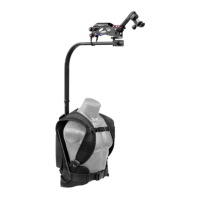

 To Next Page