Tech 39
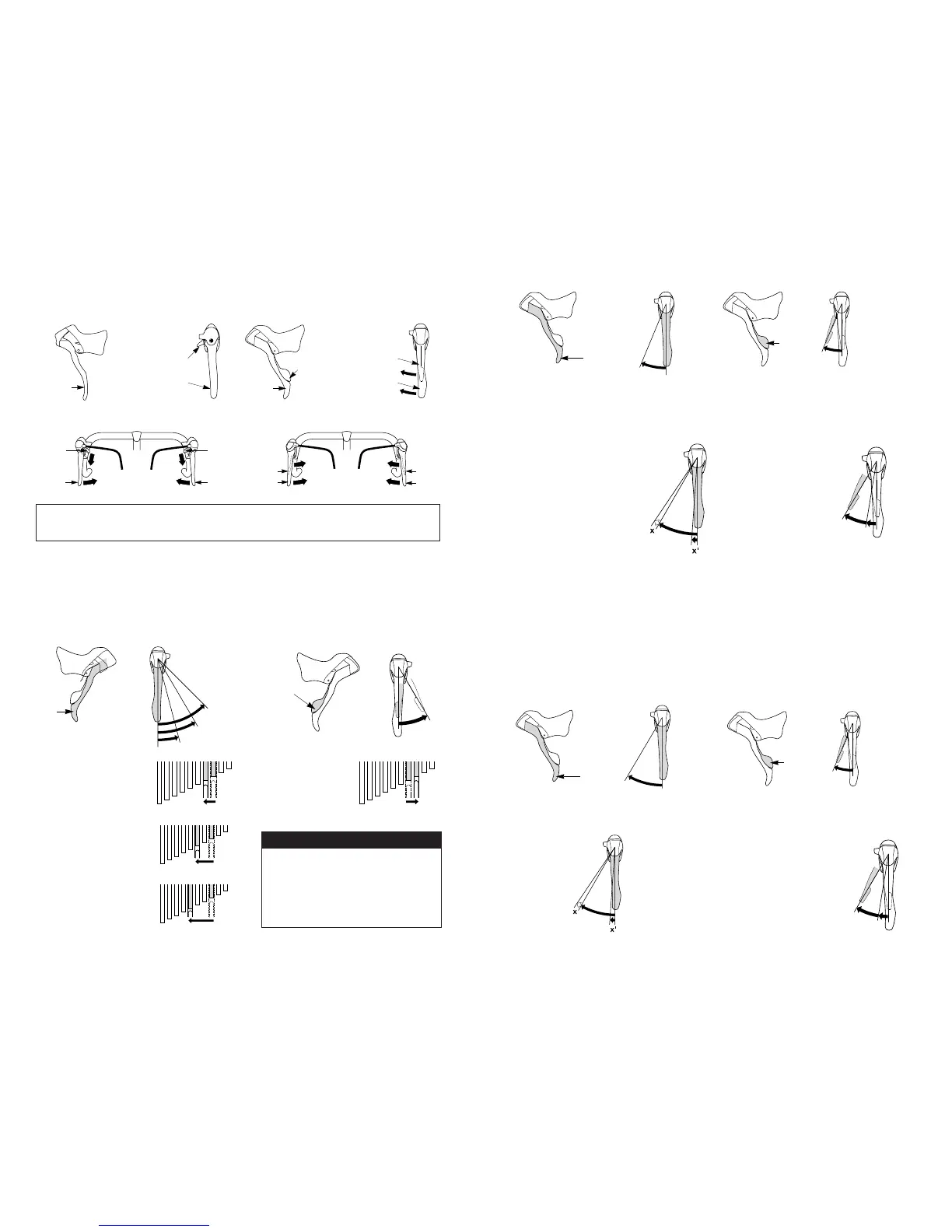
When shifting using lever b, an initial click stop marks
the start of trimming (noise prevention mechanism) and
a second, stronger click stop marks the complete chain
sprocket shift. After trimming, the next press concludes
the shift sequence.
4 3
35
3
6
34
Lever a
Lever a
Lever a
Lever a
Complete chain shift
lever stroke
Click position
Click position
Complete chain
shift lever stroke
Stroke actually
performed
Stroke actually
performed
Lever b: shifting from the middle to the
smallest chain sprocket
Lever b: shifting from the middle to the
smallest chain sprocket
If the lever movement does not produce
a complete change of chain sprocket, the
lever must be moved again by amount
(X’) in order to execute the missing lever
movement distance (X) and thus the
gear shift.
Rear RearFront Front
Lever b
from larger to smaller
chain sprocket
Lever B
Lever B
Lever B
Lever b
Lever b
Lever b
Lever b
Lever b
Lever A
Lever A
Initial Position
Lever A
Initial Position
Lever a
Initial Position
Lever a
Initial Position
Lever b
Initial Position
Lever b
Initial Position
Lever B
1st click position
1: Shifting by one gear to the next
larger rear sprocket. Example:
Shifting from 3rd to 4th gear.
Example: Shifting from 4th
to 3rd gear.
2: Shifting by two gears to a larger
rear sprocket. Example: Shifting
from 3rd to 5th gear.
3: Shifting by three gears to a larger
rear sprocket. Example: Shifting
from 3rd to 6th gear.
2nd click position
3rd click position
Lever A
Lever a
Lever a
Lever b
from larger to smaller
chain sprocket
Lever a
from smaller to larger
chain sprocket
Lever a
from smaller to larger
chain sprocket
Lever A: Shifting to a larger rear sprocket
Lever B: Shifting to a smaller rear sprocket
Lever B moves with Lever A when it is actuated;
however the exertion of pressure on lever B
must be avoided. Correspondingly, the exertion
of pressure on lever A must be avoided when
actuating lever B. The simultaneous actuation
of both levers results in no gear shift.
Operating Advice
All levers return to their initial position when released.
Lever ‘b’ moves with lever ‘a’ when it is actuated. However, the exertion
of pressure on lever ‘b’ must be avoided. Correspondingly, the exertion
of pressure on lever ‘a’ must be avoided when actuating lever ‘b’. The
simultaneous actuation of both levers results in no gear shift.
Actuating the chain guide lever
• Lever A: shifting to a larger rear
sprocket. Lever A latches
in positions 1, 2, and 3.
Actuating the derailleur lever with trimming (noise minimization) optional
Shift procedure
• Lever B: shifting to a smaller rear
sprocket. By pressing lever
B once, gear is shifted to the
next smaller rear sprocket
Lever a: Shifting to a larger chain sprocket
Lever b: Shifting to a smaller chain sprocket
Complete derailleur
lever stroke
Click position
Click position
Guide to Shifting Gears



 To Next Page