Fit 17
understand and follow the instructions that accompany the products you
purchase for your bicycle. See also Appendix A, p. 35 and B, p. 41.
WARNING: Failure to confirm compatibility, properly install, operate
and maintain any component or accessory can result in serious injury
or death.
WARNING: Changing the components on your bike with other than
genuine replacement parts may compromise the safety of your
bicycle and may void the warranty. Check with your dealer before
changing the components on your bike.
3. Fit
NOTE: Correct fit is an essential element of bicycling safety, performance
and comfort. Making the adjustments to your bicycle which result in
correct fit for your body and riding conditions requires experience, skill
and special tools. Always have your dealer make the adjustments on your
bicycle; or, if you have the experience, skill and tools, have your dealer
check your work before riding.
WARNING: If your bicycle does not fit properly, you may lose control
and fall. If your new bike doesn’t fit, ask your dealer to exchange it
before you ride it.
A. Standover Height
1. Diamond frame bicycles
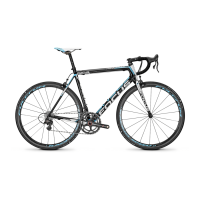
Standover height is the basic element of
bike t (see ). It is the distance from the
ground to the top of the bicycle’s frame
at that point where your crotch is when
straddling the bike. To check for correct
standover height, straddle the bike while
wearing the kind of shoes in which you’ll
be riding, and bounce vigorously on your
heels. If your crotch touches the frame,
the bike is too big for you. Don’t even ride
the bike around the block. A bike which
you ride only on paved surfaces and never
take off-road should give you a minimum standover height clearance of two
inches (5 cm). A bike that you’ll ride on unpaved surfaces should give you a
minimum of three inches (7.5 cm) of standover height clearance. And a bike that
you’ll use off road should give you four inches (10 cm) or more of clearance.
2. Step-through frame bicycles
Standover height does not apply to bicycles with step-through frames. Instead,
the limiting dimension is determined by saddle height range. You must be able
When riding fast down hill, you can reach speeds achieved by motorcycles,
and therefore face similar hazards and risks. Have your bicycle and
equipment carefully inspected by a qualied mechanic and be sure it is in
perfect condition. Consult with expert riders, area site personnel and race
ofcials on conditions and equipment advisable at the site where you plan
to ride. Wear appropriate safety gear, including an approved full face helmet,
full nger gloves, and body armor. Ultimately, it is your responsibility to have
proper equipment and to be familiar with course conditions.
WARNING: Although many catalogs, advertisements and articles
about bicycling depict riders engaged in extreme riding, this activity
is extremely dangerous, increases your risk of injury or death, and
increases the severity of any injury. Remember that the action
depicted is being performed by professionals with many years of
training and experience. Know your limits and always wear a helmet
and other appropriate safety gear. Even with state-of-the-art
protective safety gear, you could be seriously injured or killed when
jumping, stunt riding, riding downhill at speed or in competition.
WARNING: Bicycles and bicycle parts have limitations with regard to
strength and integrity, and this type of riding can exceed those
limitations.
We recommend against this type of riding because of the increased risks; but if
you choose to take the risk, at least:
•Takelessonsfromacompetentinstructorrst
•Startwitheasylearningexercisesandslowlydevelopyourskillsbeforetrying
more difcult or dangerous riding
•Useonlydesignatedareasforstunts,jumping,racingorfastdownhillriding
•Wearafullfacehelmet,safetypadsandothersafetygear
•Understandandrecognizethatthestressesimposedonyourbikebythiskind
of activity may break or damage parts of the bicycle and void the warranty
•Takeyourbicycletoyourdealerifanythingbreaksorbends.Donotrideyour
bicycle when any part is damaged.
If you ride downhill at speed, do stunt riding or ride in competition, know
the limits of your skill and experience. Ultimately, avoiding injury is your
responsibility.
G. Changing Components or Adding Accessories
There are many components and accessories available to enhance the
comfort, performance and appearance of your bicycle. However, if you
change components or add accessories, you do so at your own risk. The
bicycle’s manufacturer may not have tested that component or accessory
for compatibility, reliability or safety on your bicycle. Before installing any
component or accessory, including a different size tire, make sure that it is
compatible with your bicycle by checking with your dealer. Be sure to read,


 To Next Page